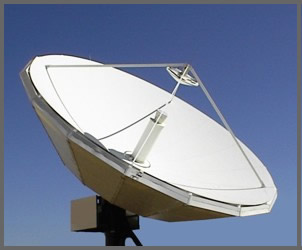
The BBC have been talking about launching a free satellite service since before 2004. Very cleverly they labelled it Freesat.
 Since then, we’ve returned to it a number of times, as it appeared to drop from the general BBC conversation.
Well it’s back in the news now, as the BBC Trust has reached a provisional decision on Freesat. Their view is one of support and have opened a 28 day public consultation prior to making its final decision in April 2007.
They foresee the satellite being shared among the UK broadcasters and guarantee that it will remain free after a one-off initial payment to cover the cost of equipment and installation.
There are problems with the much-trumpeted digital switch-over in the UK. Many areas are not covered by the digital transmitters because they are located in a remote area or that the geography of the area blocks the transmissions – in fact over half of those yet to switch (3.5 million homes) fall outside the Freeview coverage area. Satellite-delivered services do not suffer from these problems.
To date BSkyB has been the only company offering satellite delivery in the UK, indeed the BBC is carried on it. The proposal of FreeSat isn’t without impact.
As Acting BBC Chairman Chitra Bharucha put it, “We have considered the market impact and whilst there may be some negative effects, in our view these should be balanced against the potential positive market impact of greater choice. Overall, we believe a “Freesat” service to be in the public interest and we hope that other public service broadcasters would join the BBC in a joint venture.”
There’s additional benefits beyond coverage, that of delivery of HD signals, which currently it isn’t practical to do countrywide over Freeview.
Those wishing to comment should get over to the public consultation.
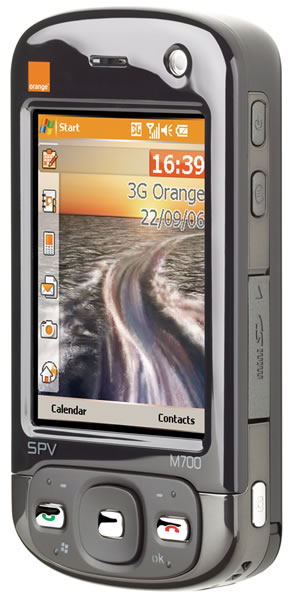 There’s been shots of the
  Apple has announced that their Apple TV product will be ‘a few weeks late.’
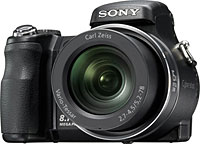 Sony’s new DSC-H7 and DSC-H9 cameras come with an immense 15x optical Carl Zeiss Vario-Tessar zoom, which translates into a whopping 31-465mm range (35mm equiv) – perfect for wannabe paparazzi and lurking stalkers.
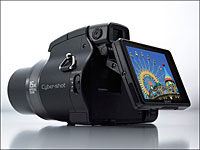 Both cameras sport face detection technology, HDTV output, red-eye reduction and an action-freezing shutter speed up to 1/4000 of a second, backed by a slew of auto, manual and scene modes.
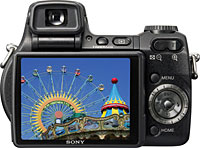 There’s no RAW image capture either, an omission that will surely push keen photographers further in the direction of cut price dSLRs like Nikon’s fine D40
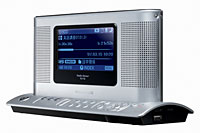 Looking like it’s teleported straight off the film set of 2001:A Space Odyssey is this new futuristic radio from Olympus sporting a colossal 37GB of disk space and a 3.9″ screen.
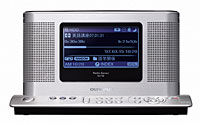 We can’t see any mention of a DAB radio on the radio which suggests it’s not for the UK market, but naturally there are presets galore for AM/FM bands.
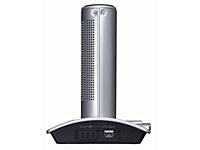 The publicity shots show the radio in what looks like a docking bay, although with no pics of the thing untethered perhaps the radio doesn’t pop out after all. Which would be a bit rubbish.
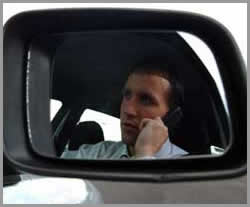 As of today, drivers using their mobile phone while driving in the UK will be hit with increased fines.
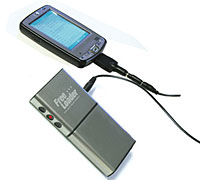
 Having a ton of the latest technological gadgets bulging in your pants may give you a Noughties swagger, but you’ll be looking like a prize chump if the batteries go flat, so Solar Technology’s new Freeloader charger might help you keep your cool.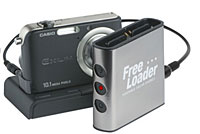
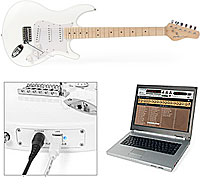 As the name suggests, this Strat-shaped guitar comes with a USB port, allowing aspiring six string warriors to plug into their laptops and access a host of cool effects.
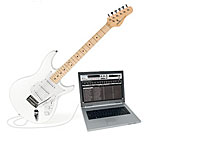 There’s also a multi-track recording/editing function for laying down dual-guitar sonic attacks, delicately layered tracks or a Ronnie Spector wall of noise.
 Research firm Hitwise reported that online traffic to YouTube soared past rival US TV websites, with the site recording more visits than all the television network Web sites combined during the week of Feb. 3rd.
 Hitwise researcher LeAnn Prescott, commented, “This is a landmark event in the changing face of web traffic and entertainment consumption, now that entertainment seekers are now more likely to go to YouTube than any other television network or gaming website.”
 The study, released yesterday, shows that some 34% of internet users have surfed the web or checked email on a computer or smartphone/PDA using a Wi-Fi connection or mobile phone network.
 They’re news junkies too, with nearly half (46%) going online to read news compared to 38% of home broadband users and 31% of all internet users.