The European Commission has dished out formal charges to Apple and ‘unnamed major record companies’, accusing them of restricting music sales in Europe.
 The EU alleges that agreements between Apple and the record companies are guilty of breaking European Union rules that prohibit restrictive business practices. It’s far from the first time that the EU and other Northern European Countries has got wound up about Apple and iTunes.
“Consumers can only buy music from the iTunes online stores in their country of residence and are therefore restricted in their choice of where to buy music, and consequently what music is available and at what price,” said Jonathan Todd, European Commission spokesman.
 “The statement of objections alleges that distribution agreements between Apple and major record companies contain territorial sales restrictions,” he added.
Promptly shifting the blame on to the record companies, Apple insisted that they’d tried to operate a single pan-European iTunes store accessible to peeps from any member state but were foiled by music labels and publishers imposing legal limits on the download rights.
The Commission first got involved back in 2005 after the UK consumer group Which? pointed out that iTunes purchasers in France and Germany were paying far less than us poor chumps in the UK (67 pence against 79 pence).
 Apple and the record companies now have two months to defend themselves in writing or take part in an oral hearing which usually happens around a month after a written reply has been received.
This latest development is unrelated to yesterday’s deal between Apple and EMI.
 It wasn’t the
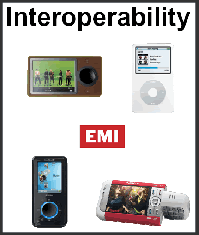
 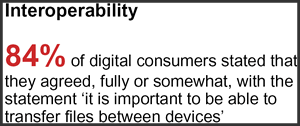 “We are going to give iTunes customers a choice — the current versions of our songs for the same 99 cent price, or new DRM-free versions of the same songs with even higher audio quality and the security of interoperability for just 30 cents more,” said Steve Jobs, Apple’s CEO.
 Keen not to miss out on the quote-fest, Eric Nicoli, CEO of EMI Group, piped up: “EMI and iTunes are once again teaming up to move the digital music industry forward by giving music fans higher quality audio that is virtually indistinguishable from the original recordings, with no usage restrictions on the music they love from their favourite artists.”
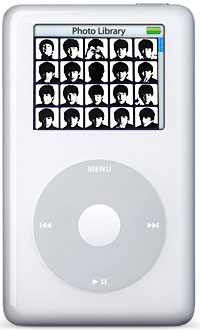 Yesterday, record company giants EMI Group PLC announced that it planned to unveil “an exciting new digital offering” with Steve Jobs and the gang at Apple, leading pundits to conclude that The Beatles’ music catalogue is finally about to be made available through Apple’s iTunes online music store.
 The Beatles have famously refused to sign up to iTunes and other online music services for years, and many expect the download charts to be instantly filled up with the Fab Four’s songs as soon as their catalogue becomes available.
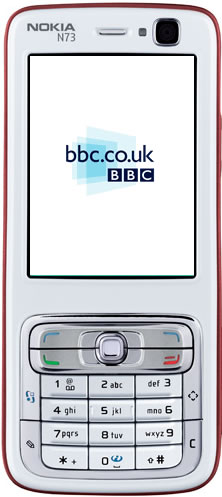 Three UK operators will be taking part, Orange, Vodafone and 3 giving subscribers to the trial the ability to watch BBC One, BBC News 24 and BBC Three streamed on their mobiles. Beyond some sports programmes and programmes where they don’t have the necessary rights.
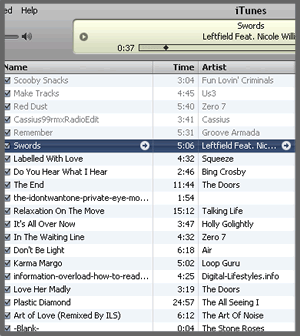 Today they’ve announced it’s for real. The new Complete My Album will give iTunes users 79p credit per track for each track on an album that they decide to purchase, if they’ve bought the tracks individually first.
 There’s been back and forth between Yahoo and Google, following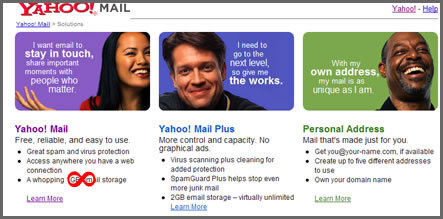
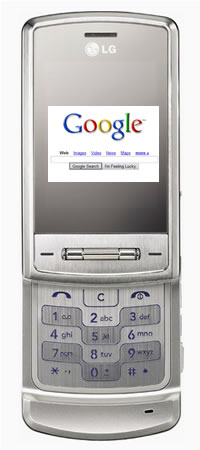 LG have committed to release at least ten new mobile phone and will jointly market them as LG-Google handsets.
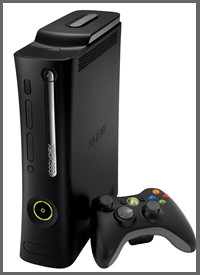 Yesterday Microsoft confirmed that the Xbox 360 Elite is a real product and will begin arriving in US stores on 29 April with an expected retail price of $480.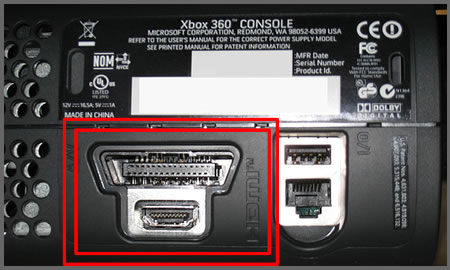
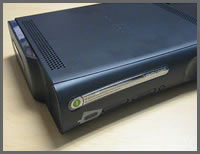 Peter Moore, Corporate Vice President – Interactive Entertainment Business, Microsoft, turned the hyperbole meter way up to deliver the following, “Today’s games and entertainment enthusiast has an insatiable appetite for digital high-definition content. Xbox 360 Elite’s larger hard drive and premium accessories will allow our community to enjoy all that the next generation of entertainment has to offer.”
 Microsoft’s Corporate VP Bill Veghte was clearly a chuffed fella, “We are encouraged to see such a positive consumer response to Windows Vista right out of the gate,” he purred in an official statement released on Monday.
 The figures seem to stack up well against the 17 million copies of Windows XP sold in the two months following its release in 2001, but the PC market has increased exponentially since then: according to IDC, total worldwide PC shipments hit 136 million units in 2001, a figure dwarfed by last year’s 227 million total sales.
 Although Windows marketing director Bill Mannion acknowledged that the upgrade program had nudged the sales figures in an upward direction, he played down the numbers saying that upgraders didn’t make up the “core component of the 20 million.”