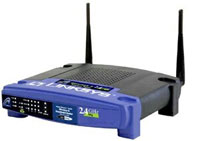
 Despite prices being pushed downwards by fierce price competition, worldwide wireless LAN equipment revenue rose 20% to US$767.6 million (~£420m ~€610m) between the fourth quarter of 2004 and the first quarter of 2005.
During that period, a grand total of 12.2 million units were shipped, the highest quarterly volume to date, according to a report from Infonetics Research.
With wireless LAN products continuing to grow in popularity across product categories and geographic regions, revenue is expected to rise another 2% to $779.6 million (£426m, €620m) by 1Q06, hitting $3.6 billion (~£173m~€251m) by 2008.
Wireless LAN switch ports have been shifting faster than a Ritalin-assisted rabbit, rising 44% to 112,000 as revenue grew 13% to $52.2 million (~£285m~€41.53m), with a leap to $699.2 million (~£381~€556) predicted for 2008.
As the world goes bonkers for broadband, the demand for wireless broadband routers has soared accordingly, registering a hefty 34% increase in revenue between 4Q04 and 1Q05 generating $328 million (~£173.8m~€253m).
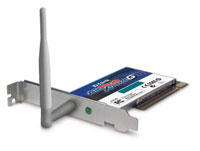 That’s a thumping great 37% increase in unit shipments, representing not-to-be-scoffed-at sales of 6 million.
Naturally, the manufacturers want to keep the cash flowing in their direction, so have been busily slapping on new product features to generate replacement purchasing.
“The demand for wireless broadband routers continues unabated, driven by the possibilities of wireless home networking,” said Richard Webb, lead analyst of the Infonetics report.
“As more and more users explore the possibilities of media download and file sharing applications they are finding that this easy-to-use device uncovers the true potential of their broadband connection. And with 802.11n and even faster throughput speeds on the horizon, the wireless router segment will ride the crest of the global broadband wave.”
Cisco continues as the worldwide wireless LAN revenue leader, hogging 17% of the market share following four consecutive $100-million-plus (~£53.7m~€79.5m) quarters.
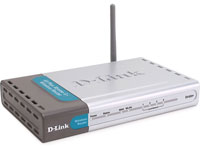 D-Link barged ahead of Cisco-Linksys to grab second place, with NETGEAR in fourth position.
Just in case you, dear reader, haven’t had quite enough facts yet, allow me to inform you that the report revealed that access points account for 71% of wireless LAN equipment revenue, NICs account for 13%, and infrastructure products, including wireless LAN switches, appliances, controllers, and mesh networking gear, account for 16%
SOHOs and consumers make up just over half of wireless LAN equipment revenue (51%), down from 53% in 4Q04 while service providers and enterprises make up the rest.
Finally, a little geographic fact flurry to end with: North America accounts for 45% of wireless LAN equipment revenue; Europe, Middle East and Africa for 30%, Asia Pacific for 21%, and Central America / Latin America for 4%.
So now you know.
 Here at VON Europe in Stockholm, Sweden, Niklas Zennstrom, CEO of Skype, has just announced the official launch of the Skype affiliate scheme. The scheme has been running as a trial for a few weeks, gaining 1,800 members.
 Part
Part 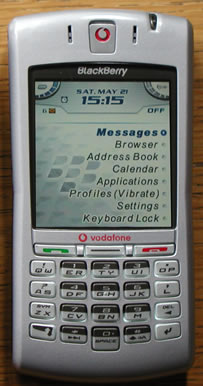 Screen
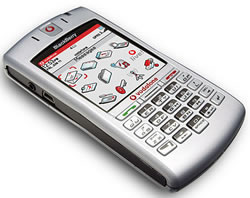
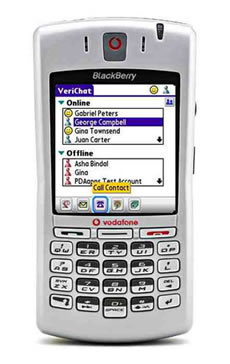 When Web pages are rendered, there are a lot of unnecessary images which would be represented instead by text. This text is usually shown in the ALT tags of the HTML from which the pages are rendered. On a lot of sites, there are a lot of navigation images, which are not good for render time on a low-powered device like the Blackberry: every time a page is opened containing images, these images are downloaded (this takes a long time with the Internet connection on a 7100v being at dial-up speeds). When downloaded these images are resized individually so as to fit on its screen.
 Back in the old days when Glastonbury was a field of medieval mud occupied by confused hippies and LSD travellers, the customary way to show your appreciation of the band was to flash the occasional peace sign or waft a spliff skywards.
 For today’s hi-tech toy generation, new ways of bigging up a band have developed.
 We’re not sure what the remaining 90% of the crowd thought of this pointless onscreen nonsense, but we’d be reaching for our phone zappers in double quick time.
 Time Warner is considering “spinning off” its AOL division to help finance acquisitions in the future, said chief executive Richard D. Parsons on Friday.
 With Time Warner’s pockets already considerably lightened, transatlantic regulators then accused them of overstating advertising and subscriber numbers from mid-2000, with the company settling all charges with thumping great payments of US$510 million (~£279m ~€406.6m) in the States and US$300m (~£164~€239m) in the EU.
 AOL is now trying to find new revenue sources to compensate for the loss of U.S. subscribers to its dial-up Web access service, which has declined by 5 million users in three years, to 21.7 million.
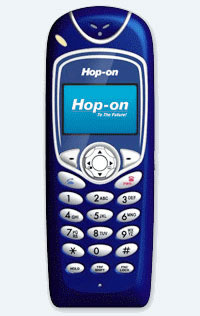 They’ve got a bit of a reputation for being a tad over-affirmative with their announcements, but Californian wireless solutions company Hop-on have revealed details of their new US$39 (~€31~£21.33) WiFi phone.
 Of course, the main attraction of this phone is the low, low price, with the company claiming that it “provides all the features and functionality of a VoIP terminal adapter but has the advantage of enabling users to talk from any available public or private WiFi access point. ”
 It’s an ugly looking beast all right, but we like the idea of cheap VoIP handsets, although hardened old cynics like us would suggest that you don’t hold your breath on this one, quite yet.
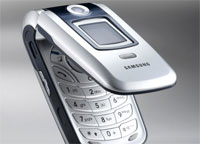 The mobile world domination plans by the white cat-stroking mastermind at Samsung continues apace with the news of yet another new phone from the Korean giants.
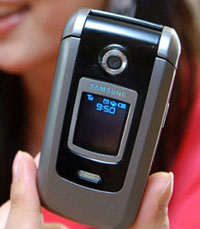 Petite in size yet delivering a surprisingly hefty sonic whack, Samsung’s wee 3G phone incorporates dual stereo speakers for its MP3/AAC/AAC+ audio player, with a healthy 50MB of internal memory for song storage.
 Basic Web browsing is taken care of with a WAP 2.0-enabled micro-browser also present, and the handset offers support for J2ME MIDP 2.0.
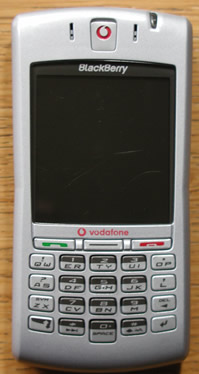 Being a self-professed gadget lover, I tend to get new toys as they come out. One particular gadget, however, escaped my grasp: I’d heard about it – all about how it was the oh-so-great new fashion for business users, and about how it was transforming people’s lives (and phone bills too as it happens). You might already have guessed what it is that I’m talking about: The Blackberry.
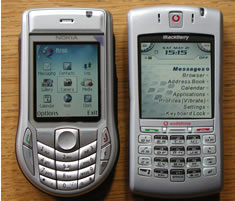 Blackberry and Nokia 6630 side-by-side (Blackberry on the right)
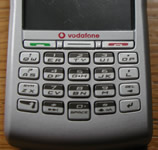 Keyboard
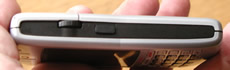 Scroll wheel
 Orange has become the first UK provider to offer live television channels to its customers’ handsets.
 Orange are already broadcasting 23 TV channels over mobile phones in France, along with other European networks selling selected live TV via 3G network streaming.
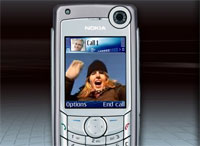 We can’t imagine any circumstances where we’d consider paying to watch barrel-scraping Celebrity Love Island program on a mobile, but someone clearly thinks that a dire mobile channel based on the show will be a hit.