 Following Ofcom publishing its new broadcasting code earlier this week, Russ Taylor of ofcomwatch outlines his reasons for disliking the R18 ban. He makes good points about the difference between IP delivered content and that which is broadcast. Simon
I’m going to stop banging-on about the Ofcom R18 ban (eventually), but I thought I would share a few thoughts about the decision:
1. The reaction to the R18 ban (or lack of reaction) says alot about the British system of content regulation. The decision–from an economic standpoint–is a significant and highly intrusive market intervention by Ofcom that creates winners (licensed sex shops, internet porn sites, future IPTV players) and losers (cable and Sky). Adult content flows through the UK. Ofcom’s decision has not stopped that flow–it has redirected the flow. So, while I use the term ‘ban’, that doesn’t quite capture the economic reality of what happened as a result of Ofcom’s decision.
 2. The decision also has a social impact: There was straight, uncritical reporting of the ban in the trade press. Privately, some people have told me that they thought the Ofcom research was shoddy. In fact, one former content regulator told me he was ‘angry’ with the decision. But, there seems to be a general intellectual consensus that there is a difference between ‘freedom of expression’, championed by British academia and the likes of the Guardian, and ‘porn-campaigning’ which is some lower form of freedom.
3. Ofcom’s reputation was going to be damaged no matter what it did on this issue. If the regulator permitted R18 content, there would have been a firestorm. If the regulator banned it, the flimsy reasoning used for the ban would be attacked. One decision (a lift of the ban) would have been evidence-based, the contrary decision (maintaining the ban) would have been political. Ofcom is a utility-maximiser and went with the route with the least amount of pain. That’s how I see it. I’m willing to be convinced otherwise – by Ofcom or others… so feel free to write us and share an alternative opinion.
4. Speaking of flimsy reasoning, the ‘PIN protection’ argument advanced by Ofcom has been universally castigated–by those willing to speak out–as weak and illogical. Of course it is. Many adult activities, such as driving, voting and the viewing of adult content, are restricted to minors, and those restrictions are sometimes porous. Underage minors have always done things that they are not supposed to. That possibility, however, has never been used to restrict the freedom of adults. Until now.
5. In any case, minors will still access R18 over the internet or by raiding their parents DVD collection. God forbid, they will probably also create their own R18 content! So, the regulation is mostly ineffective. The regulation is also not platform or technology neutral. I suspect Ofcom will be successfully challenged on this extremely weak (and non-converged) justification for its decision. But going back to my point no. 3, above, it is a better political route for Ofcom to have a judge tell them the ban cannot stand. It is also a better political route for Ofcom to maintain a ban that is ineffective.
6. I’m concerned that the LSE research on R18 harms and the YORG research on PIN protection were held and not released until the day that the code was released. Matt Peacock of Ofcom previously posted on OfcomWatch and stridently indicated that Ofcom does not tactically time the release of documents. But I was told by LSE that there research was completed in early March. Why was it not made available to the public until May 25th — too late to attack the flimsy reasoning behind the R18 ban? Perhaps Ofcom can shed light on this.
Russ Taylor is a co-founder of ofcomwatch.
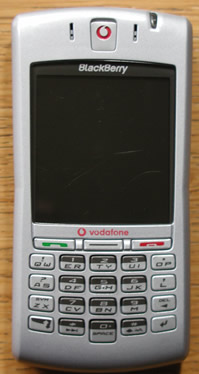 Following on from my recent detailed review of the Vodafone 7100v Blackberry, I thought it would be worth passing on a few tips I’d learnt over the process. One attempting to reassure readers through the scary process of upgrading the operating system on the 7100 Blackberry; the other, a solution for syncing your information with an Apple Mac – not something that is natively supported by RIM or Vodafone.
 After updating the software, which by the way you need a Windows computer for, I set about syncing the Blackberry with my Mac. My existing phone, the Sony Ericsson P910i, works correctly out of the box with Mac OS X’s iSync application, syncing wirelessly over Bluetooth within a few seconds.


 The insatiable appetite of hungry surfers desperate for more information, analysis and intelligence has fuelled a database market growth of 10.3 percent in 2004, according to research released by the Gartner Group.
 Despite being a still a relatively small part of the overall RDBMS market, the Linux segment is as hot as an extra spicy vindaloo, registering 118 percent growth in 2004, more than doubling from US$300 million in 2003 to over US$650 million in 2004.
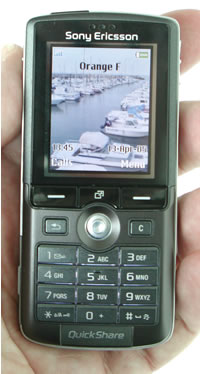 About a month ago I had the chance to spend two days with a pre-release version of the Sony K750i handset and as it’s now closer to the release of the handset, I thought an overview of the product might be timely.
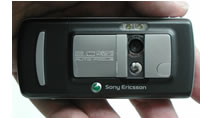 You morph it in to a camera by sliding the lens cover at the back of the device. Using the 2mpx camera you can easily captures clear pictures with vivid colours during light days.
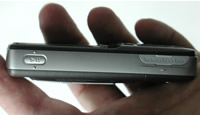 Video recording is OK, given the devices restrictions.
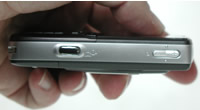 I’d just assumed the K750i would have a ‘normal’ headphone jack, letting me choose the headphones that excited me, but the provided headphones had to be connected via a Sony-interface at the bottom of the phone. This brings obvious advantages, like them having a mic, letting to let you use them as a hands-free set.
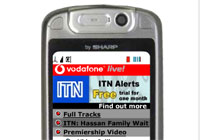 Vodafone execs spent the morning cackling wildly to themselves, throwing wads of dollar bills in the air and rolling around silk-covered beds covered in cash as record revenues and profits for its full year results were announced to the world.
 But in-between triumphant licks of triple-thick Cornish clotted cream, Sarin sounded a cautious note, warning that competition was rising.
 Vodafone performed particularly well in strong markets such as the US and Spain, with revenues growing at more than 20% year on year.
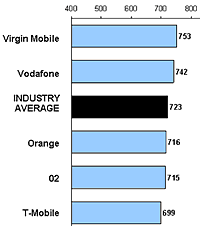 Orange has triumphed in a study rating customer satisfaction among mobile phone contract providers, with Virgin Mobile coming in top in the pre-pay sector, according to the 2005 UK Mobile Telephone Customer Satisfaction Study, run by J.D. Power and Associates.
 The authors of the study claim that the results reflect the positive impact of increasing competition and lower tariffs.
 The contract segment seemed a well-chuffed bunch too, with satisfaction levels rising to 733 index points from 720 index points in 2004.
 Mobile technology and photo messaging is still a hot potato, with 35 percent of all mobile owners snapping on camera phones and 21 percent sending photos from their mobiles.
 Like the spotty geek who turns up in the pub with a stunner on his arm, Bluetooth has confounded critics by reaching the significant milestone of five million Bluetooth units shipping per week.
 “When you couple that with the recently announced collaboration between the Bluetooth SIG and UWB,” Foley continued, “Bluetooth technology will further reinforce its leading position far into the future. Even today, we expect this will have a positive impact in Bluetooth uptake.”
 Seizing a convenient opportunity to squeeze in a bit of PR, Rosenberg added, “Already today, Nokia has introduced state-of-the-art mobile devices that allow data transmission using both high- speed cellular networks, WLAN hot spot access, and Bluetooth technology.”
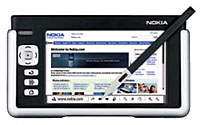 Nokia has surprised pundits at the LinuxWorld Summit in New York by announcing their new Nokia 770 Internet Tablet, a handheld Wi-Fi device for accessing the Internet around the home over a wireless broadband connection.
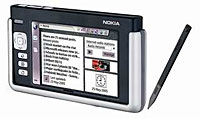 The included 1500mAh battery should keep going for about 3 hours of browsing or 7 days of standby time.
 Unlike some teensy-weensy mobile displays, Nokia’s sizeable 800×480 pixel screen should make browsing the web and interacting with email a reasonably practical proposition.
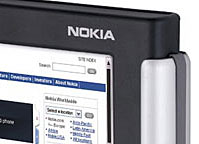 Naturally, there’s an orgy of acronyms detailing the zillion and one audio and video formats that the unit supports (deep breath): MP3, Real Audio, MPEG4, AAC, WAV, AMP, MP2 audio support, with MPEG1, MPEG4, Real Video, H263, AVI, 3GP video support and a slew of common graphics formats supported, including Animated GIF JPEG, BMP, GIF, TIFF, PNG and SVG-Tiny. Phew!
 “Linux is a logical choice for the Nokia 770 Internet Tablet as Linux and the Open Source development platform provide us with fast and efficient solutions to build products for this new Nokia product category,” added Janne Jormalainen.