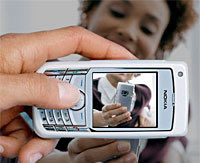
 New research from Strategy Analytics reveals that 257 million camera phones were shipped worldwide, representing 38 percent of total handset sales in 2004.
This figure was up sharply from the 84 million units sold last year (16 percent of total), in 2003.
The global research and consulting firm also reported that despite their generally shoddy quality, sales of camera phones are now outselling digital still cameras by almost 4 to 1.
Last year, 68 million digital still cameras were sold, with sales growing 40 percent annually (up from 49 million units in 2003).
“Global camera phone sales grew by an impressive 200 percent year-over-year in 2004,” commented the impressively monikered Neil Mawston, Associate Director of the Wireless Device Strategies (WDS) service at Strategy Analytics.
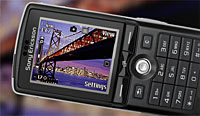 “Nokia led the pack, with an 18 percent worldwide market share, followed closely by Motorola at 17 percent, and Samsung in third position at 13 percent,” he continued.
Chris Ambrosio, Director of Strategy Analytics’ Global Wireless Practice, also fancied a go on the mic: “The digital still camera market is running out of steam. Vendors such as Kodak, Canon and Fuji will find growth harder to achieve in 2006.
Camera phones will eventually capture 15 percent of the low-end digital still camera market by 2010, while attempts to sell households in developed markets a second or third device will be restricted by the ubiquity of multi-megapixel camera phones”
The Strategy Analytics’ 2004 Global Camera Phone report also noted that VGA sensors (640×480 pixel) will still be the “sweet spot” for camera phones in 2005, but vendors will soon be screaming, “look at the size of our megapixels!” as a means of getting one over their rivals in the high end market.
 These ‘Pixel Wars’ are expected to drive higher megapixel handset demand to 3 in 10 sales worldwide in 2005.
Strategy Analytics concludes that removable memory media will be standard issue on camera phones by the end of 2007, but there’ll still be a mixed bag of wireless connectivity options on offer (e.g. USB, WLAN / WiFi, Infra-red, Bluetooth, etc.), forcing manufacturers of accessory products – like printers – to support a wide range of solutions.
 Yahoo has whipped out its wildly wedgified wallet and snapped up the online photo-sharing service Flickr, less than a week after launching a beta test of its new blogging tool.
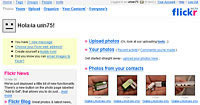 There will be some early integration, however, with the ability to log into Flickr using a Yahoo ID and password.
 (CeBIT, Hannover) Wandering around the Sony products at the pre-CeBIT press conference, I came across the DSC-T7, the smallest, sexiest model whos roots lay with the DSC-T1.
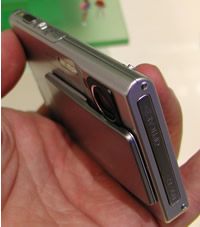 a sliding cover that both covers and protects the lens and switches the camera on. Measuring only 14.8 mm / 0.6 in at the lens cover, and 9.8 mm / 0.4in for the main body, it packs 5.1m pixel. The back is taken up with a 2.5″ TFT Hybrid LCD, displaying 230,000 pixels.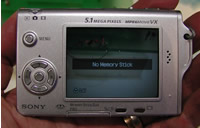
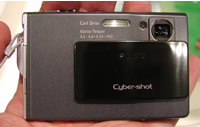 Nothing definite on release dates or price but the talk in the corridors is it should be around in May for around 375Euro, $500, 260 UKP.
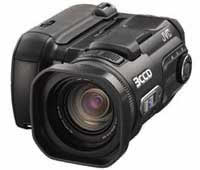 The diminutive JVC GZ-MC500 comes with three 1/4.5-inch CCD that records high-quality MPEG-2 video onto CompactFlash microdrives, with a 4 gig card, capable of storing up to an hour of “DVD-quality” video.
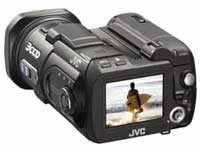 Translated into a language approaching English, this means that the camera is able to produce thumping great 5-megapixel with a resolution of 2560 x 1920 pixels still shots. This is second only to Samsung’s latest Duocam camcorder.
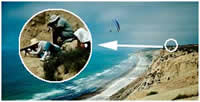 Physicist Graham Flint is working on an ultra-high-resolution portrait of America, creating a series of truly enormous gigapixel images taken with a camera made up of decommissioned Cold War hardware and Wired has discovered him (link below).
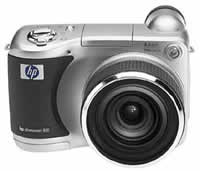 HP is making an interesting move in the digital camera market. The company’s latest technical wizardry is a system in which digital cameras could be equipped with circuits that could be remotely triggered to blur the face of those who don’t want to have their photo taken.
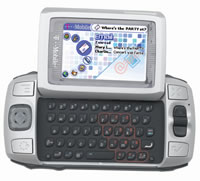 SideKick II, Danger’s successor to its Sidekick “smart phone.” hits the US shops running on Wednesday. The launch happens today though in Santa Monica where you can also buy the 25 percent slimmer version a day earlier.