When is a 300Gb hard disc not a 300Gb hard disc? When it’s in a Sky box. The fruit of Sky’s much discussed drive partitioning was revealed today, with the announcement of a March launch for Sky Anytime on TV.
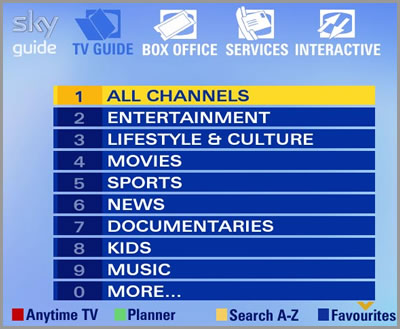
Sky Anytime on TV is a push video service that will populate users’ Sky HD (and some Sky+) PVRs with shows from the Sky network, plus Artsworld, National Geographic, Disney and the Biography and History channels. In a one-to-one briefing today, we got to sample the Anytime on TV service, not to be confused with Sky Anytime on PC or the yet to surface Sky Anytime on Mobile. For brevity, we’re going to call Sky Anytime on TV, SAoTV.
SAoTV consists of around 20 to 25 programmes, ranging from half-hour comedies to full length movies, chosen to represent the best of the weeks programming. In the wee hours of every night, a number of assets (between 1 to 6 hours of TV) will be pushed to the Sky box. At launch, every subscriber will receive identical content, although personalisation of SAoTV is ‘on the road map’, according to a spokesman.
Where it’s available, HD subscribers will receive their SAoTV content in High Definition and (in the first phase at least) all content is free from adverts, with the exception of an intro promo hat can be fast-forwarded through, like any Sky recording.
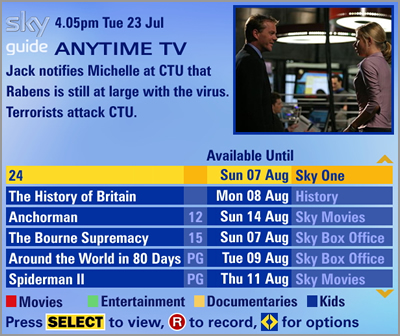
The SAoTV service enjoys its own instant access button – the red key – whose previous occupant (HD Channels) now receives its own menu entry. It’s presented in a similar way to the Planner screen, with the addition of a live video preview window showing a trailer of the highlighted show and some promotional text.
As new shows arrive nightly, older programmes are bumped down the SAoTV listings. Each programme has a clear expiration date, doing a Cinderella-style pumpkin vanishing act at midnight, seven days after its first appearance. If you want to keep a show permanently, you simply hit the Record button any time during that week to add it to your Planner.
The SAoTV service will initially be free and contain only programmes that have been previously broadcast, although Sky hasn’t ruled out charging for content or including exclusive previews in the future.
Sky Anytime on TV will be available to all HD subscribers, as well as owners of the most recent Sky+ boxes (those with partitioned hard drives): currently around 1 million households. Anyone who bought a Sky+ box within the last year should be able to use the service, although Sky will be writing to each subscriber to alert them.
Sky is also rolling out the Anytime brand to cover its Sky by broadband and Sky by mobile services.
Our take? The Sky Anytime on TV services is largely a win-win situation. Sky gets to promote high profile, expensive acquisitions like Lost, 24 and blockbuster movies – and we get to watch them free from adverts and without having to remember to set the timer (or rely on the occasionally erratic Series Link). Of course, it would be nice to see a wider range of channels on board (negotiations are on-going, but don’t expect to see the terrestrial broadcasters any time soon).
However, there will always be the argument that grown-up TV viewers should be free to populate their own hard drive as they see fit – which makes the timing of Sky Anytime on TV all the smarter. HD and Sky+ subscribers have had nearly a year to get to accustomed to their truncated storage space, making the Anytime service seem like less of an intrusion and more of a bonus.
 Both IBM and Intel have announced what they are calling major jumps forward in the design of microchips.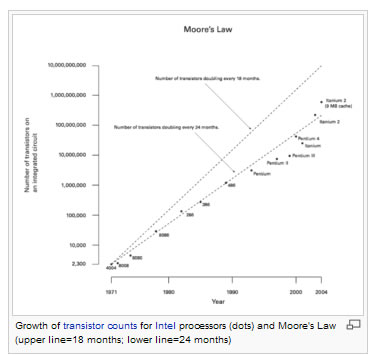
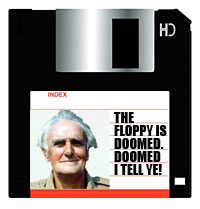 Electronics giant PC World has announced that it is to stop selling floppy disks once the current stocks run out.
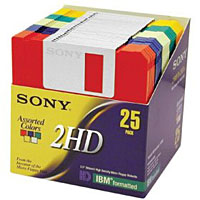 In decline since the late 1990s, the floppy once ruled supreme, shifting more than two billion units in 1998 – a figure now down to a measly 700 million last year.
 Casio has knocked out two additions to its pocket pleasing, ultra-slim Exilim Zoom range in the shape of the 10.1-megapixel EX-Z1050 and the 7.2 million pixel Exilim Zoom EX-Z75 cameras.
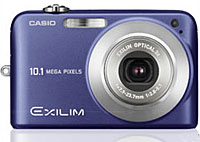 Onboard there’s Casio’s EXILIM Engine 2.0 offering new motion analysis technology, with the camera able to rattle off a claimed 7 shots per second until the memory tank hits full.
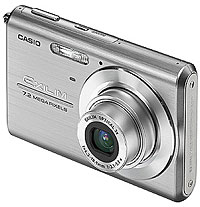 EXILIM Zoom EX-Z75
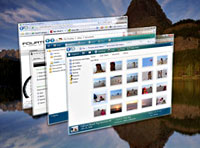 Bill Gates launched Vista this morning by emphasizing the role of the general public in its conception. “We’ve got over 5 million beta testers to thank,” he told a packed audience at the British Library in London. “They’ve helped to make sure that Vista is the highest quality product we’ve ever released. And then we picked 50 families and talked to them about how they used computing in their daily lives, generating over 800 changes in the final version.”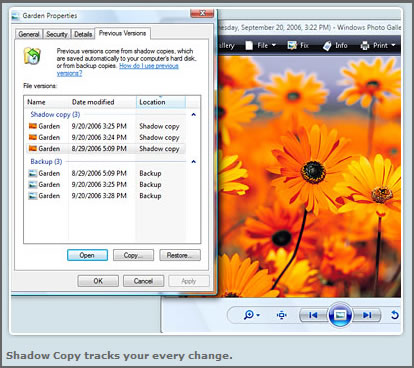
 So I’m being bombarded by Apple’s super-expensive advert campaign telling me how great Macs are and how only dull business nerds bother with PCs.
 PC users are represented as dull business bores who wouldn’t know what fun is if it French-kissed them in the buttocks, while Mac users are seen to be spontaneous, fun-loving bon viveurs, hurtling along the highway of creativity at reckless speeds.
 “Fair enough,” I think to myself, confident of a slick, smooth, user-friendly solution coming along.
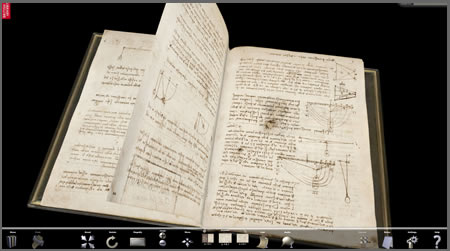
 Two notebooks containing work by Leonardo da Vinci, know as the Codices, have been digitally reunited today at the launch of Windows Vista.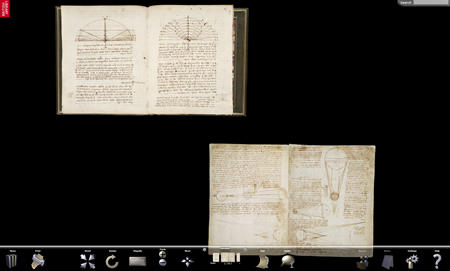
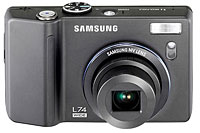 Hot off the factory presses are three new all-black models, all with distinctive and stylish looks.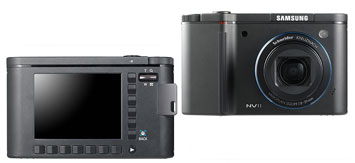
 The i7 packs a 7.2 megapixel sensor, 3x optical zoom, Advanced Shake Reduction (ASR) technology, SVGA video, face recognition ISO 1600 and even an integrated MP3 player with simulated SRS 3D sound.
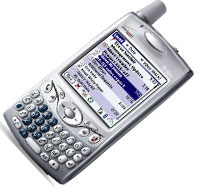 Mobile phone users are increasingly getting jiggy with the wee buttons on their handset as new figures show mobile Internet access soaring.
 Although the figures suggest we’re rapidly turning into perma-connected, perambulating Internet fiends, Thomas Husson, a mobile analyst at Jupiter Research was quick to suggest that much of the recent increase could be down to Christmas gift-giving.
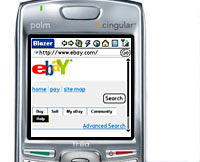 “The continued advancement of handsets means people are beginning to spend more time familiarising themselves with new services,” Lane added.
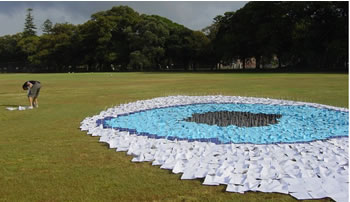 They started at 4am, pegging 2,500 sheets of paper in the grass of a park to form a giant eye – the pun being that Australia was also watching the world.