 Google’s virtual world domination plans continue afoot with the beta launch of their new blog search service, making the company the first major search engine to offer comprehensive blog and feed search capabilities.
After snapping up Pyra Labs – the folks behind the hugely popular Blogging publishing service – over two years ago, bloggers have been waiting patiently for Google to implement their promised blog search.
Although Google’s current Web search lets users rummage around blog formats such as RSS and XML, the new search facility aims to include all blogs that publish a site feed (either RSS or Atom).
According to Jason Goldman, Google product manager for blog search, their shiny new search engine scans content posted to blogs and feeds in virtually real-time.
“We look for sites that update pinging services, and then we crawl in real-time so that we can serve up search results that are as fresh as we can,” said Goldman.
 Google’s new service (sporting its trademark, no-frills interface) can be found at google.com/blogsearch and at www.search.blogger.com with a Blogger branded design.
How the searching works
The Google Blog Search works exactly the same as the regular Google search with results being sorted by date and recent posts appearing at the top of the list.
Results can also be searched by relevance, using a technology based on Google’s Web search ranking algorithms.
An advanced search interface is available with options to specify titles, authors, languages and more.
 The Blogger version comes with a branded interface with an extra “use search options” link giving access to most common search advanced options, like searching in specific posts, entire blogs or specifying a date range to search within.
Results can also be limited to a specific language, with the option to apply the Safe Search filter to results.
You can discover who’s linking to a post or blog using the link: command, and blog searches can be saved as an alert that gets updated any time new content is posted matching you query.
Getting your blog listed
You can’t manually submit your site at present, but Google say that they’ll be introducing the feature shortly.
Currently, Blogs that publish a site feed in any format which automatically pings an updating service (such as Weblogs.com), should be picked up.
Google Blog Search is available in English as well as Brazilian Portuguese, Dutch, French, German, Italian, Korean, Russian, and Spanish, with additional languages on the way.
google.com/blogsearch
www.search.blogger.com
Google Blog Search FAQ
 Hard drives are soon to go the way of 8 track cartridges and steam powered radios according to Samsung’s semi-conductor CEO Dr. Chang Gyu Hwang.
 With a cackle in his voice and a size nine sending a RAID array skywards, Hwang reckons that we’ll soon be seeing laptop memory cards with 32GB of memory, based on multiple 16Gb flash chips.
 A big advantage of using flash memory in notebooks is that the technology is resistant to the sort of mechanical shocks that can often knacker a hard drive.
 Mobile network 3 has announced two new content packages aimed at getting more customers logging on to its mobile Internet services.
 The network asserts that this limitation is to ensure that customers “can be sure that both front pages and sub-pages are viewable, that the speed of download is high and that all the site’s key activities are available”.
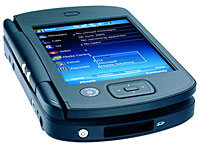 O2 has announced the launch of the o2 Xda Exec, the first PDA and mobile phone combo device to feature 3G.
 Reflecting its business focus, the phone comes with Pocket Outlook, Word, Excel, Powerpoint and PDF viewers pre-installed and offers Bluetooth, Wireless LAN, 3G and tri-band GPRS connectivity.
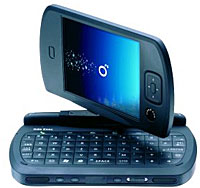 Combined with our service bundle, we believe that the O2 Xda Exec will build on the success of the Xda range, extending our market share still further into 2006.”
 Technical stuff:
 After demonstrating that high-definition television over copper was achievable through networks with increased bandwidth capabilities and compression techniques, France Telecom is looking to develop the technology and is currently testing VDSL2 transmission systems in its R&D Laboratories.
 All clear on that, now?
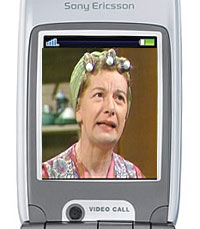 A report by Unstrung Insider claims that Mobile TV is set to become a breakthrough mass-market mobile data service, boosted by pioneering services offered by major global operators such as Orange, Vodafone, and SK Telecom.
 The report comments on the industry expectation that “one-to-many” mass-market mobile TV services may be more efficiently delivered over dedicated mobile broadcast networks using technologies such as DVB-H (Digital Video Broadcast-Handheld), DMB (Digital Multimedia Broadcast), and MediaFLO.
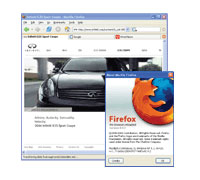 Mozilla have made their first preview of Firefox 1.5 Beta 1 – code named “Deer Park” – available to early adopters, Web developers and Extension writers.
 Mike Schroepfer, Mozilla’s director of engineering said that automatic updating will reduce the size of patches by 10 to 20 times, explaining that the feature will remove the current requirement for users to download the entire browser to obtain fixes.
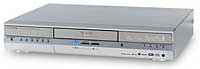 Toshiba has unveiled its new DVD recorder with the handy ability to set up and record TV programmes via email.
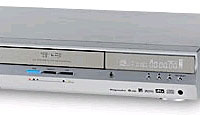 The RD-XS54 comes with Toshiba’s EASY NAVI menu and the TV Guide On Screen Interactive Program Guide for simple, easy-peasy channel navigation and recording scheduling.
 In a feast of conglomeration and convergence, Internet auctioneer giants eBay are swallowing up Luxembourg-based Skype, the world’s leader in Internet phone services.
 The company generates revenue by charging small fees for calls to non-Skype users and for Skype users to receive calls from callers not using the software. Skype also charge a fee to provide a voice mail service.
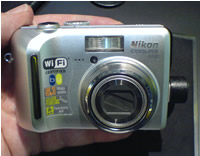 Although on the surface Nikon’s brand new Coolpix P1 and the Coolpix P2 cameras look like standard fare from the photo giant, they’ve got a trick up their sleeve – they both offer Wireless LAN support (IEEE802.11b/g).
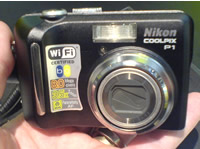 This wireless connection lets users transfer images off the camera’s storage card or transmit them ‘live’ as they’re snapped directly to Nikon’s PictureProject software.
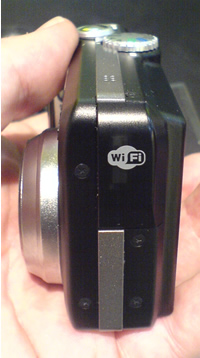 As for the Coolpix P1 and P2 cameras, there’s nothing much to get too excited about, with the two identical cameras offering 8.0 and 5.1 Megapixels respectively with a 3.5x optical zoom (36-126mm equivalent, f2.7 – 5.2).
 Framing and viewing images is taken care of with a sizeable 110,000 pixels 2.5″ TFT LCD screen and there’s a SD slot and USB 2.0 connectivity onboard.