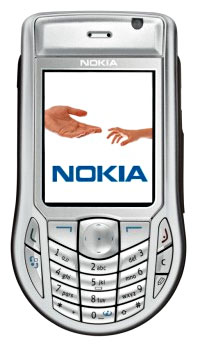
 A new UK survey shows a dramatic increase in the use of picture messaging with WAP also growing in popularity.
The results of a survey conducted by mobile media company Enpocket and Harris Interactive for Q4 2005 show that 36% of mobile owners now use their phones to send and receive picture messages, up from 21% at the same period last year.
MMS usage levels have soared over the last year amongst the tech-savvy 18-34 age group, and doubled in all age groups above 34 years old.
With easy headlines in mind, these studies always like to break the figures down by sex, so we can tell you that women are more keen on using MMS, with 40% using the medium compared to just 33% of blokes.
 When it comes to seeking mobile information online, it’s the geezers who are keenest to get their keypads rattling, with 38% accessing mobile Internet (WAP) sites compared to 26% of ladies.
Overall, a third of all mobile users are ready and willing to get WAP’ing, with the technology becoming mainstream amongst 18-24 year olds (61% saying they had recently used the mobile internet) and increasingly popular with 25-34 year olds (50%).
“Mobile as a communications medium is getting richer and a lot more exciting,” said Mike Baker, President and CEO, Enpocket, before going on to plug his company with gusto (we ignored that bit).
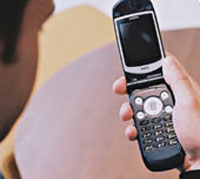 Elsewhere, the Mobile Data Association have calculated that WAP page impressions are now approaching the 2 billion per month mark, with the Mobile Media Monitor revealing the most popular types of site on the mobile internet.
Not surprisingly, those infernal ringtone sites are the most popular with 48% of WAP surfers visiting one or more in the last three months, followed by news sites (41%), games sites (36%), sports sites (33%), entertainment sites (31%) and weather sites (28%) with just 6% seeking small screen titillation from adult sites.
Lots of buzzwords available at the Enpocket site
 Yahoo is launching a new service aimed at making it easier for users to connect to Yahoo Internet-based services through multiple Web-connected devices, including mobiles and TVs.
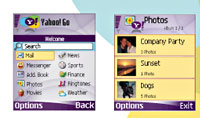 So long as the device is connected to the Internet, users will be able to access their personal Yahoo content such as photos, email and address books.
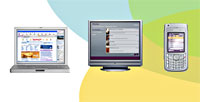 Yahoo! will be rolling out their Go TV service in the next few months, with the service enabling users to access various other Web based services for TVs, including local movie listing search and personalised MyYahoo! functions.
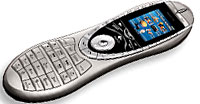 If you haven’t been to CES, you may have heard of the headache inducing noise, leg-ache inducing size and debt-ache inducing taxis and hotel rooms. We’ll save you all that and run over the highs and lows from this year’s CES 2006 show – shame we can’t help out with the glitzy lights of Las Vegas.
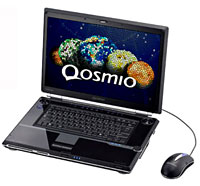
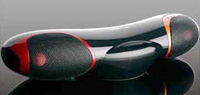 Satellite radios from XM and Sirius while Toshiba’s new HD-DVD playing Qosmio laptop gathered attention. It’s the first laptop to debut with a built-in HD-DVD player. The laptop can also play hi-def discs on your TV. The Qosmio is expected to hit the streets in March 2006 – months before the first Blu-Ray boxes are due out.
 It looks great, but you’ll need deep pockets and an understanding partner to justify forking out $399 for a humble remote control.
 Elsewhere, the PC World editors were less than impressed with the ongoing willy-waving battle for the biggest plasma screen, arguing that they’d prefer it if the manufacturer’s considerable energies were directed into producing affordable plasmas for regular folks.
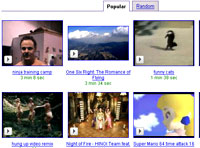 Slapping iTunes around the face with their hefty gauntlet, Google have laid down a challenge to iTunes with the announcement of their new video and television Internet service, the Google Video Store.
 The service promises to “democratise” video sales, letting wannabe Spielbergs sell their movies on Google Video Store, with Google taking what Larry Page has described as a “very low” percentage of the sale cost.
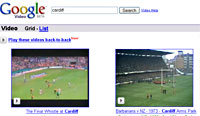 Visitors to the Google Video homepage at
  Like a pub drunk wanting to take on the entire world, Google have gone over to Microsoft’s table, knocked over their pints and invited them out for a scrap.
 Marissa Mayer, VP of search products and user experience at Google commented, “The pack has been created to give users a way to painlessly install all the essential software they need – pre-configured in a sensible way – in a matter of minutes. Better yet, users don’t have to keep track of software updates or new programs – we maintain and update all the software for them.”
 Josh Bernoff, a media and internet analyst at Forrester, a technology research company, described the move as a “direct action to challenge Microsoft,” adding, “Google is saying, ‘We can manage the browser and other elements of the computer-desktop experience better than you’.”
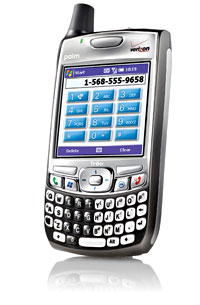 Palm have finally announced the launch of their much anticipated Windows Mobile powered Treo 700w smartphone.
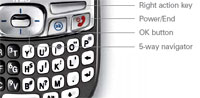 The transition to Windows has, however, seen the TFT screen resolution shrink from Palm’s 320 x 320 pixels to a more miserly 240 x 240 pixels (the same as the Treo-alike HP iPAQ hw6500 series). Early reports suggest that the screen is somewhat washed out compared to the current Palm Treo 650.
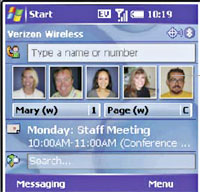 The removable battery gives up to 4.7 hours of talk time or up to 15 days of standby.
 If Palm have successfully managed the transition to the Windows platform, we can expect this new smartphone to be a winner, although we do wonder what long-term impact it may have on their Palm OS range.
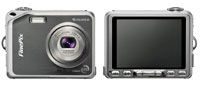 Fujifilm have rolled out their new 5.1 million pixel FinePix V10 Zoom, which they’re billing as a “next-generation digital compact camera with distinctive looks and an extra dose of fun.”
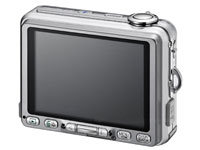 These include a shooting game, blockbuster and a maze puzzle, played via the camera’s controls which have been positioned like a console for extra playability.
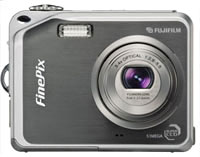 Although we’ve never felt the urge to play a shoot ’em up on our digital cameras, the rest of the camera seems to shape up pretty well, with the FinePix V10 Zoom sporting a large three inch, 230,000 pixels LCD screen in a pocketable design.
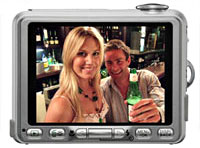 The camera boasts Fujifilm’s excellent Super CCD HR sensor, with their Real Photo Technology offering a huge range of sensitivity from ISO64 to ISO1600, making the camera suitable for low light, ‘natural’ photography.
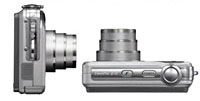 Sadly, Fujifilm are sticking with their rather obscure xD-Picture Card, which means that most photographers switching brands will have to invest in a new memory card format.
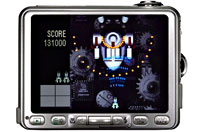 We’re not so convinced of the wisdom of bolting on arcade games on to a camera though – not only does it seem an unconvincing example of digital convergence, it’s also likely to result in a dead camera battery.
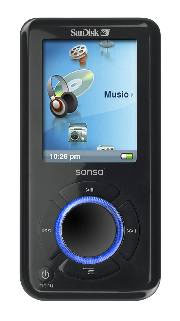 Sandisk have whipped out two iPod nano-style flash-based music players at CES 2006.
 Clearly suffering from an overdose on the hyperbole intake, Michael Dell has been getting all lyrical about Dell’s new ideas, unveiled at CES 2006.
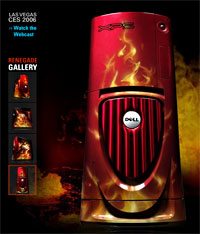
 First up is the new Dell XPS 600 Renegade, a powerful, high-end gaming PC described as a (here we go again) ‘manifestation of power so pure it can only be described as supernatural.’
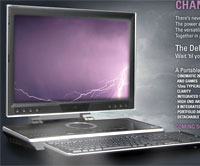 The attractive monitor offers WQXGA resolution (that’s 2560×1600 pixels to normal people), fast 11ms grey-to-grey response time, 700:1 contrast ratio and an integrated 9-in-2 memory card reader.
 We’re not sure what a ‘portfolio’ design is, but this thing’s sure got it, along with ‘anodized articulating hinges’ and a detachable wireless keyboard and mouse.
 Factory sales of consumer electronics are set to soar to a record high of $135.4 billion (~£77bn ~Ä112) in 2006, according to the Consumer Electronics Association’s annual industry forecast.
 Projections for 2006 and year-end figures for 2005 are included in CEA’s bi-annual US Consumer Electronics Sales and Forecasts report, released every year at the International CES and updated mid-year.
 In 2005, DTV sales grew 60 percent to $17 billion, with the market fuelled by the growing popularity and competitive price declines of flat panel LCD and plasma displays, which accounted for 40 percent of all DTV sales.
 “MP3 technology helped boost the audio and accessories markets in 2005. With the introduction of video playback capability, MP3 player sales surged 200 percent in 2005 to $3 billion. Trends in 2006 should be no different,” he added.