March 2007

  • Nearly Half Of All UK TVs Digital-ised: Ofcom

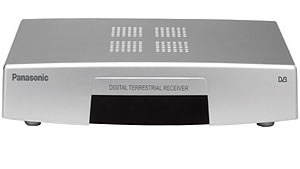
    The number of UK TVs connected to digital devices – ones that can receive digital TV signals – has increased to 48.5% reports Ofcom.

    Nearly Half Of All UK TVs Digital-ised: OfcomThe quarterly report snappily titled, Communications Market: Digital Television Progress Report, covering the fourth quarter of 2006 (October-December), shows the figures are up from 39% in the same period the previous year, and also from 44.7% in the Q3 2006.

    The run up to Xmas is traditionally a time where many more new TVs are bought, in a desperate attempt to increase the ‘enjoyment’ of Xmas by numbing their brains watching ‘entertainment’ on TV. It appears no different this year as a further one million UK homes acquired digital televisions for the first time.

    Previously, Ofcom used to highlight the number of UK households that were digital-TV-enabled, which has now reached 77.2%. This figure received a fair degree of criticism as, although it sounded impressive, didn’t give a true reflection of what the impact of switching off analogue would be for UK TV watchers.

    There’s been an interesting announcement in the US, where the American households will be offered up to two $40 vouchers to switch to digital TV. The UK government has actively discouraged thinking like this in the UK.

    As ever, there’s a huge pile of numbers that will be poured over by those in the industry who get quite excited about this type of thing. We’re normally in this category, but for some reason were not too excited about this quarter.

    Communications Market: Digital Television
    Progress Report, Q4 2006

  • Online Bloke’s Mags See Traffic Soar

    Online Bloke's Mags See Traffic SoarBlokes are generally an easily pleased bunch when it comes to magazines – just shove in loads of high tech gadgets, big cars, some football, lots of wobbling booby babes, video game reviews, pics of dangerous sports and perhaps a page or two on cooking to show off their sensitive side – and they’re as happy as a pig in dirt.

    Of course, now that they can get most of the above (and more) all over t’internet, mens print magazines have had to set up their own web presences to keep the ol’brand loyalty going and new figures from Nielsen//NetRatings show that the blokes are digging the concept.

    Their stats show that Maxim is currently most popular UK online men’s lifestyle mag, Bizarre the fastest growing with Monkey enjoying the most loyal audience.

    Online Bloke's Mags See Traffic SoarThe phwoaar-tastic Loaded site apparently has the “greatest affinity” with men, with 88% of visitors to their site being of the geezer persuasion, followed by Nuts (83%) and Zoo (81%).

    GQ is almost a girly mag in comparison with more than half (55%) of their online audience being laydees (or ‘foxy chicks’ as Loaded might put it).

    Market leaders Maxim managed to notch up 479,000 Unique Visitors in January 2007, putting it 27% ahead of second-placed FHM (378,000), although visitor loyalties seem to easily switch: FHM was the most popular site in October 2006, while Monkey ruled supreme in November and December 2006

    Online Bloke's Mags See Traffic Soar“The last quarter has seen the big three online men’s lifestyle magazines – Maxim, FHM and Monkey – vying for top spot. On its official launch in November 2006, Monkey climbed straight to the top of the tree but the last two months have seen a slight, if steady, drop in popularity to fall behind Maxim and FHM,” commented Alex Burmaster, European Internet Analyst, Nielsen//NetRatings, commented:

    Dennis Publishing were responsible for the three fastest growing online men’s magazines, with Bizarre scoring a 255% UA growth, Maxim (124%) and Monkey (99%) between October 2006 and January 2007.

    The soaring online figures are in contrast to tumbling print figures, reflecting the importance of the online space to traditional publishers.

    Via

  • Scoopt Citizen Journalism Service Snapped Up By Getty

    With ‘citizen journalism’ being one of the loudest buzzwords in the bright shiny Web 2.0 world, it’s no surprise to see the big media agencies looking for a slice of the action.

    Citizen Journalism Service Scoopt Snapped Up By GettyMajor news agencies made great use of public camera phone footage after the London 7/7 bombings, with several images making the front page of newspapers.

    The citizen journalism photo agency Scoopt currently offers a service that lets users text or email any newsworthy photos and video footage, which the company then endeavours to flog on to the international press on their behalf .

    Acquiring the company for an undisclosed sum, Getty Images is looking to fully integrate this service into the output of their pro photographers.

    The small print

    Camera phone snappers uploading imagery to Scoopt keep their copyright but agree to grant the agency a 12-month exclusive license that lets them re-license the work to one or more publishers, with a 50/50 split on the moolah.

    Citizen Journalism Service Scoopt Snapped Up By GettyWith Getty’s well established media network, amateur snappers should expect increased prospects of shifting their work, although Getty hasn’t commented if the payment share is to remain the same.

    The company has also said that it intends to invest in technology upgrades and introduce further enhancements to make the Scoopt site more accessible to punters.

    “New technology has made it easier to capture and distribute imagery, leading to citizen photojournalism that is increasingly relevant to the news cycle,” commented Jonathan Klein, co-founder and CEO of Getty Images.

    “While this genre will never replace the award-winning photojournalism for which we’re known, it’s a highly complementary offering that enables us to meet the evolving imagery needs of a broad customer base,” he added.

    Via

    How to take good camera phone pictures

    Scoopt’s site also provides a handy photo taking guide for wannabe citizen journos, and here’s their top ten tips:

    1 Hold the camera steady.
    2 Concentrate on the subject.
    3 Be aware of what is happening around you.
    4 Try to connect with your subject but stay slightly detached to look for the best time to take a picture.
    5 Go the extra mile to get the picture — but don’t take risks and don’t break the law.
    6 Keep looking and snapping even when you think you have the scoop.
    7 Don’t be put off by bad light/rain/snow/a duff viewpoint. Sometimes these elements can add to a picture.
    8 Be VERY patient.
    9 Be single minded. Getting the picture is your objective. Think in terms of images
    10 Hold the camera steady! (Did we mention that one already?)

  • Intel Announces Solid State Drives And Green Processors

    Just like clunky eight track cartridges, brick sized cellphones and desk hogging CRT monitors, the trusty hard disk could be heading for oblivion as Intel announce their first move into the flash drive market.

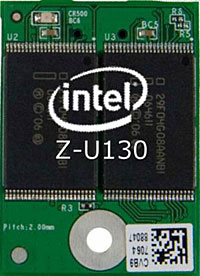
    Intel Announces Solid State Drives And Green ProcessorsYesterday, the electronics big boy elbowed its way onto the Flash Memory table clutching news of their Intel Z-U130 Value Solid-State Drive, offering USB 2.0/1.1 interfaces.

    Despite its instantly forgettable name, Intel reckons that the NAND flash memory can whip the spinning botty of hard disk drives and removable USB storage devices, offering nippier boot times, embedded code storage, faster data access, silent operation and lower power consumption.

    Although no one’s predicting that flash memory will replace hard disks quite yet (mechanical drives still enjoy a considerable cost advantage at large capacities), Greg Matson, product marketing manager for Intel’s NAND flash memory division reckons they could provide a more reliable and cheaper way of storing information on PCs for emerging markets.

    The drives could also be fitted into PCs and servers as a way to speed up the boot process, and thus deprive workers of a good excuse to pop out for a walk, “while the PC’s starting up.”

    Intel is currently keeping schtum about the pricing for their Z-U130 Value Solid-State Drives (it doesn’t get any more memorable the second time around, does it?) but the capacities will vary from 1GB to 8GB, with 8GB drive not expected to emerge until the end of the year.

    Intel Announces Solid State Drives And Green ProcessorsSource

    Intel’s Green Xeon Processors

    Elsewhere, Intel were giving their Eco-Trumpets an extra long parp with the announcement of two new Quad-Core Xeon processors – the L5320 and L5310.

    Intel claims that these offer between a 35 and 60 percent reduction in power consumption on low-power, quad-core processors designed for high end users like data centres, blade servers and financial industries.

    “Intel has really responded to the industry’s call to deliver unprecedented breakthroughs for datacenter energy efficiency,” frothed Kirk Skaugen, VP of Intel Digital Enterprise Group and GM of the Server Platform Group.

    “IT managers can get outstanding quad-core Intel Xeon server performance today and at no premium to dual-core products,” he added.

    Via

  • PS3 Home: The Virtual World Multiplies

    The Virtual World MultipliesSony is gearing up to launch a rival to popular online virtual world Second Life later this year. Playstation Home is a massively-multiplayer online game (MMO) in which a user adopts an avatar (a digital character which represents them) which they are then free to move around a virtual world, interacting with other avatars. In their Developer FAQs (PDF), Sony describes the project:

    Home™ is a real-time 3D, networked community that serves as a meeting place for PLAYSTATION3 (PS3) users from around the world, where they can interact, communicate, join online games, shop, share content and even build and show off their own personal spaces.

    It looks like Home may well be going beyond Second Life in a few areas. Gaming is the most obvious, perhaps unsurprisingly given the link to the Playstation. Users will be able to play various different arcade games around the virtual world through their avatars. So I might decide to go for a virtual drink in a virtual pub with my virtual friends, and I would then be able to have a virtual game of pinball on a virtual pinball machine. You get the idea.

    The Virtual World Multiplies

    Probably more interesting is the ability to meetup with someone in Home, and then play a Playstation game with them over the Internet. Whilst the playing over the Internet idea is far from new, it is a unique way to approach it. It adds a social dimension to game play (along with the included voice chat) which could possibly make Internet gameplay far more addictive.

    Sony are also taking user generated content seriously; as a user of Home I will be given, for free, an apartment, which I can then hang my own pictures up in and customise to my heart’s content, presumably buying various virtual items from Sony to add to my dream virtual home.

    UGC is absolutely crucial for such games; it creates a feeling of ownership over the game for every individual user, making it far more sticky.

    The Virtual World Multiplies

    Commerce is not being overlooked. Sony state in their FAQs that:

    Home prioritises community and entertainment over ecommerce. That said, we believe that there will be ample opportunities for businesses and individuals alike to generate significant revenues from the Home platform.

    This is similar to the approach taken by Second Life and other MMO games, and it makes a lot of sense. Sony, and others who set up business in Home, will be able to make vast sums of money selling things which do not really exist and which cost little or no money to develop. In the modern world of games consoles being sold at a vast loss, manufacturers are looking at every possible avenue to create additional revenue streams.

    Second Life has been hyped enormously, with pop concerts and press conferences from real bands and companies happening exclusively within Second Life. Despite this, I have always held Second Life in the greatest disdain; I spent about 15 minutes playing it some time ago and was struck by the pointlessness of it all. Whilst there are many, many people who are fans of such games, I have rightly or wrongly assumed that they are either people without a social life, who are fascinated in the technology or who are only able to create meaningful friendships through such a program.

    I do not, however, treat Playstation Home with the same disdain. It seems that Home has a purpose, namely gaming, which should give the whole virtual world meaning. If I were able to afford a Playstation 3, I think I might well enjoy a quick stroll around Home to find someone to play against, and then actually playing the game with them. In Second Life all that is possible is the stroll, and I think that if virtual worlds are to live up to the hype, they have to offer more than a stroll.

    [Engadget was a useful source]

    Huw Leslie is editor of UK-based Web 2.0 and software blog Gizbuzz. He is the co-founder of the Oratos Media technology blog network, and his personal blog is For Crying Out Loud!
  • They Want Your Pod! Brixton On iPod Alert

    They Want Your Pod!Although some may already feel that walking around Brixton is akin to taking a stroll around another planet, we began to think we might have been transported to a parallel universe when we spotted bright garish yellow billboards appearing all around town exclaiming, “THEY WANT YOUR POD!”

    The signs were appearing everywhere – on lamp posts, railings and street furniture – warning the denizens of Brixton that large dark silhouetted shapes were hell bent on taking their “POD.”

    Fearing a Day of the Triffids-like invasion of Coldharbour Lane, we took a closer look and saw that the boards were illustrated by a large black blob of a humanoid facing up to a thinner humanoid sporting the trademark white cable of the Apple iPod player.

    They Want Your Pod!In smaller text underneath the screaming headline, “BEWARE” the sign goes on, “Street robbers are targeting persons using mp3 music players in this street!”

    It turns out that far from warning visitors of an impending alien pod-snatching mission, the signs are part of the ‘Safer Lambeth’ initiative by the Metropolitan Police.

    They Want Your Pod!Although the sign doesn’t actually tell you what to do to prevent being ‘jacked’ (© Richard Madeley ), we guess the iPod imagery is a way of advising music listeners ecstatically flailing their limbs a la iPod advert that they should show a little more discretion on the mean streets of Brixton.
    Of course, being Brixton, it was only a matter of hours before the sign was joyfully subverted, with stick-on labels in the same colour and typeface altering the message to read:

    “THEY WANT YOUR POD – BECAUSE YOU TOOK THEIR SOUL.”

  • Creative Slim Down Vision M and W MP3 Players

    In the highly competitive MP3 player market, every single ounce of extraneous lard could result in lost sales, so Creative’s boffins in Japan have been working hard to slim down their popular Zen players.

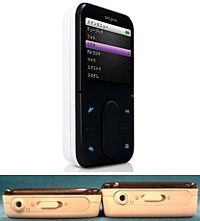
    Creative Slim Down Vision M and W MP3 PlayersFresh outta hi-tech Fat Farm, the new Zen Vision M and W models have managed to reduce their bulk by 15% on previous versions while wedging in a bigger hard disk.
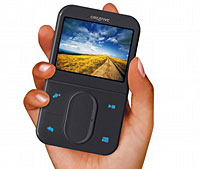
    Vision M
    Looking at the vital statistics, the Creative Zen Vision M measures up at a pocket pleasing 62x104x19mm (slimmed down from 22.1-mm to 19mm.)

    Creative Slim Down Vision M and W MP3 PlayersThe rather desirable little fella weighs in at a light as heck 170g (and that includes the battery) and comes with a 2.5 inch colour screen.
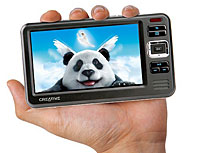
    Despite its featherweight form, the device manages to pack in a fairly generous 60GB of storage, which should be enough to keep punters entertained on all but the longest journeys (British Rail delays notwithstanding).

    Creative Slim Down Vision M and W MP3 PlayersVision W

    The Zen Vision W has also spent time on the juddery slimming belt machine, and now comes in a 134x75x22mm package (slimmed down from 26.4mm to 22mm) and weighs 280g, including battery.

    There’s also 60GB of onboard storage and a generous 4.3 inch display, although some may be wondering what happened to the 80GB and 100GB models.

    Creative Slim Down Vision M and W MP3 PlayersWhen?
    At the moment, there’s only been an announcement on the Creative Japan site, so it may take some time before us Brits can get our grubby hands on these puppies.

    Source

  • Elgato Ends Collaboration with Miglia

    We’ve just heard from Elgato that they are terminating their relationship. Although we’ve been told that the contract ended on 7 February, it’s only just being discussed publicly now.

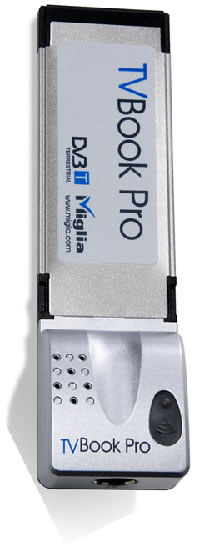
    Elgato Ends Collaboration with MigliaUntil then, Miglia has been bundling Elgato’s TVEye software with their digital TV DVB-T/Freeview/TNT tuners.
    Wanting further details, we first spoke to Miglia, who told us they could say nothing until a press release is issued tomorrow.

    A call to Elgato gave us slightly more information, but they were restrained by the non-disclosure agreement between the two parties.

    Elgato said that they were were saddened that the relationship had to come to an end, and that they had “tried [their] best to keep the relationship alive.”

    Looking on the bright side, they said that “The OEM business is only one part of our business. The bigger part is selling our own hardware with our software, which we will continue to do.”

    The official statement from Elgato is

    Elgato Systems announces that it has terminated the licensing agreement for EyeTV software with Miglia Technology, Ltd. Miglia can no longer ship, sell or advertise TV Tuner solutions bundled with Elgato’s EyeTV software.

    Customers using EyeTV with a Miglia TV tuner product are not affected by this change. Elgato EyeTV will continue to work with existing Miglia products. Elgato will continue to support existing Miglia/EyeTV customers with software updates and improvements.

    We’re waiting to hear back from Miglia which software they will be shipping with their product in the future.

    Miglia
    Elgato

  • BT Try To Vary Payphone Pricing

    In their constant pursuit for higher profits, BT have put a request into the UK uber-regulator Ofcom, to allow them to charge different prices for phone calls depending on where the phonebox is located, claim TelecomTV.

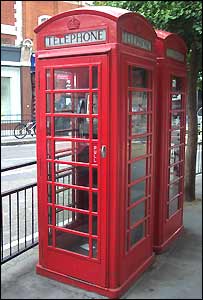
    BT Try To Vary Payphone PricingBT is under a legal obligation to provide phone boxes up and down the length of the UK, which they claim numbers 63,795. BT say that 40,500 of these phone boxes are unprofitable.

    BT is attempting to negotiate a three-year deal that would let BT “determine the acceptable pricing of pay-phone calls.”

    Try to get out of their obligations is not really playing the game is it? It’s not like their obligation to payphones is news to them.

    It’s got the ring about it along the lines of charging for directory enquiries. When BT was allowed to start charging for calls to directory enquiries, it was only ‘normal’ landlines that were effected. Calls to find out phone numbers were free from Payphone, as BT removed the printed telephone directories from them. A few years later BT had the rules changed and started charging from payphone, despite not returning the printed directories.

    BT claim that calls from payphones have dropped off by 40% in the last four years, no doubt due to the considerable rise in uptake of mobile phones.

    Digital-Lifestyles thinks this doesn’t make it right that people who live in remote locations should have to pay inflated prices for using the same payphone and connecting to the same phone network as everyone else, just because BT wants to make more profit.

    (via)

  • HD Photo: Microsoft’s JPEG Death Dream

    The 800-pound gorilla that is Microsoft is trying to get the world to shift from the global-standard JPEG format to their relatively newly-announced format, HD Photo.

    HD Photo: Microsoft's JPEG Death DreamLast week Microsoft went on a PR offensive to promote the new format, despite them having published the specification in November last year.

    It’s claimed that HD Photo offers twice the efficiency of JPEG – meaning the same quality of photo will take up half the amount of storage.

    Despite the HD at the start of HD Photo, there is no connection to the HDTV standard or format.

    It’s not surprising to hear that Windows Vista has native support for HD Photo images, and it can be easily added to Windows XP. Microsoft have also released a beta version of a plug-in for Adobe Photoshop, enabling people to save files in HD Photo format. They’ll not be charging for it, even when it’s released.

    Bold, to say the least
    Microsoft’s attempt to convert the world to using their new photo format is, to say the least, pretty ambitious given how every camera in the world uses the JPEG format to store images.

    Frankly we think Microsoft would have stood a better chance of success with HD Photo five plus years ago, before the price of storage, both of hard disks and portable memory formats, started plummeting. The same applies for the claims of needing less processing power to decode HD Photo images, as most new computers have more processing power than their owners know what to do with them.

    Their best chance of success will be to try and get photographers who shoot in RAW (uncompressed) format to save their images down to HD Photo, tempting them with less loss in their photos than JPEG currently provides.

    Wikipedia on HD Photo