The Legacy of Arthur C. Clarke, Review: IEE Lecture
 Yesterday evening saw a celebration of The Legacy of Arthur C Clarke at the IEE in London.
Rightly so. His fame not only stretched across the globe, it spanned fathering the communication satellite, to great fiction. Who can forget the seminal Sci-Fi classic 2001- A Space Odyssey?
During the addresses given by the assembled industry heavyweights, pontification was rife as they pronounced on the effect of satellite technology advances and where the industry stood in the communication world today.
To boil it down – satellites would be an important part of the communications mix, but it was unlikely to be as dominant as it was once thought.
Getting stuck right in was Olof Lumberg, formerly Chairman of Inmarsat, remarking on how the cabling of the planet was making some uses of Satellite technology passé.
Seeing quite how far Skype is disrupting businesses was interesting as key figures from the satellite industry noted that customer expectations brought about by Skype and similar VoIP technology had meant that the business model that ‘costs in’ the launching of huge satellites was becoming increasingly redundant.
 Professor Barry Evans of the University of Surrey considered the 1980’s and 90’s were probably the golden age for communication satellites and predicted their future as an infill technology. Working alongside terrestrial delivery systems, with the possibility of satellite providing TV connectivity to mobile devices outside the fibred home.
Marcus Bicknell, Commercial Director of SES Global the satellite giant spoke about the importance of niche markets and revealed a new low cost satellite mobile phone designed to help parents locate their children.
Some were more optimistic. Sir Martin Sweeting, who heads Surrey Space Technology, a world leader in small satellite development, saw a future with far less expensive launches. This could lead to the creation of ’clouds of small deployable satellites,’ configurable to provide focused communication at times of disasters.
Happily it wasn’t all business predictions. Arthur C Clarke’s brother Frederick spoke charmingly about his brothers’ early enthusiasm in looking at the skies.
The crowning glory of the night was a recorded message from Arthur C Clarke himself, from his home in Sri Lanka. Projected onto a large screen at the grand, historic setting of Savoy Place, home of the IEE, Clarke’s lucid speech belied his eighty-eighth birthday, only a few day away.
Reassuring to hear that his commitment to technology remains.
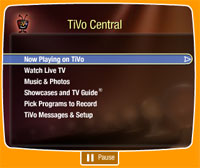 TiVo has announced that it plans to offer the first TV-based advertising “search solution” early next year.
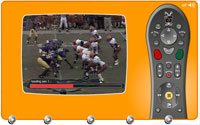 With punters able to search for products by category or associated keywords, TiVo sees big benefits for advertisers (obviously) and punters looking for information on products or services.
 Supping deeply on a morning brew of Buzzword Coffee, Tracey Scheppach, VP, Video Innovations Director at Starcom, enthused “The new TiVo application will provide both a needed platform for consumers to seek out relevant, searchable commercial content and an environment for advertisers to engage highly desirable and motivated consumers…it’s the first of its kind in the industry, and a platform that is clearly needed in this challenging advertising marketplace.”
 US analyst firm JupiterResearch has surveyed the American digital music market, and discovered that the bulk of paying downloaders come from the 25-44 age group.
 Online radio was seen to be a growing influence as were new tools like playlists and music blogs, but the report found that stronger integration with online radio and more promotion was necessary to make punters aware of these potentially powerful discovery tools.
 The report blames non credit card-holding kids, claiming that 34 per cent of 15-24-year olds use file-sharing services, and this is “impacting the way they value music with many having little concept of music as a paid commodity.”
 With a passion for creating new phones that is beginning to border on pathological, Samsung’s overworked designers have just revealed yet another new hi-tech handset, the SPH-V6800.
 There’s also a 1.3MP digital camera onboard with MPEG-4 video recording and MP3/AAC audio playback.
 With the Samsung packing in wireless connectivity into its tiny 96.8 x 47 x 24.5mm dimensions, we could well be seduced by SPH-V6800 (if it ever makes it to these shores, of course).
 Google is testing a potentially lucrative sales tool that allows users to ring up advertisers located through a Google search – for free.
 Moreover, they claim that the number will be blocked from the advertiser during the call, with Google promising to delete the number from their servers after a short period of time.
 In a sure sign that TV to the mobile is the new European media battleground, 3G mobile operator 3 Italia have announced its plans to purchase the Italian national broadcaster, Canale 7. Reports have put the price of the acquisition at between €30-35m.
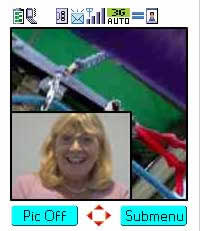 The company intends to offer a DVB-H mobile TV service from the second half of 2006. Indications are that there will be a minimum of 20 channels, although no line up has yet been decided. 3 Italia already carries Playboy adult entertainment and football via existing technology, and has worked with Mediaset and News Corp’s Sky Italia pay-TV operator.
 As we
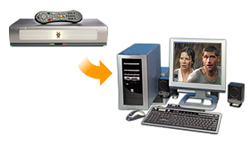
As we  It could be, that time will prove TiVo have announced prematurely this new augmentation, without fully taking account of the wide ranging business and legal implications. But in this fast moving sector, innovation is a necessity rather than an option.
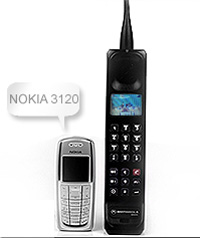 A Whole New Meaning To Retro
 Ah ha! So that’s it: These “mobile phones” are actually weapons. Guess that means the end of taking my phone on the plane then! Still… The smiling Chinese man talking on his glorified, colour LCD display-equipped brick does look so innocent!
 Broadband adoption in the UK may soon be reaching its peak, according to a new report from Datamonitor.
 Although we’re nearly broadbanded out in Europe, the report sees excellent opportunities for growth in less mature markets.