 Hackers racked up attacks on home PC users and financial services companies in the first half of this year, according to the latest Symantec Internet Security Threat Report Trends.
The report tracked Internet threat trends from January to June this year and discovered a new high in the volume of emerging vulnerabilities.
Employing a network of 40,000 sensors spread across 180 countries, Symantec identified 2,249 new vulnerabilities, with the majority of the new threats (69 per cent) being in Web applications.
Vulnerability researchers (now, there’s a job title!) found 47 flaws in the Mozilla Firefox and Mozilla browsers, a hefty increase of 17 flaws from the previous six months.
As expected, Microsoft led the pack with new threats, recording a total of 38 new threats affecting Microsoft’s Internet Explorer, up from 25 in the earlier period, with even Apple’s Safari browser notching up six more flaws to hit a total of 12 flaws.
Opera was the sole browser to see a drop in recorded vulnerabilities over the six months, dropping from nine to seven during the period.
No safe browser
“There is no safe browser,” senior director with Symantec Security Response, Vincent Weafer, finger-wagged. “If you’ve got a browser, make sure you’re configuring it correctly,” he added.
Although more bugs were found lurking in Mozilla than in IE, Symantec commended the open-source project for its prompt bug-fixing, with bugs usually being patched within one day of their public disclosure – the snappiest response of all measured browsers.
Opera came in second with an average two days to fix bugs, with Apple’s Safari recording a rather tardy five-days.
 The notoriously leisurely Microsoft averaged nine days per patch, but that snail-like response was still faster than Sun Microsystems.
The report found that home users were targeted most (86 per cent), with the US being the numero uno source of online attacks (37 percent), thanks to its large number of compromised machines with broadband connections,
“What really surprises is the way that attackers are moving,” says Dean Turner, editor of the bi-annual threat report.
“They’re now starting to target home users quite heavily primarily because home users are the weakest link in the security chain,” says Turner.
Phishing, spamming and badboy bots
Phishing continues to grow in popularity, with Symantec identifying a total of 157,477 distinct phishing messages over the six month period, while spam accounted for 54 per cent of all monitored email traffic, up 50 per cent.
Symantec also detected more than 4.6 million active bot network computers, registering an average of 57,717 active bot network computers per day.
Bot networks are commonly used in denial-of-service (DoS) attacks and their stats revealed an average of 6,110 DoS attacks per day.
The report concluded that polymorphic viruses are likely to grow, with Web 2.0 technologies and Instant Messaging affording new opportunities for pesky hackers to wreak havoc.
The real battleground, however, should come with the release of Microsoft’s Windows Vista operating system, which will see hackers doing their damndest to circumvent its new security features.
 Orange has launched, nay unleashed, the Unique phone, its first converged service using a single handset that connects via WLAN in the home and then switches to the regular mobile network when the user goes walkabout.
 So far, only the Motorola A910, the Nokia 6136 and the Samsung P200 can be used with the service, but more phones will be launched in 2007.
 U.S. Internet advertising revenue has hit a new record high of nearly $8 billion for first six months of the year, increasing by a money-spinning 37 per cent, according to a new study.
 The IAB/ PricewaterhouseCoopers figures show that Internet advertising revenue totalled nearly $4.1 billion in the last quarter, representing a thumping a 36 percent increase over the same period last year, and up a healthy 5.5 percent over the first quarter of 2006.
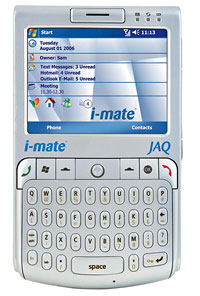 Currently blossoming on the Ugly Tree and ripe for plucking is the new i-mate JAQ PocketPC phone.
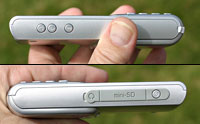 As far as we know, i-Mate haven’t officially split from HTC, but the company seems to be following O2’s policy of sourcing Windows smartphones from other manufacturers as well as HTC – a decision perhaps prompted by HTC recently releasing phones under their own name.
 Quite a hefty beast at 122x71x22mm and weighing 160 grams, the i-Mate JAQ comes with a 2.8″ 320×240 pixels, 65k colour display, Bluetooth and InfraRed, but there’s no WiFi or 3G in sight, neither is there an onboard camera, which strikes us as a serious omission.
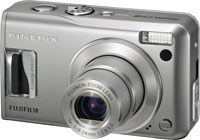 Barely half a year after the launch of the pocket-sized FinePix F30, Fujifilm has launched an upgraded version with the somewhat less memorable name of the FinePix F31fd.
 Fujifilm FinePix F31fd specs:
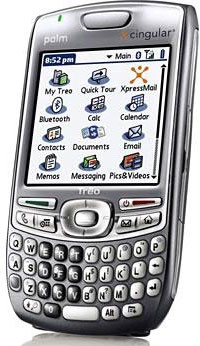 Currently leaking out all over the Web is this picture of a Palm Treo 680 with Cingular branding.
 Although it looks like a slimmer, sleeker version of the 650, the phone is aimed at the lower end of the market, so is expected to feature a rather disappointing VGA resolution camera along with Bluetooth, 64MB memory and run the trusty Garnet version of the Palm OS (sure it’s as old as the hills now, but it’s still one of the best mobile operating systems around in our opinion).
 THUS, the communications provider that owns the Demon brand has announced it has become the preferred supplier for HSBC in the UK. The contract is expected to be around £50m plus over 5 years.
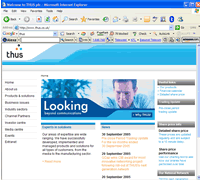 THUS also recently acquired Your Comms (a business telco based in the North of England) and Legend, a smallish ISP with a portfolio of VoIP products. Other acquisitions must be on their mind.
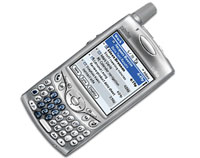 We get to see an awful lot of gadgets here at Digital-Lifestyles, so it’s not surprising we get quite a few emails asking what gizmos we personally use, so here’s my personal choices. And yes, I paid for ’em all myself!
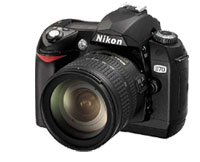 Camera
 Clad is an understated logo-free black body, this isn’t a camera that’s going to get people’s attention when you’re out and about, but its armoury of full manual controls and user configured settings means that it’s a great carry-around shooter.
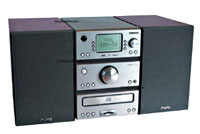 Enjoying a daily hammering of ska, punk, electro and indie tunes is the
  Now in its third year (that must be something like 70 years old in laptop years!), my Sony Vaio SRX51P is still doing the business, although with a mere 850 MHz Pentium III-M CPU and just 384 meg RAM on board, it can’t keep up with the new boys.
 Microsoft is looking to shove its king sized oar into the massive successful user-generated video phenomenon with the launch of an online service to take on the likes of YouTube, Google and Yahoo.
 With Microsoft’s vast reserves of cash to fall back on, it’s not surprising that Bennett is chirpy about their prospects, “It’s really early days in online video; this is still act one.”
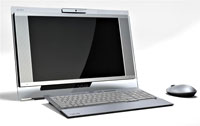 Sony Europe has announced the Vaio LA-Series, a striking all-in-one Media Centre which is sure to make a big statement on your desk (e.g. “I have pots of money” or, “keep your grubby mitts off my fashion statement transparent surround”).
 In a design not entirely unreminiscent of the iMac, the slim and sleek unit has all the components and gubbins neatly tucked away behind a large LCD screen.
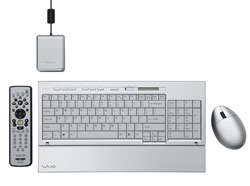
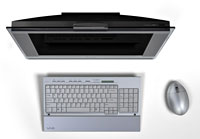 In line with the unit’s eye catching looks, there’s Sony comes bundled with a wireless keyboard and mouse in a stylish brushed aluminium finish, with the keyboard “folding up for a beautiful presentation when not in use.” Can’t say we’ve ever seen a beautifully presented keyboard before, but there you go.