New figures from a US survey by Pew Internet Project reveal that cables are becoming, like, soooo 1990s as more and more people connect to the internet via wireless connections.
 The study, released yesterday, shows that some 34% of internet users have surfed the web or checked email on a computer or smartphone/PDA using a Wi-Fi connection or mobile phone network.
Wi-Fi In The House
Wi-Fi is also proving a hit in the home, with nearly 20 percent of US Internet users now having domestic wireless networks – up a hefty 100% from the same time two years ago.
“We know that ‘always on’ broadband connections really deepen people’s relationship to the Internet; adding ‘on the go’ to the mix takes this a step further,” commented John Horrigan, associate research director at Pew.
“The convenience of wireless access gives people the chance to fire off a quick e-mail to someone while waiting in a doctor’s office or check the news headlines on the way to work,” he added.
The figures show that wireless folks are more addicted to email than other web users, with 72% checking their email ‘on a typical day’ compared to 63% of home broadband users and 54% of all internet users.
 They’re news junkies too, with nearly half (46%) going online to read news compared to 38% of home broadband users and 31% of all internet users.
Of course, these figures should be taken with a Table Mountain of salt, because it’s ruddy obvious that someone who relies on mobile email for work is going to be using wireless connections more often than your average home user.
Where they connect
The report looked at where people hook up wirelessly and found that the majority (27%) log on in web cafes or other non- work/home environments.
Some 20% of internet users said that they’ve gone online wirelessly at home with 17% connecting at work. Naturally, there’s a fair bit of overlap, with people connecting at two or three of the places above.
It’s a shame the survey didn’t ask how many were hooking up to free networks and how many were grabbing a sneaky piggyback ride on other folks’ unprotected connections, though.
But there’s lots more analysis of varying interest here: Pew Internet (PDF)
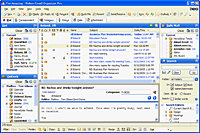 Apparently the problem of ’email addiction’ has got so bad amongst some permanently-connected workers and Blackberry toting bosses that some “executive coach” dudess in Pennsylvania has come up with her “12 steps to cure e-mail addiction” plan.
 Thankfully ol’Marsha’s on hand to help cure these poor souls, and with an eye to opening up future business opportunities, she wasn’t one to underplay the ‘problem’ for big businesses.
 We’ve been bombarded by the smug, highly slapable face of the Mac bloke in Apple’s omnipresent advertising campaign telling us how incredibly secure Macs are, but an independent researcher begs to differ.
 Finisterre says he started the project in response to Apple owners’ blasé attitude to security, commenting, “Try calling any Apple store and ask any sales rep what you would do with regard to security, ask if there is anything you should have to worry about?
 Claiming that Apple hadn’t been too interested in opening a dialogue about security matters, Finisterre said that things were now changing for the better.
 Looking deeper, deeper, deeper into his shiny orb (oo-er), the beardy Cerf revealed that it won’t be personal computers fuelling the growth of the internet. Instead he reckons that the expansion of the worldwide web will be powered by mobile phones, with countries like India snapping up zillions of the fellas and getting online en masse.
 “The mobile phone has become an important factor in the Internet revolution,” he added.
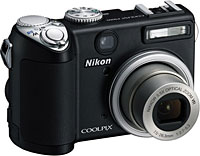 Nikon has announced several additions to its new Coolpix lineup today, but the one that’s caught our eye is its high-end Coolpix P5000 prosumer model.
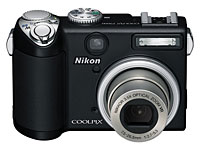 We like proper image stabilisation (rather than the ISO-booting sleight-of-hand touted by some makers) and the P5000 comes with optical lens shift VR (Vibration Reduction) technology borrowed from Nikon’s upmarket SLR camera systems.
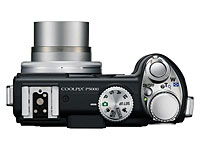 In line with most of its rivals, the P500’s ISO range soars up into the grainy heights of ISO 3200 capability (at a reduced 5M capacity), with an Anti-Shake and High-Sensitivity mode automatically selecting the optimal rating.
 They’ll also enjoy the optical viewfinder, even if it is a bit of a squinty affair, with the rechargeable Lithium-ion battery EN-EL5 promising around 250 shots on a single charge. There’s a vaguely useful 21meg of internal memory with a SD card slot offering SDHC card compatibility.
 Not all the kids are feeling the digital love though, with 45 per cent of respondents spending but ne’er a bean on music.
 When it comes to the real big spenders, the lucrative 20-24 year olds sector were flashing the most cash, with two thirds spending up to £10 a month on downloads, and 16 per cent spend from £10 to £20 a month.
 After a lengthy sojourn in beta, Adobe has finally released version one of its Photoshop Lightroom photographic software
 With more and more users shooting digitally and hard drives rapidly filling up with zillions of image files, there’s gold in them thar hills for software companies providing solid image management tools, and Adobe is hoping to nudge ahead of respected rivals like Portfolio,
  The new Key Metadata Browser comes with an improved ranking and rating system, sporting colour labels and a pick/reject system.
 Photoshop Lightroom runs under Mac OS X 10.4 or Windows XP (and, presumably) Windows Vista, and will be knocking out for an upmarket £125 (excl VAT) before April 30 rising to a hefty £175 (excl VAT) after that date.
 The figures, from the market research group NPD Group, calculated that the dollar value of Vista retail box copies shifted during the week of 28 January crashed 32 per cent compared to the value of XP box copies sold during its debut in October 2001.
 There’s no such confusion with Office 2007 sales however, which recorded very strong retail sales, more than doubling the first week sales for Office 2003.
 Wikimedia Foundation’s popular Wikipedia online encyclopedia has now become one of the most popular websites in the US.
 By July 2006 it has soared up to the 18th spot with 28.1 million unique visitors and by November it was hovering outside the hallowed top ten slot with 39.1 million unique visitors giving it a 12th place ranking.
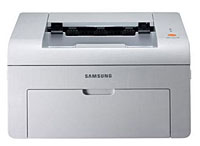 After one battle too many with our ever-flaky Epson printer (see:
 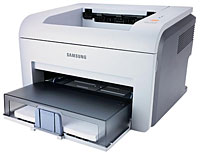 The printer tray at the bottom stores a useful 250 sheets, so you can let it get on with big jobs unattended, with the printer fairly quiet in operation.
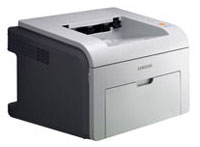 SPECIFICATIONS: