There’s been three weeks of hoo-har in the UK about television stations using Premium Rate Telephone Services (PRS) to extract income from the phone-willing programme viewer. Whole TV channels have been stopped in the process.
 Ofcom has just announced that it will be carrying out an inquiry into the whole area.
It sounds like there’s going to be a few feathers ruffled. Viewers and a range of other stakeholders have raised serious concerns with Ofcom regarding apparent systematic compliance failure on the part of a number of broadcasters, whose actions appear to contravene existing consumer protection rules.
Hearing how serious this is, does give clues as to why the TV stations acted so swiftly in suspending the availability of their PRS.
Many have criticised some UK broadcasters for creating programs whose sole driver appears to be collecting as much money as possible from the viewers.
 The inquiry will be led by Richard Ayre, a former Deputy Chief Executive of BBC News. He is expected to receive extensive input from the premium rate services regulator, ICSTIS, who are already investigating a number of individual cases.
The fragile relationship between TV viewer and the TV stations appears to have been damaged further by the PRS announcements over the recent weeks.
Ofcom Chief Executive, Ed Richards said: “Widespread concern about the use of premium rate telephone lines by broadcasters and editorial standards in those programmes has raised serious questions about trust between broadcasters and viewers.”
The scope of the inquiry includes
- Consumer protection issues and audiences’ attitudes to the use of PRS in television programmes;
- The benefits and risks to broadcasters in the use of PRS in programmes;
- The respective compliance and editorial responsibilities of broadcasters, producers and telecoms network operators and others involved in those programmes;
- The effectiveness of broadcasters’ and telecoms operators’ internal compliance procedures, guidelines and arrangements to ensure compliance with Ofcom and ICSTIS codes;
- The inquiry will also propose recommendations on actions necessary to restore confidence and trust.
Ayre expects to report his findings to the Ofcom Board and the Content Board by early summer.
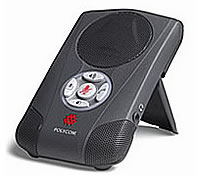 Polycom have announced that they’re going to support more VoIP software than just Skype on the current
  After weeks of speculation and one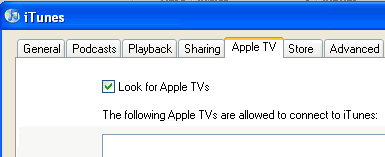
 The unit has a 40Gb hard drive that Apple says can “store up to 50 hours of video, 9,000 songs, 25,000 photos or a combination of each and is capable of delivering high-definition 720p output.”
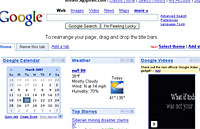
 For folks a little bored of staring at the vast expanses of white space around their Google homepage comes the news that the page is finally skinnable.
 All of themes are dynamic and change their appearance according to your own local time of day, current weather conditions or season.
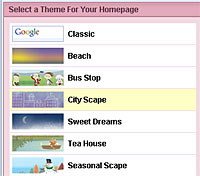 Personally, we couldn’t think of anything worse than being stuck in a windowless office and relying on Google to tell you when the sun has gone down, but we get her point.
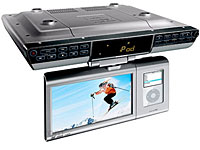 Designed to be fitted under a kitchen cabinet, the Philips DCD778 sports a flip down 8.5-inch widescreen LCD display with an iPod docking bay (compatible with fourth- and fifth-generation iPods, the iPod mini, and iPod nano).
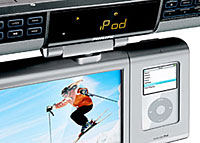 For a bit of Jonathan Ross while you create your Master Chef-challenging creations, there’s a digital AM/FM tuner onboard as well as a cooking timer and clock, and wireless remote.
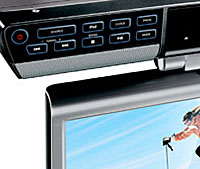 The Philips DCD778 Docking Entertainment System is expected to start shipping in the US next week for around $400, although there’s no news on a UK release.
 Rumours that Google is working on a mobile phone were given another boost after Richard Windsor, of Nomura brokers, claimed that Google reps at an industry event in Germany had blabbed about such a device.
 Pundits reckon that Google would be most likely to shuffle into the mobile world under a deal that would let them partner with an existing handset maker and hop on to the network of an existing mobile operator.
 Adobe has released an alpha version of an interesting piece of software tasked with “bridging the gap between the computer desktop and the Web.”
 “Web browsers are great for reading Web pages,” said Lynch. “For Web applications, it’s really been a stretch to support things like word processors or e-mail,” he added.
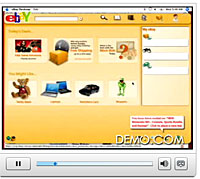 For maximum compatibility, Apollo supports existing web application technologies such as HTML, JavaScript and Flash and will, for example, let users place bids, maintain watch lists and post new items for sale on eBay straight from the desktop.
 Although it’s not the first time that a USB stick has been used to release a pop single – last October the soporific Keane released copies of “Nothing’s In My Way” on the same format, and managed to sell out stocks in a day.
 “If demand really does start to take off, it may well become viable to think about releasing selective albums on USB as well, especially if they were to become eligible for inclusion in the chart,” he added.
 The security bigwigs reported that more than six million bot-infected computers were detected during the second half of 2006, with over a third of all computer attacks originating from US-based PCs.
 The company also noted that ‘underground economy servers’ were being being used by dodgy perps to flog stolen personal information, including credit cards, bank cards, PIN numbers and other forms of ID.
 Try as we might, we can’t think of the last time we said to ourselves, “You know what? We could really use a Bluetooth enabled cushion,” but the good news is that if ever such a thought should cross our minds, urbantool.com has the answer.
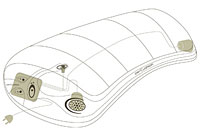 Powered by a rechargeable lithium ionic battery, call status is displayed via a series of LEDs, which indicate if the, err, pillow is in active standby mode or taking an incoming call.
 Although we couldn’t argue with anyone claiming that it’s the most comfortable phone on the planet, the idea of someone actually sitting at home talking into a cushion would suggest the presence of magic mushrooms to us.