 Handy… Literally!
Engadget has a story on how Montclair State University in New Jersey is handing out free phones to it’s students to enable them to easier communicate with each other. The handsets feature software which allows them to receive “channels” of information, which users sign up for. These channels include things like the dinner menu and the location of the university’s shuttle buses, as well as channels students have set up of their own.
I can admit I am actually kind of jealous of this: I would love the ability to be able to do this at school, checking up on when holidays are, what’s on the menu, and what my time-table’s like. Sadly, I think my school would have some difficulty in preventing the chavs from selling them on eBay, which of course is an entirely different issue.
This is the problem with technology like this: Those most likely to adopt it are, by default, young people, who therefore can’t afford it. Give it to them instead then, and a select few will take advantage of that. Technology like this, for now, is only for older people I think. This isn’t to say it isn’t exciting though: I still find socio-technological implementations, usually referred to as MoSoSo (Mobile Social Software), fascinating, as although there isn’t yet much of a market for these sorts of services, there will inevitably be, and when there is, it could well change the way we communicate with each other forever.
 Sounds nasty!
Everyone over here in Europe likes to text, or “txt” for short. I’m not entirely sure how popular the practice is over in the US, but in the UK it’s used mainly by teenagers, although others use it too, because of it’s extremely low cost in comparison to making voice calls.
The New York Times is reporting that apparently, using SPAMming techniques, it should be possible to flood a cities GSM infrastructure by sending as little as 165 text messages a second into the network. This is made possible because text messages use the same communications infrastructure and network that voice calls are made to as well. Imagine what could happen if someone flooded a network, so that no calls could be made, and then at the same time a co-ordinated terrorist attack occurred. People would be unable to call the emergency services, and wide-spread carnage and destruction would occur.
This is particularly scary for me, as I would be at a loss in an emergency without my phone: It’s central to how I find people and communicate with them, and when I really need to get in touch with them, I wouldn’t be able to. This reliance and taking for granted of technology is something that most of my generation are likely guilty of, and when everything does kick off and there’s no electricity, phones or water, I would have severe doubts that a lot of them would be able to cope with it.
It was only really recent events (London bombings) that brought this to my attention, but it has made me realise that reliance on technology could be very turned around and be used against us.
 That lot again
Yes, that’s right, the RIAA are at it again: A short time ago, a case against a mother on her daughter’s behalf of file sharing was dismissed in court. Now, the RIAA are back, but this time, they’re not suing the mother but her 14-year old daughter.
People like the RIAA make me so, so angry: At 14, no-one really knows what they’re doing. So a little girl downloaded some of her favourite songs from the Internet. That little girl was probably a paying customer as well, but her pocket money just wasn’t enough, and she just wanted to hear one more song by her favourite artist, but couldn’t afford it. Her friend said “you can get it for free from here”, and so that’s what the girl did. Next thing she knew, the very company she was a customer of, was sending threatening letters to her, demanding thousands of dollars in compensation.
Is this the right way of treating your customers? I know for sure it is one great way of driving them away. If you are in my position at the moment, of having a good few thousand songs you enjoy, then stop buying music unless it is from your local bands or from an independent label. It might sound an unrealistic expectation, but I have found so many great bands on the Internet and locally at pubs and other music venues, that I am quite confident I will never be giving another penny to those greedy folks over at the RIAA.
You can do something about it though, by going to www.boycott-riaa.com. Every little helps!
That would be my rant for the day, have a nice weekend :-)
 The 2006 world championships draw closer and if you‘ve not yet considered your Christmas gift list, this might be just the thing you were looking for.
 Aussie God squadders looking to get down with Da Yoot have translated all 31,173 verses of the Bible into SMS text-speak.
 The translations were based on the Contemporary English Version and remained faithful to the grammar, with just the spellings being altered.
 According to a study by IDC, instant messaging in the business world is going bonkers and looks set to continue its huge growth, but experts are warning of security risks.
 The growth in the enterprise segment is being fuelled by domestic users of IM tools like MSN Messenger bringing their online chatting habits into the work place and using the service as a business collaboration tool.
 IMLogic says that the attacks on the IM clients have reached record values – up 14 times on last year – with the complexity of the attacks also increasing.
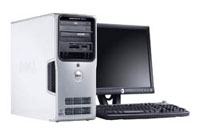 Dell have started shipping a Windows-less desktop PC for customers looking to install other operating systems on their PCs.
 Dell’s new Dimension E510n PC comes with a blank hard drive untouched by all things Microsoft, with the company bunging in a copy of the obscure FreeDOS operating system for users to install, if they so desire.
 The base machine’s reasonably specified (a Pentium 4 processor, 512Mbytes memory, 128MB ATI Radeon X300SE HyperMemory video card, Sound Blaster®Live! 24-bit Audio and 80GB hard drive), and knocks out for $774 (~e647~£439).
 T-Mobile have launched ‘Web’n’walk’, their mass-market mobile Internet service, and are confidently predicting that it expects to lure hundreds of thousands of customers onto the service over the next couple of years.
 Conceding that Internet services on mobile devices to date had so far been, well, rubbish, McBride bigged up T-Mobile’s approach for fast, simple and affordable services and products, saying that mobile networks will eventually carry more Internet traffic than fixed-line computers or phones.
 Olympus have unveiled the SP-700, a new addition to their new SP series of cameras with a special guide function for beginners explaining what button does what.
 We couldn’t find a preset for ‘pub’ or ‘all night rave in a dingy warehouse’, but there’s an underwater mode included too (just so long as punters remember that they’ve got to slap on the PT-013 underwater case before dunking their expensive camera into the sea).
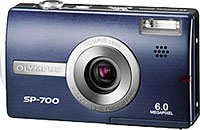 Olympus is making a big hoo-hah about its ‘Compare and Shoot’ function which lets users check and compare results before re-shooting or adjusting settings if needed.
 The camera is pitched directly in competition with the
  Google and Sun Microsystems have come up with a broad, but fuzzy, deal which will see the two companies developing and distributing each other’s technology in a move to challenge Microsoft’s Office suite dominance.
 It’s also expected that the deal will make it easier for freeloading punters to obtain OpenOffice, Sun’s well-regarded, freely distributed office productivity suite which directly competes with Microsoft Office.
 Bundling the two products together seems a wise move, increasing the appeal of the Google Toolbar and making Java a more attractive proposition for software developers.
 Fashion aficionados concerned that the hue of their laptop may clash awfully with their high fashion clobber will be delighted to learn that Sony is releasing their Sony F-type laptops in four stylish colours.
 Carbon Fibre Laptops
 The Vaio TX series offer a handy AV mode button which makes the machine available for watching movies or listening to music in just 12 seconds with no need to boot up Windows.
 Search company Blinkx have launched a free service that lets amateurs and pro filmmakers upload and store their video files to a searchable online library.
 Users of the Blinkx.tv service will also be able to create custom channels, based on a specific search term.
 This will be automatically populated in the background with videos that match a chosen search term, encouraging users to have the occasional rummage around in their smart folder to see what new videos have been added.