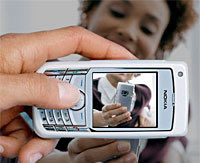
 New research from Strategy Analytics reveals that 257 million camera phones were shipped worldwide, representing 38 percent of total handset sales in 2004.
This figure was up sharply from the 84 million units sold last year (16 percent of total), in 2003.
The global research and consulting firm also reported that despite their generally shoddy quality, sales of camera phones are now outselling digital still cameras by almost 4 to 1.
Last year, 68 million digital still cameras were sold, with sales growing 40 percent annually (up from 49 million units in 2003).
“Global camera phone sales grew by an impressive 200 percent year-over-year in 2004,” commented the impressively monikered Neil Mawston, Associate Director of the Wireless Device Strategies (WDS) service at Strategy Analytics.
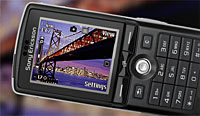 “Nokia led the pack, with an 18 percent worldwide market share, followed closely by Motorola at 17 percent, and Samsung in third position at 13 percent,” he continued.
Chris Ambrosio, Director of Strategy Analytics’ Global Wireless Practice, also fancied a go on the mic: “The digital still camera market is running out of steam. Vendors such as Kodak, Canon and Fuji will find growth harder to achieve in 2006.
Camera phones will eventually capture 15 percent of the low-end digital still camera market by 2010, while attempts to sell households in developed markets a second or third device will be restricted by the ubiquity of multi-megapixel camera phones”
The Strategy Analytics’ 2004 Global Camera Phone report also noted that VGA sensors (640×480 pixel) will still be the “sweet spot” for camera phones in 2005, but vendors will soon be screaming, “look at the size of our megapixels!” as a means of getting one over their rivals in the high end market.
 These ‘Pixel Wars’ are expected to drive higher megapixel handset demand to 3 in 10 sales worldwide in 2005.
Strategy Analytics concludes that removable memory media will be standard issue on camera phones by the end of 2007, but there’ll still be a mixed bag of wireless connectivity options on offer (e.g. USB, WLAN / WiFi, Infra-red, Bluetooth, etc.), forcing manufacturers of accessory products – like printers – to support a wide range of solutions.
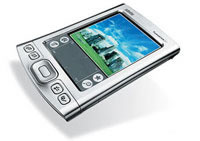 PalmOne’s Tungsten E – introduced in 2004 – proved to be a rip-roaring success, becoming the top-selling handheld in North America and among one of the best sellers world-wide.
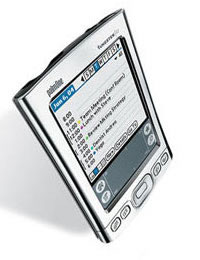 Apart from the inclusion of palmOne’s new Multi-Connector serial port (replacing the previous mini-USB port), everything is much the same as its predecessor, with the directional pad, application buttons, SDIO slot, IR port, headphone jack and metal barrel stylus being unchanged.
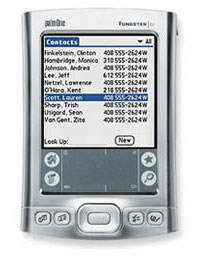 Other software includes a media suite (for playing back videos or viewing photo stills) an upgraded PIM suite, Web browser in ROM, with VersaMail and Documents To Go available on the included CD.
 In a never-ending quest to stem the flow of illegal file sharing, the UK record companies’ trade association, the BPI (British Phonographic Industry), has announced that is taking legal action against another 33 illegal filesharers in the UK.
 The BPI ramped up the pressure on March 4 this year, declaring that it intended to pursue proceedings against 31 more illegal filesharers. The offenders were sent details of the BPI’s legal claims against them yesterday after their identities were revealed by their Internet service providers.
 All of the accused are alleged to have been indulging in an orgy of uploading involving hundreds or thousands of music files illegally and face civil action for an injunction and damages.
 Apple Computer has announced that the latest major update of its Mac OS X operating system, code-named Tiger, will be available on 29 April.
 This powerful core application lets users search just about everything on their system – files, emails, contacts, images, movies, calendars and applications – with the results appearing “instantly”.
 Mac OS X version 10.4 “Tiger” will be available on 29 April from 6:00 pm at Apple’s retail stores and through Apple Authorised Resellers for a suggested retail price of £89 (US$129, €129)
 There has been much rumblings of discontent from content suppliers to the mobile phone industry, and, as the globally dominant brand, Vodafone have been taking a lot of the flack.
 Feeling the pressure, Vodafone have tried to placate their grumbling partners in the short term by dishing out a sizzling barbeque of buzzwords, liberally doused with PR doublespeak.
 It looks like Tim Harrison, Head of Games at Vodafone Group Services, had been smoking pure Moroccan Buzzword when he came out with this piece of baffling industry-speak: “Having pre-agreed, pan-regional marketing and distribution capacity will allow us to run multi-territory co-marketing more easily, improve efficiencies for our partners and benefit the industry as a whole.”
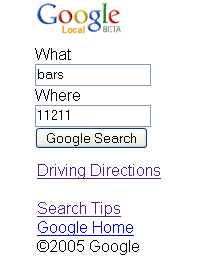 Google is making its local-search service available to mobile-toting users, offering maps and driving directions optimised for the wee screen.
 Telephone numbers are displayed as a hyperlink, and if the users’ phone supports the facility, clicking on the link will dial the listed telephone number (unlike some local search services, there is no additional charge for this).
 Local search services are set to be the big hot potato of 2005, with the Kelsey Group reporting that local search ad spending hit US$162 million (£85m/€125m) in 2004.
 New figures by media researchers, Screen Digest, has shown that the mobile games market has scooped up £327m worth of funding since September 1999, 56% of which was raised during 2004.
 The growth of multimedia/web-enabled phones has supercharged consumer spending on downloadable mobile games, with sales growing from £380m (US$719m/€554m)in 2003 to £778m (US$1.4bnm/€1,134m) in 2004.
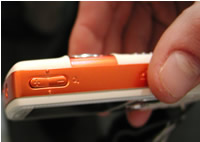
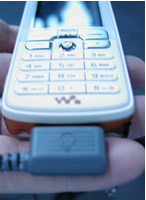
 I had a Sony W800 Walkman Phone in my hands for the first time today at the Sony Media Experience in Bordeaux. There’s already been a terrific buzz about this camera and it was great to get my hands on the thing during what Sony claims was its first European outing.
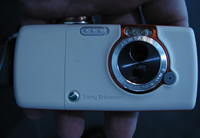 The central music button is the focus of the handset and, not surprisingly, pressing it takes you straight to your music selection.
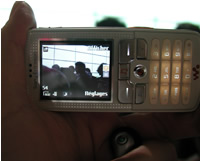 The software comes with the handset will take music CDs straight from the player on your machine to handset, without intervention.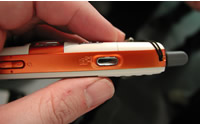
 TComm has launched a mobile TV service capable of delivering live, streamed and downloaded audio/video content to mobile phones.
 Subscribers currently have a choice of six premium channels with another eight channels rolling out over the next 60 days.
 Tony Johnson, the Content Manager of TComm (UK) Limited, was on hand to lavish praise on his own service: “With content from UK and US production companies such as 2 Minute TV, Fearless Music, Sandy Frank Entertainment and Hungry Biker, TELLYfone sets a new standard in content provision for the mobile phone market.”
 A special promotion is offering free access to the service throughout April, after which access will be on a paid subscription basis.
 Automotive DAB market gets a boost with successful road trials and three new design wins for Frontier Silicon.
 The whole caboodle measures only 55mm x 37mm x 13mm and is designed to mount inside a 1DIN radio/CD player.