 There has been much rumblings of discontent from content suppliers to the mobile phone industry, and, as the globally dominant brand, Vodafone have been taking a lot of the flack.
With sales soaring through the roof, you’d think all would be cream cakes and Earl Grey tea in Mobile Land, but trouble’s been a-brewing concerning the split of income from subscribers for the content.
In a world where content providers are used to calling the shots about product pricing – and the mobile companies are used to a similar position of dominance – an uneasy truce has been maintained, with the best spilt available being 50/50.
Clearly dissatisfied with their lot, content providers have been making long whining noises in the direction of Vodafone. They want more money but – not surprisingly – Vodafone aren’t to keen to dish it out.
 Feeling the pressure, Vodafone have tried to placate their grumbling partners in the short term by dishing out a sizzling barbeque of buzzwords, liberally doused with PR doublespeak.
We’re not sure if their partners are going to have much of an appetite for what’s on offer – if they can make sense of it – but it seems that Vodafone are offering to spend more on marketing mobile games (without altering their percentage split of the income.)
The extra promotion will clearly be good news for content providers, but the more cynical amongst us will be quick to point out that Vodafone will clearly benefit from the extra publicity too.
 It looks like Tim Harrison, Head of Games at Vodafone Group Services, had been smoking pure Moroccan Buzzword when he came out with this piece of baffling industry-speak: “Having pre-agreed, pan-regional marketing and distribution capacity will allow us to run multi-territory co-marketing more easily, improve efficiencies for our partners and benefit the industry as a whole.”
Vodafone will be rolling out their grandly titled ‘Marketing and Distribution Plan’ by the end of April, with the remaining Vodafone Operating Companies and partner markets enjoying “maximised marketing and distribution efficiencies” by the end of Q3 2005.
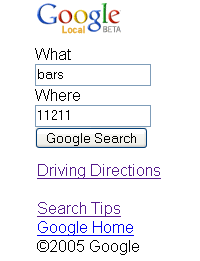 Google is making its local-search service available to mobile-toting users, offering maps and driving directions optimised for the wee screen.
 Telephone numbers are displayed as a hyperlink, and if the users’ phone supports the facility, clicking on the link will dial the listed telephone number (unlike some local search services, there is no additional charge for this).
 Local search services are set to be the big hot potato of 2005, with the Kelsey Group reporting that local search ad spending hit US$162 million (£85m/€125m) in 2004.
 New figures by media researchers, Screen Digest, has shown that the mobile games market has scooped up £327m worth of funding since September 1999, 56% of which was raised during 2004.
 The growth of multimedia/web-enabled phones has supercharged consumer spending on downloadable mobile games, with sales growing from £380m (US$719m/€554m)in 2003 to £778m (US$1.4bnm/€1,134m) in 2004.
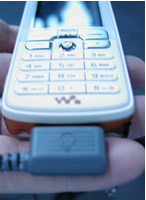
 I had a Sony W800 Walkman Phone in my hands for the first time today at the Sony Media Experience in Bordeaux. There’s already been a terrific buzz about this camera and it was great to get my hands on the thing during what Sony claims was its first European outing.
 The central music button is the focus of the handset and, not surprisingly, pressing it takes you straight to your music selection.
 The software comes with the handset will take music CDs straight from the player on your machine to handset, without intervention.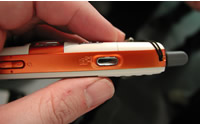

 TComm has launched a mobile TV service capable of delivering live, streamed and downloaded audio/video content to mobile phones.
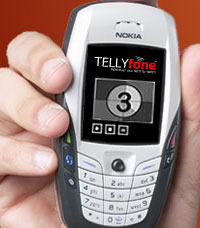 Subscribers currently have a choice of six premium channels with another eight channels rolling out over the next 60 days.
 Tony Johnson, the Content Manager of TComm (UK) Limited, was on hand to lavish praise on his own service: “With content from UK and US production companies such as 2 Minute TV, Fearless Music, Sandy Frank Entertainment and Hungry Biker, TELLYfone sets a new standard in content provision for the mobile phone market.”
 A special promotion is offering free access to the service throughout April, after which access will be on a paid subscription basis.
 Automotive DAB market gets a boost with successful road trials and three new design wins for Frontier Silicon.
 The whole caboodle measures only 55mm x 37mm x 13mm and is designed to mount inside a 1DIN radio/CD player.
 It must be tough trying to get noticed in the crowded MP3 player market.
 The new teensy-weensy MobiBlu DAH-1500 player apparently offers MP3 and WMA support, a FM tuner and a claimed 15- 20 hours battery life (we say ‘apparently’ because our Japanese translation skills aren’t too good).
 If users manage to avoid dunking the player, their publicity photos also suggest they can wear the device as a head tilting earring or lug it around the neck as a clunky necklace. Cool, or err, what?
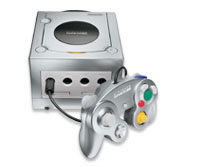 A study by Nielsen Entertainment has revealed that men spend more money on video games than they do on music, adding weight to a growing belief that video games are displacing other forms of media for the notoriously fickle attentions of young men.
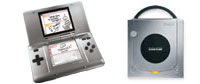 Naturally, advertisers are keen to cash in on the rising popularity of games, and are looking at ever more persuasive ways to bombard bedroom-bound, bunglesome boys with beguiling adverts (branded billboards in race games are already commonplace, as we’ve
  Overall, Nielsen reported that active gamers tend to spend just over 5 hours a week playing alone and 3 hours a week playing with people or online.
 UK Online is hoping to bring broadband to the masses by smashing the price point for “entry-level” home broadband down to a wallet-untroubling £10 a month.
 Surfers not used to this level of generosity may be wondering where the catch is, but we haven’t found it yet: we wrote to UK Online and they confirmed that both the Broadband 500 and Broadband 2000 are unlimited services with the Broadband 8000 offering an enormous 500GB monthly download allowance.
 Canary Wireless have released their Digital Hotspotter device, which, as the name suggests, is a WiFi detection and analysis tool.
 To scan for more networks, bash the button again.
 And while we can’t disagree with Ben’s summary, we wonder how long it will be before laptop makers start fitting WiFi sniffers into machine cases to let users seek out accessible networks without going through all the palaver of booting up.