 The boffins at the US National Science Foundation (NSF) have proposed “re-engineering” the Internet to create a whizz-bang updated version that connects all kinds of devices with built in security and robustness.
With the government agency challenging researchers to look at the Internet as a “clean slate”, the NSF’s Global Environment for Networking Investigations (GENI) initiative proposes a research grant program and an experimental facility to test new Internet technologies.
NSF officials trumpeted the GENI project at a conference for the Special Interest Group on Data Communications in Philadelphia last week.
But before you get too excited about this new super-improved Internet being piped into your devices (ooo-er), NSF spokesman Richard “Randy” Vines has some news for you: it’s not yet funded and it’s only “an idea under consideration.”
With the Internet continuing to grow exponentially and with researchers predicting an explosion of data in the next decade from mobile and wireless devices as well as sensors, the GENI project intends to anticipate and envision the Internet society’s needs 15 years or more from now.
 The goals of the GENI Initiative include a new core functionality for the Internet, with new naming, addressing, and identity architectures; enhanced capabilities, including additional security architecture and a design for high availability; and new Internet services and applications.
According to the NSF’s GENI Web page, the GENI project intends to “explore new networking capabilities that will advance science and stimulate innovation and economic growth,” adding, “The GENI Initiative responds to an urgent and important challenge of the 21st Century to advance significantly the capabilities provided by networking and distributed system architectures
The site also urges the enabling of “new classes of societal-level services and applications”. We’ve no idea what that means, but it sure sounds good to us.
Faster transmission speeds aren’t on the agenda of the GENI Project, however, with David Clark, a senior research scientist at the Laboratory for Computer Science at the Massachusetts Institute of Technology sagely commenting, “Making a network faster has never made it more secure or easier to use.”
National Science Foundation
NSF Global Environment for Networking Investigations
 UK Online have officially joined the 24Mbps broadband party by announcing the October launch of their own broadband ADSL2+ based product.
 UK Online has been conducting technical trials of its ADSL2+ service since March of this year and their 24Mb broadband service should be available in October for under £30 (~$55 ~€43) a month.
 Be Unlimited
 Temptingly, there’s no connection fee for new users with a free Wi-Fi-enabled modem lobbed in for no charge (the company will be using DSLAMs from Alcatel, and a Thompson 716g V5 wireless modem, optimised for VoIP and video-streaming applications.)
 Send Your Name To Pluto
 It’s fast, but why? Nice solution, but where’s the problem?
 That’s… Fast!
 Big Brother is Everywhere
 Deutsche Telekom have just announced that they will be rolling out 50 Mbit/s connection in 50 cities around Germany by 2007.
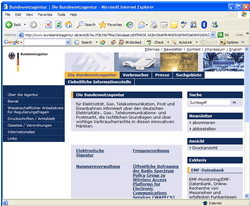 The “we’ll make the country globally competitive by installing high speed Internet access, but it needs to be made worth our while” argument has been used before by other incumbent telcos when they are trying to get good, or better deals from the regulators.
 As with all companies at IFA, Grundig have shown a ton of new products, try to persuade the assembled throngs that they are approaching Digital Lifestyles by understanding the consumer.
 Large pools of drooling saliva formed around our mouse mats this morning when we caught sight of Sony’s new range of slimline laptops, the Sony T.
 There’s also healthy 512Mb of RAM (upgradeable up to 1.5Gb) onboard, 40 to 60Gb HDD space and a DVD burner
 As ever, it’s the lucky Japanese who get to play with the cool toys first, with the Sony T going on sale in Japan from September 10th onwards.
 From deep within the Microsoft base, Bill Gates has pulled a few levers and dispatched a corporate grabbing tentacle in the direction of Teleo, a privately held provider of VoIP software and services.
 The San Francisco-based outfit Teleo was founded just two years ago and got as far offering a beta PC to PC or standard phone Skype-like VoIP service with click-to-call dialing through Microsoft Outlook and Internet Explorer before Gates grabbed the product.
 Terms of the deal haven’t been disclosed, but Microsoft have said that members of the Teleo executive team will continue to work closely with MSN, while some Teleo product developers are expected to shuffle across and join MSN.
 Sir Richard Branson will be slamming the virtual champagne against the good ship Virgin Digital UK as another digital music service slides down the slipway on September 2nd.
 Virgin Digital UK is set to serve up a mix of digital music store, music club subscription service, streaming radio, powerful digital music and portable device management tools, along with a collection of music-discovery gizmos.
 Samsung will be debuting the world’s first 19″ notebook, the Samsung M70, on 2 September at the IFA Consumer Electronics Show in Berlin.
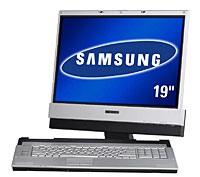 This lets users detach the laptop’s screen and place it in a dock to give the appearance of a conventional desktop.
 Despite the added complexity and enormous screen size, Samsung have claimed that the laptop will weigh no more than their current 17-inch notebook so it should be vaguely portable (if you work out at the gym).