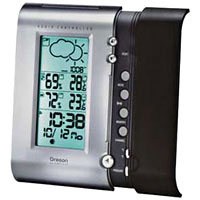
 It may not look as pretty as an old fashioned barometer, but Oregon Scientific’s Easy Weather System Pro can provide a wealth of information about the weather – with no need to tap its face to get the dials moving.
The £49 ($86, €72) wireless weather station will provide users with ample material for Britain’s favourite topic of conversation, with a large LCD screen dishing out a veritable storm of weather-related data.
The weather station comes in two parts with a large main unit (142 x 63 x 158mm) powered by three AA batteries and a smaller remote sensor which beams outdoor temperature and humidity data back to the main unit every 40 seconds.
Getting the sensor to talk to the weather station was simple enough – set the channel number on the sensor (the system can support up to 3 sensors), press ‘memory’ and ‘channel’ on the main unit for a few seconds and that’s it.
The sensor has a small, built-in LCD read-out, with the main unit sporting a signal reception icon and low battery warning.
Time accuracy is ensured with a radio controlled alarm clock and calendar that synchronises to the radio signal from Rugby, with a handy onscreen indicator shows the signal strength.
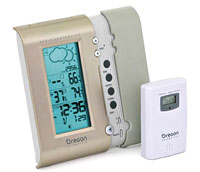 Once set up, the large LCD screen provides indoor and outdoor stats for humidity/humidity trend and temperature/temperature trend as well as barometric pressure/trend (the trend readout displays an arrow to show whether the data is rising, steady or falling.)
A large animated icon forecasts the next 12-24 hours of weather within a 30-50km radius with what Oregon claims to be “75% accuracy” – we found it to be pretty accurate throughout.
Finishing off the feature set, a large clock display gives the time, date and seconds/day with a Moon phase readout.
Over the test period, we found ourselves being strangely drawn to the Oregon’s display, constantly checking for barometric blips and temperature twitches and rapidly becoming a walking encyclopaedia of weather waffle.
For anyone with an interest in what’s going on weather-wise, the Oregon Wireless Weather Station represents fabulous value and offers a stylish – if sizeable – addition to the work desk – and Lord help anyone who then rings you to innocently ask, “What’s the weather like where you are?”
Our verdict:
Features: 85%
Ease of Use: 85%
Build Quality: 80%
Overall: 85%
 Several forests are having to be torn down to supply Google with enough chequebooks to keep up with their current spending spree.
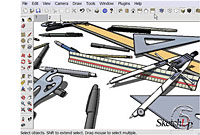 Bought for an undisclosed sum, a statement on @LastSoftware’s site details how they fluttered eyes at each other a wireframe table: “We got to know a bunch of Googlers while we were building the Google Earth plug-in for SketchUp, and it quickly became apparent that we could really stir things up together.”
 “Google’s resources will allow us to serve our current users better, and Google’s reach will allow us to expose more people to SketchUp in one year than we could have touched in 10 years on our own,” he commented in a budsy message to customers.
 The combination of SketchUp’s 3-Dimension models overlaid on Google Earth’s maps could serve up a competition busting offering, with the added detail offering real value to GPS users.
 Microsoft is to release a suite of free parental controls and other safety measures designed to safeguard children on the Internet.
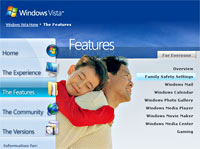 Kids definitely won’t like this, but the software also lets parents access their activity reports to check what they’ve been up to online.
 Family Safety Settings will be available for any PC running Windows XP with Service Pack 2 as well as the upcoming Windows Vista operating system.
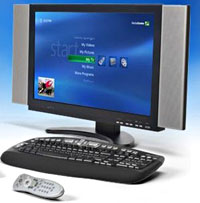 A new report by analyst firm Current Analysis claims that consumers are warming to Media Center PCs, with the entertainment-focused PCs grabbing eight per cent of the US retail market in January 2005, soaring 48 per cent in December.
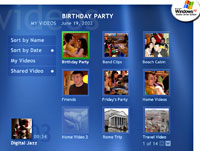 However, tuner-toting Media PCs are already making a comeback, with the market share for TV tuner-equipped systems climbing from 8.7 per cent in October to 12.8 per cent last month.
 “The upward TV tuner-clad trend is a small victory for Media Center with regard to the digital home,” she said, adding that the TV arena is a “pivotal turf in the war for the digital home because it offers the most opportunities for lucrative infrastructure and broadcast content.”
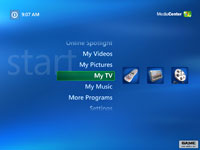 Microsoft first rolled out their Media Center Edition back in October 2002, but consumers have been sniffy because users weren’t inclined to buy the more expensive hardware needed to run the software – neither did the idea of watching TV on a clunky computer monitor seem particularly thrilling.
 The US mobile companies are finally, really getting hold of delivering content of all sorts to mobile phones.
 As with all things to mobile phones, we’d love to see the figures as to who actually pays for access to this. A barrier which has yet to be consistently cracked.
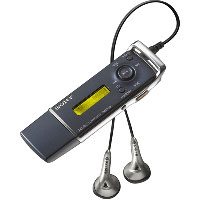 As voice recorders go (and, let’s be honest, they’re not the most exciting of gadgets) Sony’s new CD-U70/ U50 devices look to be quite natty numbers.
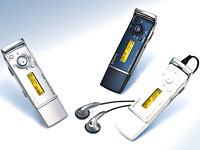 Battery life is listed as an impressive 140 hours for voice recording and 6 hours for MP3 playback, with the unit offering Digital Pitch Control, Digital VOR (Voice Operated Recording) and 5 message folders to keep your perambulating wafflings filed away neatly.
 We’ve already run several stories about WiFi being made available for some passengers, sorry customers, on the UK’s rail network, but until now coach users have been left unconnected.
 With luck, the free trial may give the rail companies currently charging hefty prices to use their Wi-Fi a well-deserved kick up the buffers.
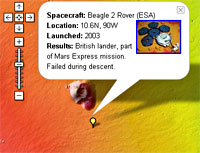 Google’s plans for galaxy-spanning domination have continued apace with the launch of Google Mars, giving surfers the opportunity to explore the surface of the Red Planet.
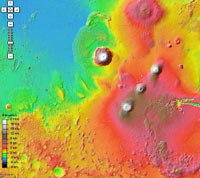 Finally, the Infrared mode offers a mosaic of infrared images taken by the Thermal Emission Imaging System (THEMIS) on NASA’s Mars Odyssey spacecraft.
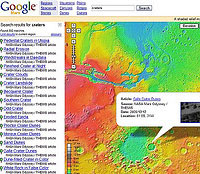 You can also track the landing sites of failed and successful space missions and find the probable crash landing site of the much loved – but totally unsuccessful – Beagle 2 mission.