 We saw it with the Internet in the late 90s and iTV in the early noughties, now mobile TV is the disruptive technology du jour.
All this year’s major TV industry gatherings – MipTV in Cannes, August’s Edinburgh International TV Festival and the RTS in Cambridge – have showcased mobile.
And in recent weeks, Sky, ITV and Channel 4 have all announced plans for mobile video content.
 It’s easy to be swept up in the hype, and persuasive arguments abound.
At last week’s inaugural mobile TV Forum, the atmosphere was upbeat. BT, Arquiva, Fremantlemedia and Universal all gave impassioned presentations suggesting mobile TV is just around the corner.
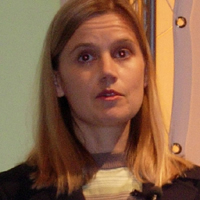
BT’s Emma Lloyd (left) said the mobile video “Livetime” service would be UK-wide on Digital One’s DAB network by June 2006.
 Claire Tavernier from Fremantlemedia (right), owner of Neighbours and Baywatch, said “Fremantle TV” would launch on US mobile networks before the end of the year.
And Cedric Ponsot from Universal (below left) reported on “Label Studio TV” – a mix of ten different mobile music channels – which launched on France’s SFR 3G network in July.
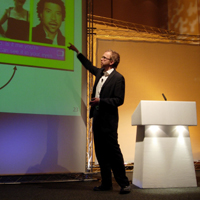
“We’re combining two of the most consumer products of all time” said Arqiva’s Hyacinth Nwana (below right) in his keynote – the underlying subtext was: how can we go wrong?
 But is the industry is in danger of death by over-sell before it’s even arrived?
Forecasters are predicting untold riches. A recent report from Informa estimates the global mobile entertainment market to be worth £24bn by 2010. Venture capitalists are already expressing an interest in mobile TV projects. (At the forum, Justin Judd of i-rights was one such example, saying he had “unlimited funds” available for the right idea.)
 This is all sounding very familiar – we’ve been here before. As with the early days of the Internet and iTV, business models are unclear. Hurdles include lack of appropriate content – including rights clearance on existing properties, lack of spectrum and unproven consumer demand.
At the forum, BT’s Lloyd revealed she’d had to fully-fund the content channel, Blaze TV, to complete the offng for current trials. “We need to kickstart content development” she admitted.
While advertisers were mooted as one possible source of funding, Fremantlemedia’s Tavernier thought they were “scared to invest” in mobile TV, “because of lack of consumer research and lack of structures in place”.
 Tavernier also talked about rights, revealing that although Fremantlemedia owned worldwide TV rights to Mr Bean and The Benny Hill Show, both Rowan Atkinson and Benny Hill’s widow had said no to mobile distribution.
Eirik Solheim from NRK (left), the Finnish public service broadcaster, admitted that every so often their mobile TV broadcasts had cut to video of fish swimming in a tank – as not all programme rights had been cleared.
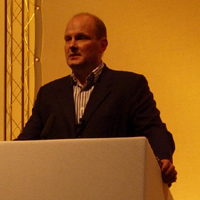 The most telling figures came in the final session of the conference: “Viewers don’t see their mobile as an entertainment device” said Enpocket’s Jeremy Wright (right). “They see it first and foremost as a communicator.”
Wright pointed to figures from a recent Enpocket survey showing that sharing photos of family and friends was the number one multimedia option; videocalls with family and friends were number two. Mobile TV came bottom.
As traditional broadcast models deteriorate, and the rise of the semantic web places social software at the centre of everything, the service I would back would be completely user-generated.
But the smart money will be watching from the sidelines.
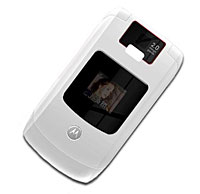 Motorola have offered more details about their forthcoming 3G RAZR V3x slim flip phone.
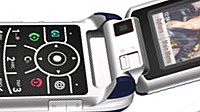 The onboard Bluetooth chip supports wireless stereo sound through Motorola’s Bluetooth Stereo headphones and other compatible hands free wotsits, with up to 512 MB of removable optional TransFlash memory.
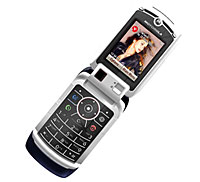 Motorola have also included an advanced speaker-independent voice recognition which lets users state a number/name and be connected without all that pre-recording palaver.
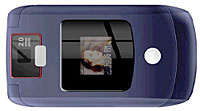 Meanwhile, as Motorola’s phones scoff the pies, rival NEC has launched the
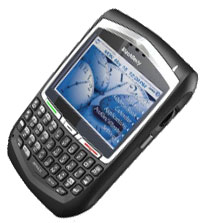
 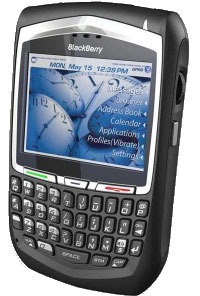 We’re still waiting for the official announcement, but Blackberry enthusiast site Pimstack has managed to unearth some photos and specs of the forthcoming Blackberry 8700.
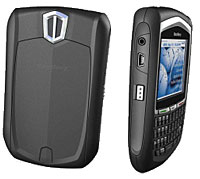 Connectivity is taken care of via quadband GSM/GPRS/EDGE connectivity with onboard support for Bluetooth 2.0. There’s also a hands-free speaker phone built in.
 RIM Announce Intel Partnership
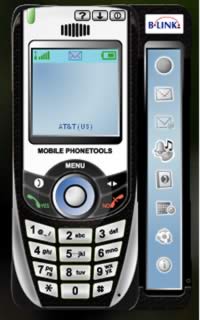 If you’ve ever spent hours shouting at the little blinking blue light on your laptop screaming, “what do you mean you can’t find my phone? IT’S THERE!!”, then you may find Broadcom’s new BLINK Bluetooth software (Bluetooth-Link = BLINK, getit?) bringing your blood pressure down.
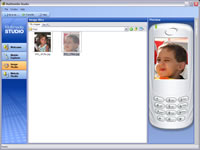 BLINK software claims to soothe the troubled brows of baffled Bluetooth uses with an intuitive graphical user interface (GUI) that makes complex Bluetooth-related tasks “as simple as browsing the Internet.”
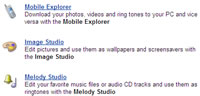 Once fired up, the BLINK software serves up a graphical representation of the user’s mobile phone on their desktop or notebook PC screens.
 “Digital photos, phone numbers and calendar appointments are literally trapped inside users’ cell phones because of the complexity involved in transferring this information to PCs and other devices,” said Brian O’Rourke, Senior Analyst at In-Stat.
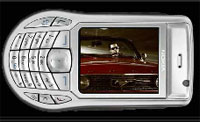 Virgin’s ‘independent-style’ record label, V2 Music has teamed up with mobile video solutions developer Rok Player to announce the release of an ‘indie music video album’ for playing on mobile phones.
 Using Rok Player technology, indie kids can play back audio-visual content preloaded on memory cards at an impressive 24 frames a second (full screen) on compatible mobile handsets.
 “This is such an exciting development in the distribution of music videos” enthused Beth Appleton of V2 Music “as nearly everyone has, or will have, a compatible mobile phone and ROK Player turns those into portable DVD players. So now, for the first time, people can watch as well as listen to their favourite artists perform”.
 Bruce Renny of ROK , commented, “We’re already seeing tremendous interest in our music video albums for mobile phones, and to be able to include this new title in our portfolio is tremendous. We’re expecting the V2 album to prove very popular indeed because of the high quality of the artists it features”.
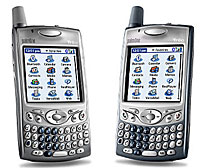 To the sound of a thousand wailing Palm Pilots, Palm has unveiled a version of the classic Treo smartphone running on Windows Mobile 5.0.
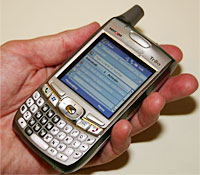 Palm users still waiting for the Wi-Fi card categorically promised at the
 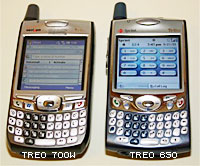 Carmi Levy, Senior Research Analyst at Info-Tech Research Group commented that the new Treo signals a massive shift in the handheld/smartphone market, adding that “when viewed in conjunction with the sale of PalmSource earlier this month, it’s an acceleration in the demise of the Palm OS platform and final confirmation that its once-dominant position in the broader handheld market is gone for good.
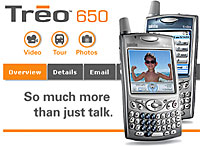 There’s been no release date set for the Windows-based Treo yet, but it is expected to be available “very early” in 2006.
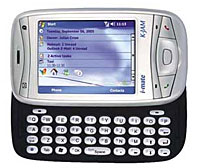 Building on the success of their hugely popular JAM phone, i-mate have announced the new K-JAM smartphone/PDA.
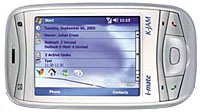 The display comes in the form of a 2.8″ QVGA (240 x 320 pixels) 64k Transflective screen, and the device runs on the latest Windows Mobile 5.0 OS.
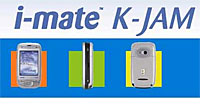 The phone offers support for a wide range of music formats, and claims 10 hours running time in PDA mode and 4-5 hours talk time.
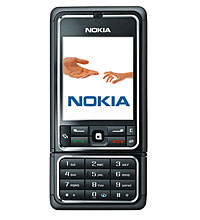 Finnish mobile giants Nokia have come up with the Nokia 3250, a new music-driven mobile phone featuring dedicated music keys and storage for up to 750 songs.
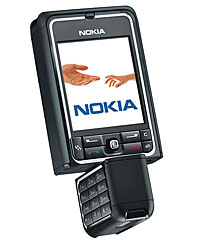 Songs can be converted from CD and transferred from home PCs using the “drag and drop” Nokia Audio Manager software.
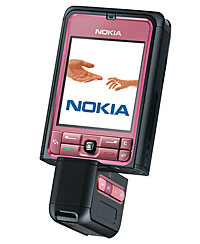 “Nokia connects people to their passions – music – and as the world’s largest manufacturer of digital music players, Nokia is leading the charge to make mobile music widely accessible. The XpressMusic feature brand, also introduced today, makes it easier for consumers to identify those Nokia devices which are specifically designed to listen to music,” purred Kai Öistämö, Senior Vice President, Mobile Phones, Nokia.