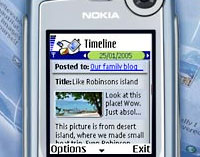
 Nokia has launched Nokia Lifeblog 2.0, an updated version of their photo-blogging offering.
Designed for Nokia’s Nseries handsets, Lifeblog lets users create a multimedia diary, with photos, video clips, messages and text notes and store them on their phone and/or PCs.
The material is presented in a chronological manner, with the new version of Lifeblog offering the ability to add audio notes, calendar entries and location information, so that users can add some context to their pictures and video clips.
 Well, that’s how we’d describe the process, but Nokia has a more flowery interpretation, insisting that adding the extra information is “rendering them as part of the rich tapestry of items that make up your personal Nokia Lifeblog timeline.”
The new Nokia Lifeblog can be set up to link photos to information about a user’s location, the time or calendar entries, so that any photos taken at, say, a wedding, would automatically be tagged with this information from the user’s calendar.
 “With imaging becoming an integral part of mobile devices, the way people approach photography is changing. You are able to capture events and create memories in a spontaneous way as your device is always with you,” gushed Mikko Pilkama, whose job title is surely unpronounceable after five beers: Director, Nokia Nseries See New, Multimedia, Nokia.
Content from the NSeries phones can be transferred to a compatible PC, and photos and video clips can also be shared directly from PCs via email or by blogging to a compatible service.
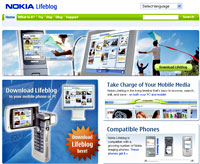
The PC version of the software lets users import existing digital photo collection from their hard drive to their phone – this software can be downloaded for free from www.nokia.com/lifeblog.
 They’ve been busy boys at BT this week, with the UK telecoms giant making two major announcements.
 Using the UK’s existing digital audio broadcasting (DAB) network, the broadcast service will be offered on a limited exclusive basis to virgin Mobile customers later this year. BT Movio will be available in the future to all mobile operators in the UK.
 Microsoft partnership
 Anyone who’s anyone in the 3GSM world will be hot footing it to the 3GSM World Congress in Barcelona, which starts tomorrow.
 The mobile phone industry is desperate to come up with mass market services to entice consumers to use 3G networks, but they’ve got their work cut out, with a recent survey finding that almost 80 per cent of UK users said that mobile services are getting too complicated.
 BT are also going to be at the show and are expected to launch their new broadcast digital TV to mobile service,
  BBC World have been busy bunnies of late, signing distribution deals all over the globe.
 The video streams include the adverts that would be shown if BBC World were being shown on the TV in the region. As yet, BBC World aren’t charging their advertisers any extra to splash them on mobile screens – they’re seeing it as added value for them
 In the 3/Hutchinson Australia deal, the subscribers are being asked to pay Au$4/month for unlimited access, Au$2/day or Au$0.50/two minutes.
 Mobile operator 3 has launched an innovative service that, for the first time, pays customers to receive calls and texts.
 Designed to boost usage of data services, 3 also hopes that the cash-back scheme will prove attractive to new punters and tempt customers from other networks to switch.
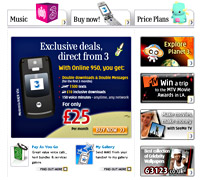 The WePay top-ups come as all-cash vouchers available in £10, £15 and £20 denominations, with no expiry date. However, the WePay cash credits are only valid for 30 days.
 Two recent studies into mobile TV on 3G mobile phones have managed to produce rather inconclusive results concerning the willingness of the great British public to use the service and how much they’d be prepared to pay for it.
 The feedback seemed back-slappingly reassuring, with 83 per cent of the triallists “satisfied” with the service, and 76 per cent indicating they’d be keen to take up the service within 12 months.
 “This trial is further illustration that we are moving from a verbal only to a verbal and visual world in mobile communications,” said David Williams, O2’s technology chief.
 Vodafone has started to roll out its global Mobile TV channels, serving up a feast of “world-class TV brands, pan-European sports coverage and leading entertainment and documentary programmes”.
 Sports fans will be kept amused on the move with Eurosport, UEFA Champions League and, err, Chilli TV (who?) channels, with the Vodafone service also carrying popular channels like MTV and Discovery.
 Vodafone say that their research into the market revealed that Mobile TV complemented television viewing habits at home and thus demonstrated a hearty appetite for the product amongst consumers.
 NTL is currently in talks to merge with Virgin Mobile in a deal that would create a potential rival to the now
  In a fiercely competitive market, cable companies on both sides of the Atlantic are looking to outflank their satellite and phone company rivals by adding mobile phone services to their portfolio of voice, Internet and TV services.
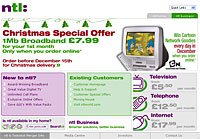 NTL and Telewest have notched up around 5 million subscribers combined, next to BSkyB’s 7.8 million digital television viewers.
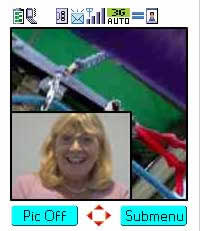 The company intends to offer a DVB-H mobile TV service from the second half of 2006. Indications are that there will be a minimum of 20 channels, although no line up has yet been decided. 3 Italia already carries Playboy adult entertainment and football via existing technology, and has worked with Mediaset and News Corp’s Sky Italia pay-TV operator.
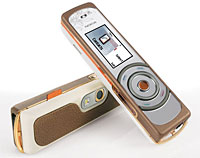
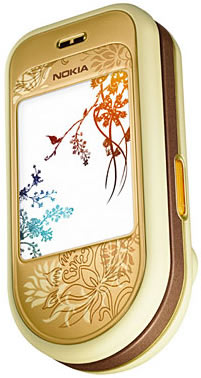 Mobile phone giants Nokia have announced three new phone models aimed at the “style-conscious” market.
 Desperately described as a phone for “trend-setting men and women who enjoy being the centre of attention,” the highly distinctive 7380 looks like it’s come from the same bonkers design studio as the
 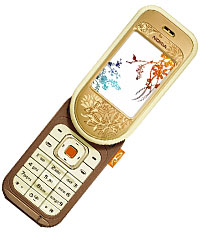 Employing a sliding keypad, the Nokia 7370 comes with a 2-inch QVGA colour screen (320 x 240 pixels), stereo speakers with 3D sound effects and a 1.3 megapixel camera (8x zoom) onboard.
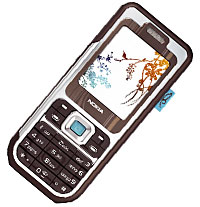 Nokia 7360