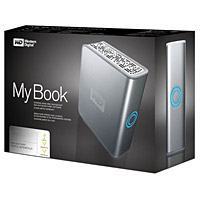
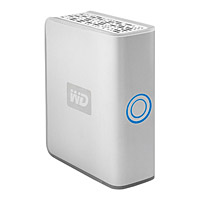
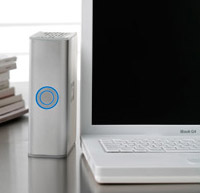
 Attractively designed in a rounded sleek metal jacket and sporting a funky blue capacity gauge, Western Digital’s MyBook range of external hard drives are aimed at consumers looking for a stylish solution to their storage problems.
The drives can be used horizontally or vertically and come in two sizes – 250GB or 500GB, – and three ‘editions’ offering extra features.
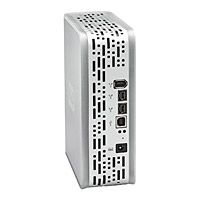
We reviewed the 500GB My Book Pro Edition which offers three ways of hooking up the drive to your PC; FireWire 800, FireWire 400, and USB 2.0.
All leads were provided in the box, and we tested both the FireWire 400, and USB 2.0 interfaces with no problem.
Also bundled in the package is the handy EMC Retrospect Express backup and recovery software, with the drive coming with a 3-year limited warranty.
 Setting up the drive was a cinch: we simply plugged the drive into a USB port our Windows XP machine, and the drive utilities were automatically installed.
With the drivers installed, we were able to switch to our preferred FireWire 400 connection and the drive was ready for use.
Blue light fever
As the name suggests, the drive is hardback-sized, and could sit happily on a bookshelf although the glowing blue capacity gauge on the front might look a tad odd amongst the Mills & Boon.
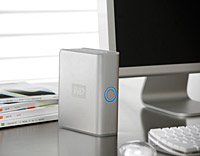 We loved the glowing gauge though: it fades in and out when the drive is turned on and off and does a nice little shimmy when in use.
The outer ring displays the power/activity functions, while the inner ring is split into six sections which illuminate as the space is progressively used up. It’s a nice touch.
Lurking inside the 500GB drive is a 7,200rpm drive with a 16MB cache and a quoted seek time of 8.9ms, and we found it very fast in use and had no problems running video files straight off the disk.
Right now we can’t imagine filling up that 500GB in a hurry, but for drive space demons, Western Digital has recently announced the My Book Pro Edition II, which crams in two 500GB drives in an extended case to give you a massive whopping 1TB of storage – enough for about a zillion photographs (all right, up to 284,000 photos according to Western Digital’s figures).
 Although the drive is quiet in use, you can certainly feel it vibrating if you’ve got it on the same surface as your machine, so we recommend lobbing it up on to a shelf.
Conclusion
We loved the My Book so much we went out and bought the thing – so now we won’t have any excuses to not back up our data.
It’s a shame that there’s no networking option, but with an online price hovering around the £180, the My Book drive still represents remarkable value for money.
With a choice of three interfaces, we should have no problem using the drive with a variety of desktop PCs and laptops, and unlike many other external hard drives, this one actually looks nice too.
 Our verdict
Features: 75%
Ease of Use: 85%
Build Quality: 90%
Overall: 87%
Specs
Performance Specifications
Rotational Speed 7,200 RPM (nominal)
Average Latency 4.20 ms (nominal)
Seek Times
Read Seek Time 8.9 ms
Track-To-Track Seek Time 2.0 ms (average)
Serial Transfer Rate
FireWire 800
Serial Bus Transfer Rate (1394b) 800 Mbits/s (Max)
FireWire 400
Serial Bus Transfer Rate (1394a) 400 Mbits/s (Max)
USB 2.0
Serial Bus Transfer Rate (USB 2.0) 480 Mbits/s (Max)
Physical Specifications
Formatted Capacity 500,107 MB
Capacity 500 GB
Interface Triple Interface
Physical Dimensions
Height 6.780 Inches (Max)- 172.2 mm (Max)
Length 5.630 Inches (Max) – 143 mm (Max)
Width 2.23 Inches – 56.7 mm
Weight 2.60 Pounds – 1.2 kg
Electrical Specifications
Current Requirements
Power Dissipation
AC Input Voltage 100-240 VAC
AC Input Frequency 47-63 Hz
 We whacked it on an older (1.5GHz) machine and found that it really didn’t have the horsepower to run it properly. It’s a pretty greedy little number, even running out of steam on a 2.5GHz. The buzz around us beta testers is that currently, it _loves_ taking power/resources.
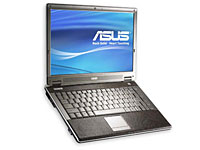 Asus has announced some of technical details of its second generation luxury laptop, the Lamborghini branded VX2, which comes compete with a leather-bound palm rest.
 Despite the Lamborghini badge on the lid, you won’t find a v8 engine inside but a rather sprightly 1.83GHz Core 2 Duo T5600 processor with Intel 945GM Express integrated graphics and 1GB of memory (with an option to install an extra half a gig).
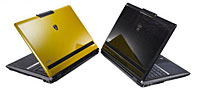 The lappie weighs in at 1.86kg (2kg with extended battery) and measures up at 317×228.6×32.15~37.5mm.
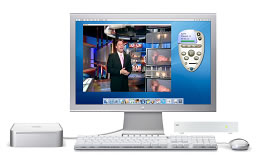 TiVo has been shipping their PVRs with an Ethernet port since their series 2 model, promising content delivered over broadband.
 TiVoToGo for the Macintosh
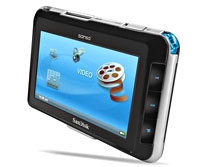 Measuring up at a pocketable 78.5mm x 123mm x 16.9mm, the flash-based player comes with a large 4″ widescreen display and can display photos up to 16 megapixels, making it handy for photographers on the move.
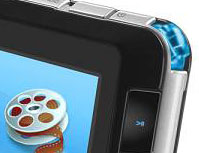 External storage options come in the shape of a slot for SD and the new SD High Capacity (SDHC) cards.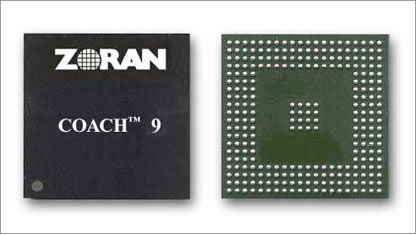
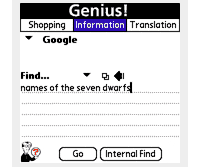 Designed for Palm Treo 600/650/680/700p users, Genius! gives you fast access to mobile-optimised sites, via a tabbed interface offering, ‘information,’ ‘shopping’ and ‘translation’ categories.
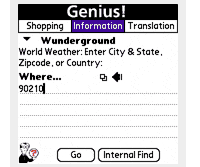 Devious cheating pub quizzers will like the ‘information’ tab which will quietly send your question to fact-filled sites like google, wikipedia and answers.com and bring up a Webpage with the answer already showing.
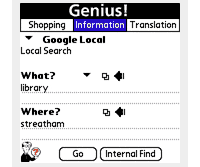 Although it’s not one of those programs that is likely to change your life, power users regularly accessing the Web via their Palm Treos may find this an invaluable addition to their handheld – and at around a fiver ($9.99), it’s well worth a punt.
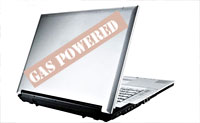 The boffins at Samsung have developed a super long life fuel cell expansion dock that will keep laptops powered up for over a month.
 Samsung’s dock clips on the back of the laptop and measures up around the same size as a regular laptop docking station.
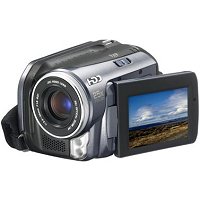 More than four in every five camcorders sold in Europe in 2005 recorded footage to digital tape. However, according to a new industry report from Understanding & Solutions (U&S), digital tape will only account for 14% of the European camcorder market by 2010.
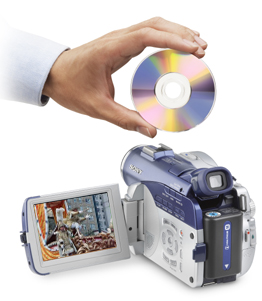 “By 2010, DVD will have clearly established itself as the format of choice for mass market consumers, and will account for nearly half of all camcorders shipped,” says Bryant. “This format’s appeal is its ease of use. You can record direct to a DVD and then drop the disc straight into your home player: it makes for a hassle-free workflow system. Couple this with the wide availability of low cost DVD players and you can see its appeal.”
 In addition to traditional motivations for video capture, there is an upsurge of consumers who capture video to inform, meet and entertain, primarily via the Internet. The growing global interest in social networking sites such as YouTube and MySpace will squeeze the camcorder market, applying pressure through hybrid ‘still-cams’, digital cameras and mobile phones. In particular, the ever-increasing capacity of flash memory will make these devices a serious future competitor to the camcorder.
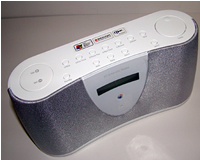 With last week’s launch of it’s TV over the Internet service, a raft of integrated net-based services and a slew of new hardware devices, BT has relauched itself as a multi-media service provider instead of a plain old utility company. The BT Internet Radio shows another face of BT’s rebranding. It’s a slickly designed consumer electrical product aimed directly at the growing digital radio sector.
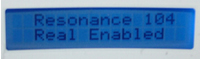 Choosing between stations is a bit of a hit and miss affair. If your tastes tend towards anything beyond the mainstream categorizations (rock, pop, dance, hip hop etc) you’ll struggle to find the music you want to hear. This, of course, isn’t BT’s fault. The device uses the Reciva Internet Portal to aggregate its stations. If you access the Reciva Website (
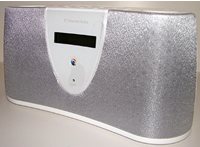 The device can access and playback MP3 or other audio files from a networked PC. An extremely useful feature and one that really capitalizes on the network power of the unit. It probably would have done the most to sell this device to me. In practice it was unable to connect to my PC so I had to leave the feature untested. Typically, macs are not supported and I was unable to access my sizable MP3 collection via either of the macs on the network. It’s not surprising that BT have chosen to adopt Windows technology for integration with computers but it is disappointing that they couldn’t have adopted an interoperable standard which would have supported any operating system.