 If you haven’t been to CES, you may have heard of the headache inducing noise, leg-ache inducing size and debt-ache inducing taxis and hotel rooms. We’ll save you all that and run over the highs and lows from this year’s CES 2006 show – shame we can’t help out with the glitzy lights of Las Vegas.
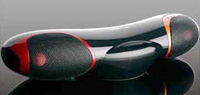
Noteworthy on the entertainment front was the Saitek A-250, a $129 wireless 2.1 speaker system playing music stored on a PC’s hard drive via Class One Bluetooth technology. The system managed to effortlessly stream music up to 100 feet away from the PC.
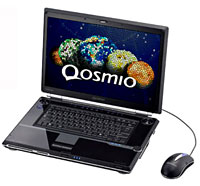
 Satellite radios from XM and Sirius while Toshiba’s new HD-DVD playing Qosmio laptop gathered attention. It’s the first laptop to debut with a built-in HD-DVD player. The laptop can also play hi-def discs on your TV. The Qosmio is expected to hit the streets in March 2006 – months before the first Blu-Ray boxes are due out.
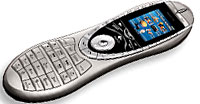
For multimedia aficionados, PC World reckons the Harmony 890 could take gadget lovers to remote control nirvana, with Logitech’s Harmony 890 Universal Remote using RF technology allowing owners to control consumer electronics located in other rooms and floors.
 It looks great, but you’ll need deep pockets and an understanding partner to justify forking out $399 for a humble remote control.
When it comes to portable video devices, Samsung’s new YM-P1 handheld DVR was described as a “genuinely intriguing product”, offering users the ability to record TV directly to the built in 20GB hard drive for viewing later on the unit’s 4-inch screen. You can expect the device to come out in February, priced around $400.
In the flash-based MP3 player department, SanDisk’s 6GB flash player proved a hit, impressing with its generous storage capacity, pretty-boy looks, feature set and video support.
 Elsewhere, the PC World editors were less than impressed with the ongoing willy-waving battle for the biggest plasma screen, arguing that they’d prefer it if the manufacturer’s considerable energies were directed into producing affordable plasmas for regular folks.
Read their full list of highlights and lowlights here: CES 2006: Picks and Pans.
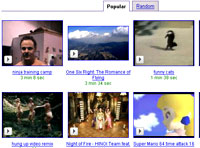 Slapping iTunes around the face with their hefty gauntlet, Google have laid down a challenge to iTunes with the announcement of their new video and television Internet service, the Google Video Store.
 The service promises to “democratise” video sales, letting wannabe Spielbergs sell their movies on Google Video Store, with Google taking what Larry Page has described as a “very low” percentage of the sale cost.
 Visitors to the Google Video homepage at
  Like a pub drunk wanting to take on the entire world, Google have gone over to Microsoft’s table, knocked over their pints and invited them out for a scrap.
 Marissa Mayer, VP of search products and user experience at Google commented, “The pack has been created to give users a way to painlessly install all the essential software they need – pre-configured in a sensible way – in a matter of minutes. Better yet, users don’t have to keep track of software updates or new programs – we maintain and update all the software for them.”
 Josh Bernoff, a media and internet analyst at Forrester, a technology research company, described the move as a “direct action to challenge Microsoft,” adding, “Google is saying, ‘We can manage the browser and other elements of the computer-desktop experience better than you’.”
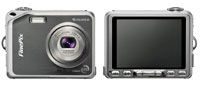 Fujifilm have rolled out their new 5.1 million pixel FinePix V10 Zoom, which they’re billing as a “next-generation digital compact camera with distinctive looks and an extra dose of fun.”
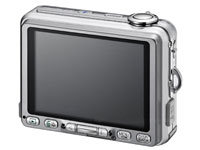 These include a shooting game, blockbuster and a maze puzzle, played via the camera’s controls which have been positioned like a console for extra playability.
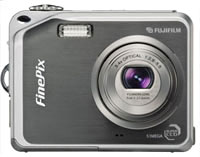 Although we’ve never felt the urge to play a shoot ’em up on our digital cameras, the rest of the camera seems to shape up pretty well, with the FinePix V10 Zoom sporting a large three inch, 230,000 pixels LCD screen in a pocketable design.
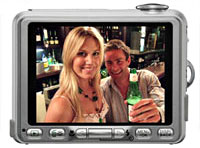 The camera boasts Fujifilm’s excellent Super CCD HR sensor, with their Real Photo Technology offering a huge range of sensitivity from ISO64 to ISO1600, making the camera suitable for low light, ‘natural’ photography.
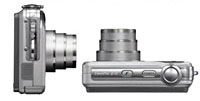 Sadly, Fujifilm are sticking with their rather obscure xD-Picture Card, which means that most photographers switching brands will have to invest in a new memory card format.
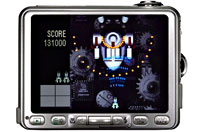 We’re not so convinced of the wisdom of bolting on arcade games on to a camera though – not only does it seem an unconvincing example of digital convergence, it’s also likely to result in a dead camera battery.
 Factory sales of consumer electronics are set to soar to a record high of $135.4 billion (~£77bn ~Ä112) in 2006, according to the Consumer Electronics Association’s annual industry forecast.
 Projections for 2006 and year-end figures for 2005 are included in CEA’s bi-annual US Consumer Electronics Sales and Forecasts report, released every year at the International CES and updated mid-year.
 In 2005, DTV sales grew 60 percent to $17 billion, with the market fuelled by the growing popularity and competitive price declines of flat panel LCD and plasma displays, which accounted for 40 percent of all DTV sales.
 “MP3 technology helped boost the audio and accessories markets in 2005. With the introduction of video playback capability, MP3 player sales surged 200 percent in 2005 to $3 billion. Trends in 2006 should be no different,” he added.
 Eastman Kodak and Skype have announced the “latest innovation in digital storytelling”, Kodak Photo Voice, a new free online service that combines live voice and online photo sharing.
 “Today’s families and social networks are scattered around the globe. Staying connected through photo sharing remains an important element in maintaining closer personal relationships,” said Sandra Morris, general manager of Consumer Imaging Services at Kodak.
 Once a user has downloaded Kodak Photo Voice and Skype, they can select photos from a Kodak Easyshare Gallery album or from their computer, compile them into a Kodak Photo Voice presentation and “call” a friend over Skype to watch the slideshow live.
 Currently in live beta, the KODAK Photo Voice is the first Skype certified “online photo sharing experience” (we’re currently enjoying a “live coffee drinking experience”, btw) and is available as a free download at
 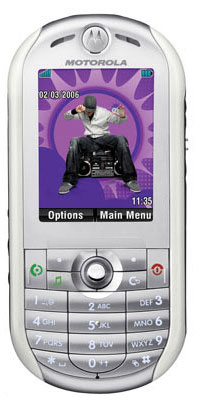 Motorola says adieu to Apple and bonjour to Linux as it unveiled its shiny new ROKR E2 phone at the Consumer Electronics Show today.
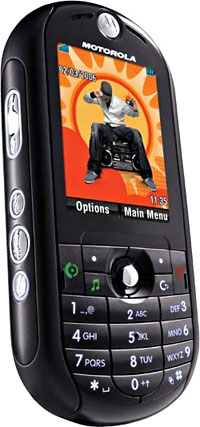 Running on a new Linux-based operating system, the Motorola ROKR E2 also includes a high-res 320×240 screen, a 1.3 megapixel camera with video recording, a built-in FM radio, Opera Web browser Bluetooth (supporting wireless music streaming to stereo Bluetooth headphones), and joy-of-joys – a standard 3.5mm stereo headphone jack and not one of those ruddy annoying mini sockets that are incompatible with normal headphones.
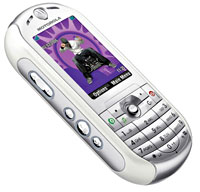 In the absence of iTunes, Motorola intends to push their iRadio Music Service, a subscription music service that uses mobile handsets as the base platform.
 The BBC has announced its Open News Archive, making archive news reports freely available to the UK public to download and use for free in their own creative works.
 Made available under the terms of the recently-launched Creative Archive Licence, the footage can be viewed, downloaded, edited and mixed by UK residents – so long as it’s for non-commercial programming (there’s also several other caveats that budding film makers should read first
 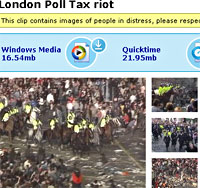 Helen Boaden, Director, BBC News, said: “This trial is an important step in allowing us to share with our audiences the extraordinary news archive which the BBC has recorded over the years. We look forward to getting their reaction.”
 The BBC already offer nearly a hundred clips in their
 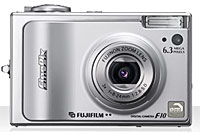 Best compact:
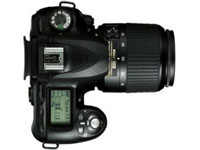 Best dSLR
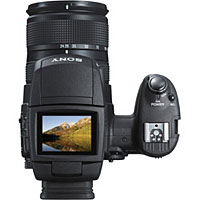 Sony Cyber-shot DSC-R1
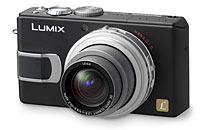 The Panasonic Lumix LX1