Michael Greeson of the Diffusion Group picks up on a theme we’d also raised earlier in the week – the insanity around Apple’s recent announcements, here he focuses on AppleTV.
AppleTV Unwrapped
On January 9, Steve Jobs made good on his 2006 promise to release an Internet TV Adapter (iTVA) and rolled out AppleTV, a set-top box that allows you to stream video from your PC to your TV. This was an important move for Apple and for the entire broadband video industry; one TDG predicted several years ago would likely happen in 2007.
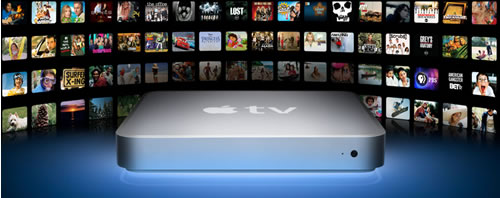
I don’t want to talk about the technology behind the AppleTV platform – you’ve all heard by now that it’s an 802.11n-based wireless media hub with a 40GB hard drive and Intel processing, and is capable of streaming video, music, and photos to up to 5 different PCs. You’ve also likely heard that it will hit the market in February and cost $299 (although those who simply can’t wait to say they’ve bought one can pre-order the devices as of last Tuesday).
So the real reason for this particular OpEd? The often nauseating level of presumption extended to Apple by the public media and (in many cases) the analytical community. It’s as if everything that Apple touches will not only turn to gold but fundamentally redefine how we experience media [1].
You Don’t Want This Kind of Hype
An AP article in this morning’s New York Times captured the dominant opinion regarding AppleTV, stating that it “could be as revolutionary to digital movies as Apple’s iPod music player was to digital music. [2] ”
In what world do these people live? Are they completely oblivious to the fact that Internet-enabled DVRs and set-top boxes, not to mention digital media adapters, have been around for a couple years? Are they aware that the latest generation of game consoles do pretty much the same thing as AppleTV (sans iTunes), including burning content to an embedded hard drive?
Why is Apple’s entry into this space considered “revolutionary” when so many others offering similar solutions were there first? Are they aware that, despite the fact that MacWorld may have been a more exciting show than CES, the number of PC-to-TV solutions, Internet-capable TVs, networked set-top boxes at CES was topped only by the number of attendees? Everyone’s in the game, so Apple’s entry could hardly be considered “revolutionary.” Again, this is convincing evidence of the press’s blind fascination with all things ‘Apple.’
But this should also be a concern for Apple itself. Could these pundits have possibly set the expectations for this device (and the whole concept of Internet-based digital video to the TV) any higher? There is no way Apple can live up to this kind of hype.
Second, these pundits are guilty of using an analogy which, however seductive, is so unrealistic it borders on being dangerous. Betting that the future of Internet video will simply mirror that of Internet music is foolish, and those spouting this nonsense should, well, have their iPods taken away for a week.
 Let’s Get Serious, If Only For A Moment
Here is a litany of knee-jerk, prima facie objections to the pundits (the other pundits, that is) blind proclamation.
First, AppleTV is not the iPod. (Really? Yes, really. And neither will AppleTV enjoy the success of the iPod – again, the bar is simply set to high and such placement shows a poor understanding of the marketplace.)
Second, the online video business is not a simple mirror image of the online music business. (Yes, the similarities are strong but they are not universal. For example, purchasing a song download at $.99 is quite different than purchasing a movie download for $150-$20. Just ask someone who doesn’t work in the business how appealing this sounds. TDG has done the research and less than 13% of consumers would respond positively to such an offering.) As Dawn Chmielewski noted in Wednesday’s Los Angeles Times, no one knows whether the entire PC-to-TV or Internet-to-TV strategy will pay off, and if it does to what extent it will float all boats [3].
Third, iTunes on the TV is not the same as iTunes on the PC. (Nor should it be – Apple must avoid the temptation to simply duplicate the iTunes web store on the TV screen.)
Fourth, the ‘for-purchase only’ model of iTunes remains unproven. (Despite the fact iTunes has sold 50 million TV episodes and more than 1.3 million feature-length films, the real long-term winner may be movie rentals, not sell-thru.)
Fifth, the cable, satellite, and TelcoTV players will not sit still and let someone like Apple, Sony, or Microsoft simply step in and cannibalize their TV revenue. (Yes, the future of Internet TV is bright – TDG just released an analysis and forecast on the growth of Internet-enabled TVs. However, allowing consumers access to a wide variety of unique content that is not carried by the major players is not the same as offering a movie service that competes directly with the incumbent video offerings – especially movies.)
The list of objections can go on for pages. For TDG’s clients and frequent readers, you are aware that we remain as excited about Apple’s entry into the living room as the next pontificator. In the long term, this will have a positive impact upon both the ‘digital home’ and ‘connected consumer’ industries. However, this box is not ‘revolutionary’ in the slightest, nor is moving iTunes to the TV. This is just the latest move by a very important technology innovator, a market leader whose every move is in the professional and public eye.
Despite the widespread cry of ‘revolution,’ the public has yet to weigh in on Internet video-to-the-TV in general and Internet movie downloads in particular, so that best that can be said is that the jury is still out. Research indicates that those that have used iTunes for video downloads are but a small portion of total iTunes users and comprised primarily of tech enthusiasts. Apple knows it will take a lot longer for iTunes to sell two billion online movie downloads at $20 than it did to sell two billion individual music downloads at $.99.
So let’s turn down the hype surrounding AppleTV. No doubt the expansion of Internet video into the living room is real; however, its emergence as a force in our TV viewing lives will be evolutionary or incremental in nature, not revolutionary. In other words, the AppleTV revolution will not be televised.
For a more sober look at Internet video on the television, The Diffusion Group would be delighted if you took a look at their latest report , Broadband Video: Redefining the Television Experience.
[1] This morning’s Good Morning Silicon Valley began with a headline entitled “You know, if the analyst gig doesn’t work out, there’s always a job for you in Apple PR,” a reflection on the fact that virtually every analyst on the planet was under the control of some sort of Apple-esque reality distortion field.
[2] “Apple Unveils New Mobile Phone,” Rachel Konrad, Associated Press, January 9, 2007
[3] “TV May Be A Tougher Challenge,” Dawn Chmielewski, Los Angeles Times, January 10, 2007.
Michael Greeson, Founding Partner & Principal Analyst, The Diffusion Group
 OK, we all know the details now. Apple are releasing a phone – and it’s a looker. Hurrah.
 According to a report in yesterday’s Observer, Google has been cosying up to mobile giants Orange with a multi-billion-dollar plan to knock out a ‘Google phone,’ offering easy Web searches on the move.
 The Observer reported that the phone could access Google’s databases to offer a wealth of location-based searches, including personalised listings of local cinemas, restaurants and other amenities, and maps and images from Google Earth.
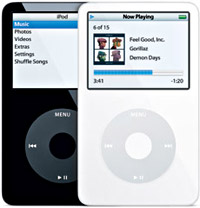 Industry analysts Nielsen Media Research have discovered that Apple iPod-toting consumers aren’t going ga-ga for video, with the vast majority preferring to listen to music and audio podcasts rather than watch TV or movies.
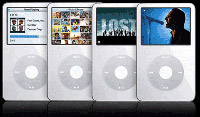 Not surprisingly this figure rises for Video iPod users, who were found to spend 11 per cent of their time watching videos.
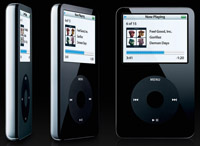 We know that we barely ever watch video content on our mobile players, but then we’d imagine the video-playing target demographic is considerably younger than us comparative crumblies (i.e we’re over 20).
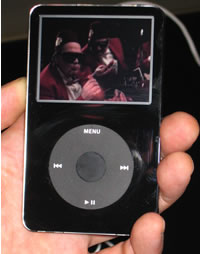 Apple have just announced that they have signed deals with six major airlines, offering the first seamless integration between iPod and the planes in-flight entertainment systems.
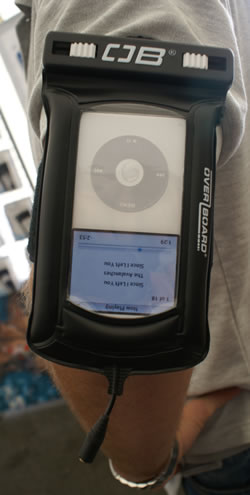 A UK company specialising in waterproof bags, OverBoard, have widened their selection of waterproof cases to include electronic gear.
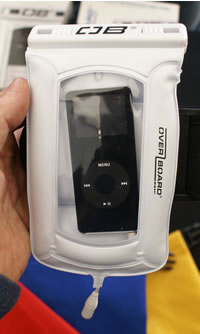 Not content with just providing their leisure range, they’ve decided to tackle the design problem of a waterproof iPod case for extreme water sports, a range they call pro-Sports. Not only are they more rugged, but float, so your rather expensive music player doesn’t start playing its tunes to the fishes.
 The time I had with it gave me the impression that the case is very tough. There’s two leads supplied, a neoprene velcro sports arm strap (for attaching to your arm – in the photo) and a safety break neck lanyard.
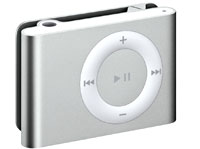
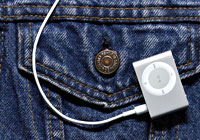 Apple has announced that the updated version of their teensy-weensy iPod Shuffle will be ready to tempt your wallet from today.
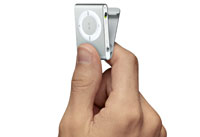 The Shuffle comes with a 1GB capacity – enough for around 240 tunes – and users can elect to play songs in sequence or randomly.
 Apple has sold more than
  Windows system requirements
 Steve Wozniak, Apple co-founder and genius hardware builder, is currently on a book tour around the UK promoting …. not surprisingly, his book, iWoz. As you probably know, he’s commonly referred to as Woz.
 On the iPod and its expected longevity, Woz pins it, “Will the iPod always remain that large? Walkmans seemed to come and then go away. I think Apple’s making the most out of the lifespan.”
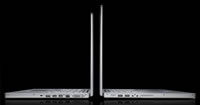 Apple has updated its whole MacBook Pro range of laptops to run Intel’s Core 2 Duo range of processors. They claim a 39% speed improvement.
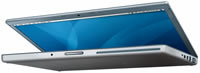 Those keen little things, who shelled out for them, might be a little down in the mouth to find a new, even whizzier version coming out.
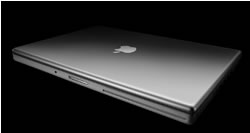 Pricing
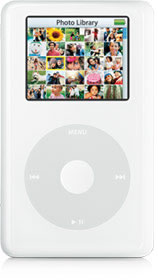 Apple has continued to increase the number of iPods they’re selling. Their latest quarterly results show that they grown the 8.11m iPods they sold in the previous quarter to 8.73m this quarter, beyond market expectations. The quarter that is reporting didn’t change or introduce any new iPods.