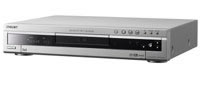
 As the number of digital TV-enabled households continues to rise and the analogue switch off looms ever closer, it seems strange that Sony’s RDR-GXD500 is the first DVD recorder to come equipped with a built-in digital TV tuner.
Over 60% of UK households can now receive digital TV, but trying to record the content can involve nightmarish battles with endless cables and component boxes.
Sony’s RDR-GXD500 is a one-stop solution that’s easy to set up and use, with its all-in-one functionality letting users view Freeview digital channels, make digital recordings and play discs all from a single compact unit.
The included ‘learning’ multi-function remote control lets you jettison your TV remote too, leaving one less thing to have to find on a drunken Saturday night.
Setting up the recorder is a breeze: plug it into your telly, turn it on and then let it automatically scan for channels.
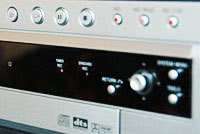 The unit’s onscreen interface is simplicity itself, with the eight-day electronic programme guide (EPG) banishing those video timer nightmares forever – this puppy is so simple, even a granny overdosed on Christmas sherry would have no problem setting up a recording of Des and Mel.
Selecting programs to record is as simple as clicking on the programme you wish to record from the EPG and that’s it. Easy!
Things look pretty good under the hood too, with the unit sporting high quality components such as a 12-bit/108Mhz DAC and both digital and analogue tuners, allowing you to record one channel while you watch another.
Conveniently, the RDR-GXD500 offers simultaneous record/playback and chase play (this lets you begin watching a recorded programme before it’s finished) as well as a veritable armoury of advanced editing, archiving and organising functions.
In use, the Sony performed flawlessly. Memories of long hours endlessly fast forwarding and rewinding video tapes looking for a programme, were banished forever thanks to the recorder’s indexing and multi speed search facilities.
The digital reception was crisp and sharp and infinitely superior to the vintage On Digital box lurking downstairs. Images were rock solid, the black is Bible black, and the colours are vibrant and richly balanced.
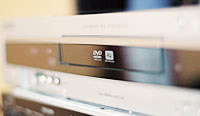 A range of recording quality modes let you increase recording time at the expense of image quality.
The highest setting (HQ) produced copies that were indistinguishable from the original broadcast, although this brought the recording time down to a just over two hours.
With the lowest quality mode, SLP (super long play) time-rich viewers could squeeze in up to six hours of recording with that old school ‘snow storm’ dodgy video feel.
DVD playback was pretty damn good on the machine, with a stable image output providing very little in the way of ‘smearing’ and digital artifacts.
Overall, the Sony RDR-GXD500 gave a consistently good account of itself in all areas, and as such, this is a DVD recorder I can wholeheartedly recommend.
 Highly recommended


Pros: Great all round performance, integrated digital tuner and simple Cons: The baffling lack of progressive scan video capability
Specifications:
Size (WxHxD): 49x9x38cm
Weight: 5.1kg
Recording formats: DVD-R/-RW, DVD+R/+RW
Playback formats: DVD, DVD-R/-RW, DVD+R/+RW, CD, CD-R/-RW, VCD
Video outputs: Component, SCART (RGB), S-Video, composite, RF
Audio outputs: Line out, optical digital, coaxial digital
Street price: Under £400 (~US$762 ~€591)
 The battle between Google and Yahoo continues to heat up, with Yahoo ramping up the feature set of its ‘My Web’ suite of personal search tools.
 Yahoo claim that their service is “better than bookmarks”, with users able to save an exact copy of a page along with the link, so that saved content will always be there when users return to the page.
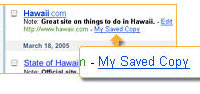 Yahoo’s search history tool bears more than a passing similarity to the one released by Google last week and reflects the fierce competition between the two companies.
 BT Rich Media has cuddled up to Sportfive, a French sports marketing group, and announced a partnership to make 2006 Football World Cup qualifying and friendly games available to fans streamed over broadband on the Internet.
 Football bonkers viewers will be able to choose between 250Kbps or 500Kbps quality streams for approximately £7 (~US$13 ~€10), or alternatively download the entire match to keep forever for around £5 (~US$9.50 ~€7). As a long suffering Wales fan, I have to admit that there’s several games which I never wish to see again!
 The games will be served up on http://www.qualifiers2006.com and promoted to over 10 million users via a range of affiliate sites such as soccernet.com,.teamtalk.com, sportinglife.com and rivals.net .
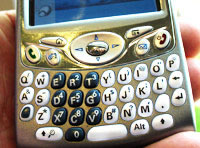
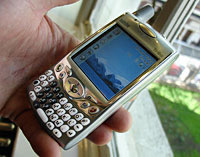
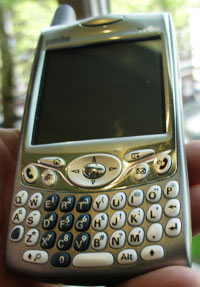 PalmOne has formally launched its Treo 650 in the UK – more than six months after jammy Americans got their mitts on the keenly anticipated smartphone.
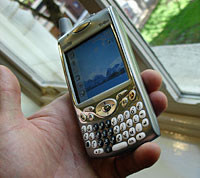 The handset includes useful quad-band GSM/GPRS connectivity for voice and data, with the bundled VersaMail email application supporting a single Microsoft Exchange Server 2003 ActiveSync account and multiple IMAP and POP accounts.
 Even with WiFi, Treo users will still be missing out on the killer VoIP application, Skype, so I asked if there were any plans to introduce a version for the Palm platform.
 Despite attending an official product launch, I left none the wiser as to when the Treo will actually be available or what other network carriers (apart from Orange) will be offering the phone. Naturally, there wasn’t a peep about pricing plans either.
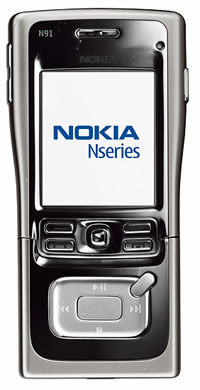 Nokia has launched three new Nseries mobile multimedia handsets, capable of taking print-quality pictures, playing MP3s, reading e-mail, browsing the Web sites and viewing mobile TV.
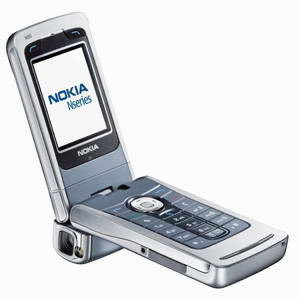 Nokia N90
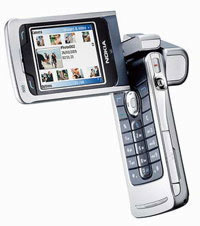 Images, videos and sound can be stored on the phone’s internal 31 MB memory or on the supplied 64 MB RS-MMC
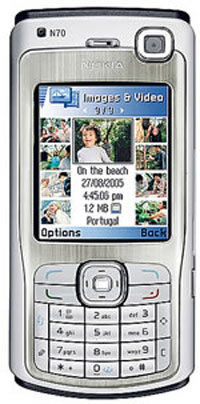 Joe Coles, Director of imaging product marketing at Nokia, stressed the consumer demand for camera-enabled mobiles: “The number one reason why people today purchase new handsets is the camera. Indeed, we foresee that by the end of 2005, over half a billion people worldwide will own a camera phone.”
 After several years of delays, Microsoft has assured computer-makers that Longhorn, the next version of Windows, is on track for release by the end of next year.
 Longhorn aims to boost security by placing cryptographic keys in special silicon chips built into PCs – a more secure solution than the current practice of storing encryption locks as data on a hard drive.
 This would offer a built-in method to let users view and print graphical documents, without the need to install the application that created the original file – in other words, a rival to Adobe Systems’ popular PDF technology and PostScript page description language.
 Real Networks is looking to up-end Apple’s iTunes store and nobble Napster To Go by launching a new music subscription services for portables music players.
 Rhapsody 25 is the entry-level standard service which is completely free to use. It’s being supported by advertising, initially Chrysler and is designed to tempt people to subscribe. It allows anyone who downloads Rhapsody’s Windows-based jukebox software to listen to 25 songs for free each month from Rhapsody’s library, with the option to purchase and download songs a la carte. There will also be 25 ad-free radio stations available.
 It’s been likened to having your CD collection on permanent hire purchase – once you lapse on your payments, you can kiss goodbye to your tunes. To old-school music fans, not owning your precious sounds is a bonkers proposition, but both Real and Napster believe there’s a market for subscription-based music downloads, with punters excited by the promise of filling an entire iPod for less than the price of two CDs.
 Digital-Lifestyles were on hand to witness a new world record being created, as former World Text Champion Arttu Harkki used a Treo 650 smartphone to type the fastest-ever email on the move using a QWERTY keyboard – using a single thumb.
 Before the record attempt could start, Hein Le Roux, official adjudicator from Guinness World Records explained the rules, “There are a lot of phones that incorporate QWERTY keyboards, and we need to make sure that the record is standard across all models. For this reason, we asked Arttu Harkki to type using just the thumb of one hand.”
 As the stopwatch-toting Le Roux looked keenly on, Harkki’s mighty uni-thumb went supernova as he bashed out the following message:
 Once I’d recovered from the high octane excitement of watching someone write a text message repeatedly, I asked Le Roux what the previous record had been, and was surprised to find that there hadn’t been one, because this was a new category.
 AbbiTalk, a West Sussex-based provider of Voice Over IP (VoIP) telephony services, is talking tough about its cut-rate broadband call packages, that offer customers extra telephone lines with discount local and UK call charges and no line rental.
 Prices start at £149 for “AbbiTalkBasicOne”, which provides one extra phone line, a unique number with Pre Pay phone account, an adaptor and a DECT digital cordless phone with digital answering machine.
 No line rental is charged and there’s no need to use a computer to make the calls as these are accomplished through the standard cordless handsets.
 Samsung announces a prototype hard disk drive that includes flash memory, promising longer battery life and less hard disk woes for laptop users.
 The hard disk would only spin up when the flash memory’s “write buffer” was full, reducing the time and power needed to keep the drive’s rotating media spinning.