 Unlike several telecoms companies in the US who are hell bent on blocking free Wi-Fi hotspots, BT has stated that it has “no problems” with the concept.
Although free wireless hotspots are becoming increasingly common worldwide, telcos in Philadelphia and Texas are camping in their lawyer’s offices in an attempt to get hotspots shut down, arguing that it is not in the government’s remit to compete with commercial services.
To a chorus of boos in our office, Andrew “meany” Allison, head of Intel’s mobility group in the UK, spat out; “Governments should do what governments are meant to do: govern. They don’t run, support and maintain networks. That’s for network operators.”
Clearly, Islington Council in London doesn’t agree. They launched a mile-long free Wi-Fi network, dubbed the ‘Technology Mile’, earlier this week.
 The network covers the length of Upper Street – one of the busiest streets in Islington – with the Council donating PCs to some local businesses as part of its push to boost economic activity in the area and to encourage local residents onto the Internet.
Chris Clark, BT’s chief executive for wireless broadband approves, telling vnunet.com that he has no problems with free wireless hotspots, and that the more people using the technology the better.
“Free access doesn’t touch us,” he said. “It’s not a market we’re going after. We’re after the business market and in a lot of cases business laptops are locked out of such hotspots for good security reasons.”
 Clark does not envisage US-style legal wrangling in the future for the UK and expressed confidence that if more people use Wi-Fi it will drive demand for BT’s services.
Clark also confirmed today that BT will be launching a seamless roaming GSM/Wi-Fi phone by the end of the year, adding that he expects Wi-Fi phones to be “very common”, although not ubiquitous in five years time.
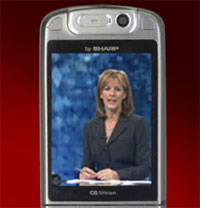 ITN is set to steal a march on its rivals by delivering up-to-the minute election analysis and comment through a partnership with Vodafone Live!
 Nicholas Wheeler, managing director of multimedia content at ITN, commented: “This is a new facility using mobile technology that was not available at the time of the last election.”
 Web search goliaths Google have delivered a large size nine up the rear end of their fierce rivals Yahoo by being the first to launch a local search service in Britain.
 “It’s the first time we’re bringing local search to a country outside North America,” said Kate Burns, ad sales and operations manager for Google in Britain, declining to give details about launches elsewhere in Europe.
 Global search advertising revenue is already sending cash tills into overdrive, with US investment bank Piper Jaffray estimating spending to rise to US$7.9 billion (£4.1BN/€6bn) in 2005 from US$5.5 billion (£4.1bn/€4.2bn) in 2004 – with most of the growth coming from international expansion and higher volume.
 After years of throwing pans at each other, Sony and Toshiba are set to kiss and make up and develop a universal standard for next-generation DVDs, according to a report in the Nihon Keizai Shimbun business daily.
 Two competing formats developed out of this technology, with Sony and Matsushita (Panasonic), introducing the Blu-ray standard in February 2002, with Toshiba and NEC Corp. following with the HD DVD standard.
 A coalition of government policy makers, technology and broadband companies from China have rocked up to the NAB2005 Media Show in Las Vegas.
 Motorola handset owners will now be able to go multiplayer bonkers, courtesy of a new selection of real-time, multiplayer games from Motorola’s consumer portal, www.hellomoto.com.
 As well as playing directly against other phone users, game-hungry portal visitors will also be able to compete in ladder tournaments, view global rankings and chat in-game.
 “This represents another major step forward in the development of Terraplay given the stature of Motorola in the global wireless market. Motorola’s initiative is excellent news for the growth of the multiplayer sector,” purred Jeremy Lewis, Chairman of the Advisory Board, Terraplay Systems, “Multiplayer gaming, offered as premium services, is a real revenue generator and an ideal path to higher ARPU for all service providers”.
 The latest National Statistics monthly update to the survey of Internet Service Providers (ISPs) shows that there was a 1.9 per cent increase in the number of active subscriptions to the Internet in the past year (Feb 2004 – Feb 2005)
 Permanent Internet connections rose to 43 per cent of all subscriptions in February 2005 (up 2 per cent from Jan 2005) with a year on year increase of 85.9 per cent for subscriptions for permanent connections.
 The Electoral Commission is supporting efforts to get the UK’s young voters well up for the forthcoming election by encouraging them to get down wiv their mobiles.
 Becky Lloyd, campaigns manager at the Electoral Commission rapped: “It’s important that we communicate with the younger electorate in particular through a medium with which they are comfortable and familiar and mobile phones are a good way of doing this.”
 US Record industry honchos will be taking a bigger interest than unusual in the new Springsteen release as they wait to see how the new DualDisc format goes down with Brooooooce fans.
 The music business is hoping that the new format – and the extra cash – will help recoup the slice of the retail market lost to piracy and illegal file-sharing. “It’s harder to file-share DVD content and it’s virtually impossible for anyone to burn a DualDisc at home,” purred Thomas Hesse, president of global digital business for Sony BMG.
 Video Networks Limited (VNL), who operate the HomeChoice VOD service around London, have added the children’s animation channel Toonami to their line up using the MPEG-4 / AVC format, making it the world’s first television channel to be encoded with advanced compression technology.
 VNL’s migration to MPEG-4 for its remaining broadcast channels, including the Cartoon Network and Boomerang, is expected to be completed within the next two months. In time the VOD service will also be moved to the new CoDec.
 “The first commercially available encoding platform to support MPEG-2, MPEG-4/AVC and SMPTE VC-1, Harmonic’s DiviCom MV 100 enabled VNL to provision a compelling video-over-DSL service while in parallel developing the elements of an MPEG-4 environment.