 Wi-fi enabled North Londoners can now gorge their connectivity needs with the announcement by Islington Council that its ‘Technology Mile’ has gone live.
Located in Upper Street, Islington, the ‘Technology Mile’ runs from The Angel to Highbury Corner, providing one mile of unbroken free wireless broadband access to residents, businesses and any passing freeloader.
The service will be available to anyone with a suitably enabled Wi-Fi device, with surfers being directed to a customised council page featuring a comprehensive menu of council services, information and communication options including jobs, travel, e-Govt options, child care and advice services
Happily, there’s also direct access to the World Wide Web – all for nowt.
The second part of the project is to dish out computers to businesses in the area, so that customers can use these for free access.
 The council are anticipating that locals may use the free access to pay off council bills and are hopeful that the service may stimulate commercial activity in the area.
“As London’s largest ‘hotzone’ Islington’s Technology Mile is a landmark in providing wide reaching community services directly on the street,” says Cllr Bridget Fox. “By offering free access to important council services and to the internet, the project addresses social inclusion head on and supports our ambition to turn Islington into an A1 Borough for all.
“The technology mile builds on other schemes the council has in place to help everyone to gain the benefits of internet access. I’m especially pleased with the second phase of the project, when we hope to begin work with selected local businesses, supplying PCs along Upper St business so they can offer free access to their customers.”
We like this scheme. There’s not much point in having free community Wi-Fi if only well-heeled laptop-toters can use it, but by ensuring public access to computers in the area, the walls of the digital divide could come crashing down.
The scheme comes with a few commercial risks – if the service proves to be fast and reliable, locals may cancel their commercial subscriptions and this may result in ISPs fighting back – in America, several commercial providers have already managed to get legislation passed to prevent free or low-cost municipal broadband services arguing that they’re uncompetitive.
Marc Meyohas, Chief Executive of Cityspace, the company who built the network gave out his love for the borough: “Islington is a progressive council with great vision; the Technology Mile proves what can be achieved for the community by taking the internet out of the restrictive arenas of homes and offices and truly integrating it into people’s lives.”
 An unemployed Scottish man alleged to have carried out “the biggest military computer hack of all time” will appear in a London court today.
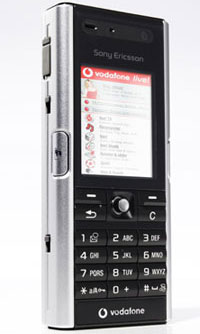 Rather immodestly self-declared as ‘beautifully designed’, Sony Ericsson and Vodafone have announced their new V600i 3G phone.
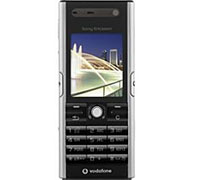 Subscribers can also take advantage of the content streamed from the Vodafone live! site, including live sports and music videos.
 Cutting edge office hipsters keen to perfect that
 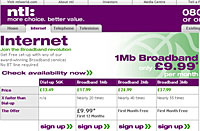 NTL’s claim that 300K broadband offer was “more than 5 times faster than standard 56K dial-up internet” has been happy-slapped down by the Advertising Standards Authority (ASA), who condemned it as being in breach of TV Advertising Standards Code.
 The telecoms giant insisted that it was standard industry practice to refer to the speed of broadband only in terms of download speed and, to back up their case, readily snitched on a host of competitors making similar claims.
 After an eternity of “will they? won’t they?” rumours Siemens has announced that it is to flog its loss-making mobile-phones unit to the Taiwan-based BenQ Group.
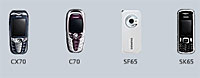 Through the haze of a soft focus lens, Klaus Kleinfeld, the CEO of Siemens AG whispered sweet nothings about his new bedfellow:
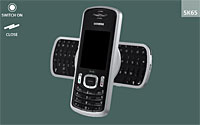 Perhaps a little tipsy from wielding his fearsome buying power, BenQ Chairman & CEO K.Y. Lee roared “With the acquisition of Siemens’s mobile phones business, we are rapidly approaching our goal to become one of the world’s leading players in the mobile phone industry. Our expansion strategy will be strongly supported by this deal, as we can rely on a global organization with excellent employees, a well-established blue-chip customer base in the mobile business and a strong brand with high impact.”
 “Siemens will continue to offer its customers in the telecommunications industry one-stop shopping for all their needs. With BenQ, we have found a partner who will supply us with the corresponding products. In addition, we will be collaborating closely in research and development. Moreover, we also intend to utilize synergies in jointly addressing customers and in our selling operations,” commented Lothar Pauly, the CEO of the Siemens Communications Group.
 America Online is taking on the likes of Yahoo, Hotmail and Google’s Gmail with its new free 2GB email service in the US, launched yesterday after trials earlier this year.
 Users will be able to log in with their existing AOL IM screen name as their e-mail address, with an updated version of the AIM 5.9 software offering one-click access to AIM Mail.
 The new free service represents a hefty shift in AOL’s business strategy which has traditional involved charging users subscription fees for its services. Instead, the company is expecting to generate revenue from AIM Mail through banner ads – hence the punter-tempting monster giveaway promotion.
 United and Verizon Airfone have become the first companies to receive Federal Aviation Administration (FAA) approval to install Wi-Fi for use on US domestic commercial aircraft.
 Although the FAA approval currently only applies to the cabin of United’s B757-200 aircraft, it’s an important landmark on the way to enabling full high-speed wireless Internet access on board all United aircraft.
 “Our wireless broadband system will require only the addition of an avionics box, a wireless access point and a directional antenna, making it the faster and more affordable choice for United and its passengers,” said Bill Pallone, president, Verizon Airfone.
 Once a service provider is selected by the FCC, United should be able to meet their passengers’ Wi-Fi needs in double quick time with, no doubt, zillions of other airlines following their lead.
 There’s a big battle going on for your landline, with the Carphone Warehouse limbering up to get in some telling punches into BT’s sector dominance.
 Chief exec Charles Dunstone was ready with a quote: “We are now well on the way to developing a broad-based telecoms group, providing mobile and fixed line services to individuals and businesses across ten countries.”
 Crucially, revenues from telecoms services were up 45% to £804 million (~US$1,462m ~€1,190m), with operating profit flying up 50% to £22.5 million (~US$41m ~€33m).
 The rumours have been floating around the Internet for weeks, but it now seems certain that Apple will announce later today that it will be switching its computers to Intel’s.
 When asked about the deal he said that the company has long pursued a deal with Apple, adding, “We always talk to Apple. Apple is a design win that we’ve coveted for 20 years and we continue to covet them as a design win. We will never give up on Apple.”
 Sales of laptops outstripped the number of desktop PCs for the first time ever, according to Current Analysis.
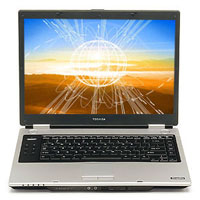 Once back-breaking beasts with a battery life measured in nano-seconds – and a price tag to make grown men weep – modern laptops are now faster, slimmer, more capable and, crucially, cheaper (laptop prices have fallen 17 per cent against a smaller 4 per cent fall for desktops).
 His barely-revelatory statement was backed up an announcement from Mike George, VP of consumer business for Dell US, who today revelaed that Dell will be launching a “luxury” range of computers, with their hoity-toity desktop and notebooks selling for between $1,200 (~£660, €979) and $3,500 (~£1,925, €2,855).