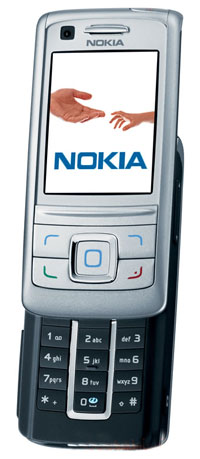
 In a veritable orgy of mobile manufacturing, Nokia has launched a grand total of seven new handsets, including a dual camera 3G device and their most feature-rich CDMA phone yet.
Four of the models use the ‘Matrix-style’ sliding design, which features a keyboard which slides out from under the display.
The phones are powered by the somewhat elderly Series 40 user interface, although the latest version of the O/S cranks up the eye candy, adds a new “Active Standby” home screen and bundles in support for applications written in Macromedia Flash Lite.
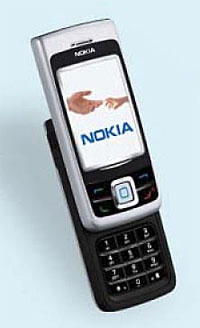 The 3G multimedia-tastic 6280 is a compact WCDMA/EDGE sliding handset sporting a 320 x 240 pixel screen, a 2 megapixel camera (with a VGA front camera for video calls), a removable mini-SD card and a built-in FM radio. It’s expected to appear on the shelves in the fourth quarter 2005 for EUR375.
Next up is the 6270, a quadband 2.5G slide phone with a 2-megapixel camera. The phone has similar specs to its more expensive cousin, with the same size screen, music playback and a built-in FM radio. Price is estimated at EUR300.
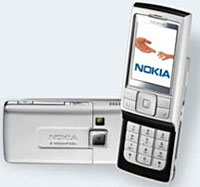
The 6265 is Nokia’s most feature-rich CDMA phone, with a 2 megapixel camera – complete with flash – and 176×144 pixel resolution video recording. The Nokia 6265 can play streaming video of up to 15 frames per second, and offers music layback, Bluetooth and miniSD memory storage (up to 1 gigabyte).
CDMA (code division multiple access) is the world’s second most common mobile phone technology after GSM and Olli-Pekka Kallasvuo, Nokia’s executive VP and GM for mobile phones, said the company were committed to growing its CDMA mobile business, particularly in Asia Pacific and China
 “The growth prospects on the CDMA front are extremely encouraging. The CDMA market is expected to grow at pace with the overall handset market and the global CDMA handset volume is expected to increase by 10 to 15 percent year-on-year in 2005,” he said.
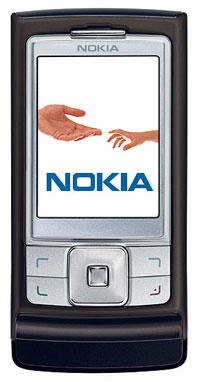 The last of the slider phones is the 6111, which has more than a passing resemblance to the hugely successful i-mate JAM phone, although the screen is much smaller at 128×160 pixels. The camera contains a 1-megapixel camera and 6x digital zoom and retails for around EUR270.
All of the slider phones are expected to ship in the fourth quarter.
Nokia have also announced two entry-level CDMA designs, the folding 2255 and the compact 2125 (due to ship in the fourth the third quarters, respectively) and the Nokia 6060, a GSM clamshell model for basic voice functions.
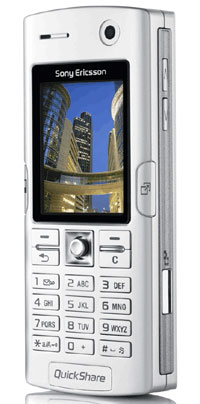 On the same day that Nokia went forth and multiplied with seven new phones, rivals Sony Ericsson announced four new handsets, aimed at increasing its presence in the low end and mid-market sectors.
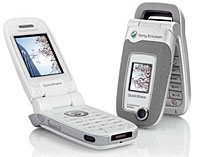 There’s 32MB of memory space on the phone for shunting on ringtones, wallpapers, still shots and video footage, with a built in music player and FM radio taking care of multimedia.
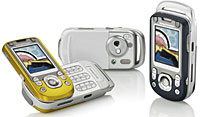 The S600 comes with 64MB of onboard memory, but sadly, there’s no memory card on offer – presumably it’s been left off so as to not compete with the higher spec’ed K750 model.
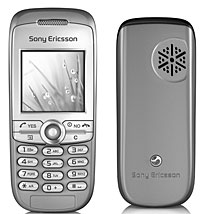 Flipped open, the twin-display phone offers a 1.8″ 128 x 160 pixel, 65k colour, TFT main screen, supported by a 101 x 80 pixel, colour secondary display on the outside.
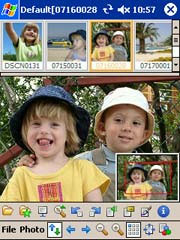 These days, a smartphone/PDA isn’t worth sniffing at unless it comes with a built in camera and a shedload of internal/external memory for storing mobile snaps on.
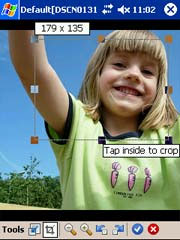 When you install the Pocket PC program, there’s also an option to install the Resco Album Generator on your desktop PC – this program lets you create photo albums ON your desktop and then have the pictures and the album information transferred to your handheld device on the next sync.
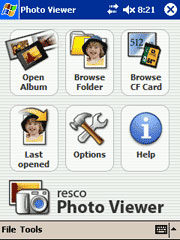 In full screen mode, the keypad can be used to scroll through picture collections manually, or users with tired fingers can set up a slide show and choose from a selection of transition fades and effects.

 Ofcom’s press release accompanying their response to the DCMS green paper on BBC Royal charter was my first point for comment. It initially indicated to me Ofcom were sticking to:
 1. Ofcom have produced more original thinking than I gave them credit for, initially, perhaps because the introduction and summary to the document are not as robust as its contents. Read on…
 This reflects the EU rules governing the use of State Aid, which require that publicly funded services such as the BBC’s must complement rather than substitute or duplicate provision by the market. Furthermore, where market developments supersede publicly funded provision, the BBC should withdraw from those services or activities and re-direct its valuable public resources to areas of activity where there is a proven market failure. While market failure should not be the only test applied to BBC services, it should provide the underpinning for all publicly funded BBC services. The absence of a market failure analysis raises significant questions as to the compatibility of the BBC’s publicly funded status with European State Aid rules.
 Ofcom has today reported its quarterly figures on the rate of take-up of digital TV in the UK.
 This is bad news for Sky, as it’s starting to get close to the around 7.5m homes that they have. What’s worse news for them is in the detail of the report. Sky’s all-important ARPU (Average Revenue Per User) has dropped from £386 in Q4 2004 to £382 in Q1 2005. This might not sound huge, but for an organisation that is trying to constantly increase their ARPU, it’s not encouraging. Another figure of note is their rate of churn, that’s up to 11.1% form 9.6% in the previous quarter.
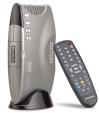 The growth of aerial-delivered Freeview has been gaining more momentum of late, still spearheaded by the BBC using the Freeview channels to first-show a lot of its content.
 The breakdown of the figures is as follows
 Animated UK act, Gorillaz, are proudly claiming a world first for their ‘next generation’ enhanced video for ‘Feel Good Inc.’
 Bundling in a host of interactive freebies is clearly being seen as a useful marketing tool for record companies, keen to discover new ways to part loyal fans with their cash.
 The band – brainchild of Blur’s Damon Albarn (aka 2D) and Tank Girl” creator Jamie Hewlett (aka Murdoc) – are already celebrating the US success of their second album, “Demon Days,” which has debuted at No. 6 on The Billboard 200.
 It’s hardly revelatory stuff, but a study by J.D. Power and Associates has revealed that customer service issues dealt with by living, breathing human beings create significantly higher customer care ratings than those with computer-generated interaction.
 “As more companies encourage customers to contact Internet and computer-based customer service programs to save operating costs, they run the risk of increasing churn [techie word for a customer switching carriers] as the number of contacts needed to resolve a customer complaint or issue rises,” said Kirk Parsons, senior director of wireless services at J.D. Power and Associates.
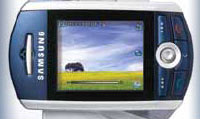 Scheduled for release at the beginning of July is Samsung’s “Web friendly” SGH-Z130 3G handset.
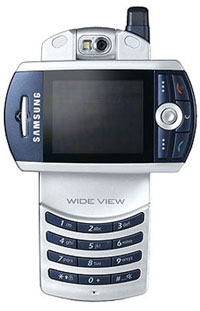 There’s a fair bit of memory on board to handle all the multimedia fluff, with a total of 88.5 MB storage offering 80 MB for Image/Sound/Video, 4 MB for Java, 3 MB for Email and 1.5 MB for MMS with just enough room left over for 200 SMS messages.
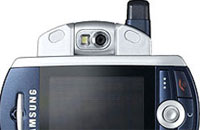 As with earlier versions of Netfront, there is a handy option to render Web pages to fit smaller screen widths, saving a ton of pesky horizontal scrolling.
 Hot on the heels of yesterday’s story about the ‘world’s greatest military hacker’ comes this tale of advanced doltery from train operator Great North Eastern Railway (GNER), who managed to publish their system passwords in a magazine available to thousands of passengers.
 GNER, owned by the Sea Containers Group, provide high-speed intercity train services along Britain’s East Coast main line, linking England and Scotland along a route of almost 1,000 miles.
 A new survey published today reveals that more Europeans than Americans possessed a broadband Internet connection in the first quarter of 2005, with hi-tech South Korea in danger of losing its global pole position.
 Leading the European charge were countries such as the Netherlands and Denmark whose broadband connectivity now only trails South Korea by a smidgen.
 “Given the slow growth of South Korea, we expect that the top position, now held by South Korea, will change hands this year,” observed TelecomPaper director Ed Achterberg.