 According to a survey by Entertainment Media Research, UK legal digital music downloads have grown by a thumping great 75% in a year.
The 2005 Digital Music Survey also predicts that UK consumers will spend 60% more on buying music downloads in the next six months
Although 40% of UK music lovers are still grooving to music files illegally downloaded to their MP3 players and PCs, the survey found that 35% had bought legal downloads with a further 23% intending to start purchasing downloads soon.
Legal downloads are continuing to find favour with consumers, with over two thirds of illegal downloaders claiming they will download less in the future.
The survey revealed that the dwindling enthusiasm for dodgy downloading was due to user concerns about prosecution (44%), fear of viruses (29%) and inferior audio quality vs legal downloads (21%).
 These findings are supported by the news that legal digital downloads have accounted for 8% of Coldplay’s recent album sales in the US – the biggest share for any new release to date.
Dutifully dissecting the digital demographic, we can reveal that the fear of getting into trouble with The Man worried 13-17 year olds (50%) and women (47%) the most, while 35-44 year olds (35%) and women (34%) were most concerned about the prospect of downloading infected and unauthorised files.
Spoddy, EQ-adjusting audio aficionados of the male variety were the most put off by the audio quality of the unauthorised tracks, with the difficulty in finding the exact right track particularly troubling music-obsessed blokes between 25-44.
The survey discovered that legal download demand is being fuelled by immediacy over price, with nearly two-thirds (63%) claiming immediate availability as being the key reason.
The ‘must-have-that-record-now’ ethos was most reflected by men in the 18-24 age group, with the price of downloads relative to CDs seen as a less important factor (43%).
 Two fifths of those surveyed preferred digital downloads because they were only interested in one or two tracks, while 29% downloaded music to sample an album before purchase.
The survey revealed that 45% of legal downloaders buy current singles, unlike older consumers (45 years plus) who tended to know what tracks they want and were more likely to purchase 1-2 tracks from an album.
Russell Hart, Chief Executive, Entertainment Media Research, rummaged through the figures, mulled for a moment and then declared, “The findings indicate that the music industry is approaching a strategic milestone with the population of legal downloaders close to exceeding that of pirates.”
The survey was undertaken in association with law firm, Olswang, with their senior partner and Digital Lifestyles chum John Enser, commenting, “Clear deterrents to illegal downloading are emerging with fear of prosecution running high and close behind is the sense that unauthorised downloading is “not fair on the artists,” suggesting that the industry’s messages, led by the BPI, are being communicated effectively.”
 Sony BMG Music Entertainment has announced that it intends to add copy-restricting software to its latest CDs.
 This doesn’t affect Apple computer users – they can freely copy and transfer music from the restricted CDs to their iPods – but consumers using Microsoft’s Windows software won’t hear a note, although they will be able to transfer music to Windows Media-supporting devices.
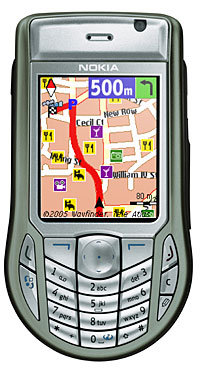 Nokia and Wayfinder Systems have proudly proclaimed the availability of the Nokia 6630 Navigation Pack, a compact smartphone-based navigation package for folks on the move.
 Never one to knowingly undersell his product, Jonas Sellergren, VP Product Management, Wayfinder Systems proclaimed “the Wayfinder Navigator application on the Nokia 6630 brings the ultimate navigation solution to the consumer.”
 A recent study by security vendor Prolexic Technologies has declared AOL to be king of the zombies, with their customer’s machines accounting for more infections than any other ISP.
 In full-on PR schmooze mode, AOL spokesman Andrew Weinstein declared the numbers to be “great news” for the company, pointing out that the number of Zombies on its network is actually low in relation to the total number of its members.
 In a novel move to publicise the benefits of broadband for regional dwellers, the Welsh Assembly Government’s Broadband Wales Unit sent mobile Internet gateways scurrying around the valleys and mountains of lovely, lovely Wales.
 The Get Smart – Get Broadband campaign revs up at Swansea Party in the Park this Sunday, where fans will be able to send messages (known in the vernacular as “shout outs”) from the Smart Cars to a giant onstage screen.
 A report by compilers Mintel International has revealed that pets are being ousted by consumer electronics in British homes.
 The study observed that, “In those families with children, the demand for pets may not be as strong as it once was, since many children now prefer to immerse themselves in the world of computer games and TV programmes”.
 But it’s not all bad news for our precious pampered pooches and treasured tabbies, with the report revealing that sales of pet food, accessories and pet insurance have rocketed by 24 percent in the past five years, reaching a total of US$6.5 billion.
 With the rise of home entertainment robots like the Sony Aibo and the forthcoming Nintendo virtual pet game, Nintendogs (where virtual dogs will respond to voice commands and bark at passing Nintendog consoles), we wonder how long it will be before children think that pets live on batteries.
 According to a new study from Internet audience statisticians Nielsen//NetRatings, nearly one-fifth of Web users who read newspapers prefer online to offline editions.
 “A significant percentage of newspaper readers have transferred their preference from print to online editions,” said Davidson.
 As traffic has increased traffic to news sites, newspaper editors have been allocating more content to their online editions, adding frequent news updates, weather news, original content, message boards and editorial blogs.
 US scientists have created imaging technology that lets viewers enjoy what they claim to be the first truly three-dimensional holographic movies.
 Made by Texas Instruments, these clever puppies are currently used in television, video and movie projectors and incorporate a computer that processes an incoming digital signal several thousand times a second.
 If you look at interferograms on a PC screen, all you get is a series of random black dots creating an effect that looks a bit like a telly on the blink.
 Emerging blinking from their underground laboratories, the overworked boffins at Samsung have announced the creation of the SGH-E620 Bluetooth voice recognition phone which is a Bluetooth mobile with – you guessed it! – voice recognition technology.
 Vodafone has made their service more alluring to international business travellers by cutting roaming charges on their 3G data networks.
 According to analysts Gartner, the new prices demonstrate that operators are currently charging too much; “This is a sign that mobile operators are starting to recognise they charge too much for roaming data services,” they added, as your writer’s head nodded vigorously in agreement (while making snarling noises in the direction of T-Mobile).
 Gartner noted that with Vodafone only selling sold 300,000 3G data cards since launching the 3G data network in January 2004, the company is hoping that the reduced roaming charges will boost this figure.