 I like this … Guba
In these times, there are many options available to us when we choose how we want to consume media. Sometimes, however, it’s the oldest choices that are the best: A company called Guba has developed a superb Usenet interface, with which it is possible to download music videos, MP3s as well as TV shows. The ease of use of this terrific application blew me straight out of the water, and I immediately signed up to it. Great service, just what I had been looking for and well worth my $15 (£8.50 or there abouts).
Now where did I park…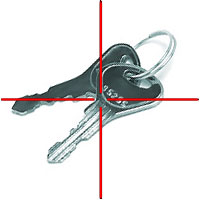 Guidepoint, a company that make navigation and location soft- and hardware, have released a new product, that allows car owners to track their four-wheeled pride and joy using their mobile phone. Although this technology is cool, you might be wondering what appeal it may have to someone of my age, who, at least in the UK, isn’t legally allowed to drive yet.
Well I’ll tell you why this got me a teensy bit excited: I’m a teenager. Teenagers are forgetful, and as such I am forever losing things. Imagine if I could attach small locator tags to items I lose often, and then find these tags using my mobile phone. This sort of technology would stop me losing anything, ever, and would save me countless hours of looking for my keys when they fall down the back of my desk again.
Here’s another examples. Can’t find my graphics folder for school? No problem, just whip out my mobile phone, and I would get a map with a little cross-hair on, telling me exactly where it’s located. If it was closer than, say, 10 metres, I would instead get a small arrow with a distance reading next to it, which would guide me towards the item that I had lost.
I’m not sure how such a technology would work, but a mixture of a flavour of 802.x and bluetooth would be cool, with maybe some GPS thrown in for the maps. Now if only Father Christmas read Digital-Lifestyles, he might bring me one… Sigh…
By the way, Guidepoint has now expanded their mobile service to include remote car starting and door-unlocking. Could come in handy next time I’m planning a bank robbery ;-)
 Hope it gives change!
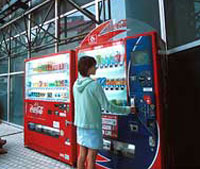
This one just about qualifies as part of the weekly round up. Engadget covered the news that mobile phone giant Vodafone are to start selling mobile phones in vending machines. Interesting idea, but I can’t really imagine it taking off to be honest: When I go phone shopping, I value the expertise of specially trained staff and the advice they have to give.
On the other hand though, a lot of staff in shops seem to lack any knowledge of mobile phones… Maybe it’s just a cost-saving measure, but sometimes I think when I walk into certain phone shops that they might as well be employing monkeys half the time!
Still though, although I personally wouldn’t buy a phone from a vending machine I can see a lot of kids who don’t care what they get as long as it’s a phone buying these.
 This morning, Homechoice, the currently London-focused DSL-based VOD announced that they had appointed CSFB (Credit Suisse First Boston, as was) to raise new capital for their expansion around the UK.
 Their newly-announced ARPU (Average Revenue Per User) figures are impressive at £430, being considerably higher than Sky’s £384 (announced in 3 August 2005), but lower than Telewest’s £538 and ntl’s £477 (reported to ofcom, Q2 2005).
 MacExpo has moved to Olympia from the Islington Design Centre and that’s probably the most exciting bit of the show.
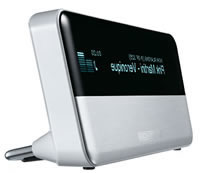 The new G5’s are nice, based on the PCI Express architecture with the ability to put some very high-end NVidia graphics to real work. They now support two CPU’s each with dual cores (i.e. 4 cores) though each core only operates up to 2.5GHz rather than the older two CPU systems that operate up to 2.7GHz (but then, in theory, you’re getting 10GHz compared to a max previously of 3.4GHz – real world tests show more like a 67% speed increase). The new NVidia graphics cards are all capable of driving dual displays – so that’s two 30″ Cinema displays … but you’ll need a new desk.
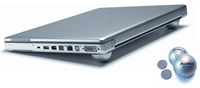 The new iMacs were there too and they are still the sexiest systems on the market.
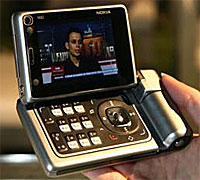 Nokia has announced three more Nokia N series multimedia devices, the Nokia N92 (the world’s first mobile device with a built-in DVB-H receiver), the Nokia N71 and the Nokia N80.
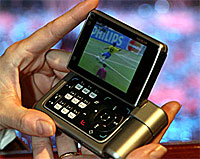 Using the built in software, users can also create personal channel lists, subscribe to TV-channel packages, set program reminders and interact through services such as voting, program feedback and additional web discovery.
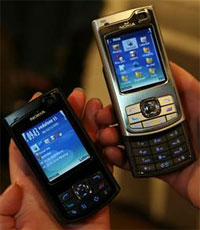 Sporting WLAN and 3G, the Nokia N80 is being touted as the world’s first handset to feature UPnP technology, and has the ability to be used as a remote control for wirelessly swapping content between PCs, audio equipment and TVs.
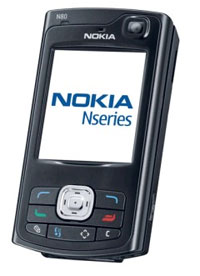 Photos snapped on the Nokia N80 can also be printed wirelessly to any UPnP-enabled printer or photo kiosk.
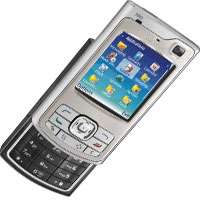 Storage comes in the form of 40 MB of internal memory, with support for miniSD cards of up to 2 GB.
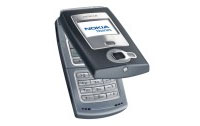 We could only find a teensy-weensy picture of the 3G clam phone as we went to print, but we can tell you that is has two displays and two cameras, one of which is a 2-megapixel camera.
 Not satisfied with its already-almighty online presence, the BBC has launched the Film Network – a growing interactive showcase for new British filmmakers, broadcasting three new short films in broadband quality every week.
 The Website aims to expose new talent and create a platform for some great films that are rarely seen elsewhere.
 Viewers keen to grab a slice of the free film action will first have to register on the site.
 It should be noted that the BBC Film Network is not part of the currently in-trials
  The best thing about Samsung’s press photos is that they always feature groups of attractive young ladies deliriously happy to be touching their latest products.
 Coming in two parts – the laptop and its detachable 19″ screen – we were confident that we’d be in for double the fun and, sure enough, we were rewarded with happy-clappy shots of two ladies near-ecstatic to be fondling the electronics.
 Happily, Samsung have had the nous to ensure that they used standard monitor connectors too, so that the laptop can be connected to a bigger screen (for giving a corporate presentation, for example) – and even the display can be used with a different PC.
 Full technical details, pricing and availability is yet to be announced, but we can tell you that the laptop packs a whopping 19″ WSXGA+ (1680×1050) HDTV compatible screen and is powered by a Pentium M770 (2.13GHz) CPU.
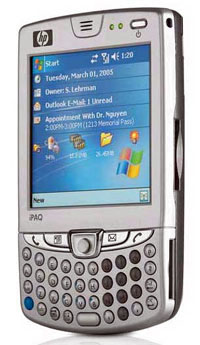 Helped by big European growth, global PDA (personal digital assistant) shipments whizzed up 21% in the third quarter of 2005, according to analysts Gartner.
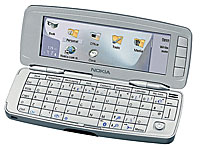 The biggest shipment rise was recorded by Research in Motion’s (RIM) Blackberry device, growing 52.6% in the third quarter as the company extended its lead as the top dog worldwide PDA vendor.
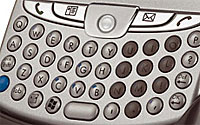 Overall, the Western European PDA market grew 53.4% in the third quarter of 2005, with 1.2 million units shipped.
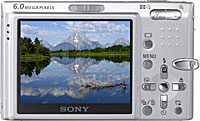 Sony continues to build on the success of its ultra-slim DSC-T digital still camera range with the release of the six megapixel Cyber-shot DSC-T9 model.
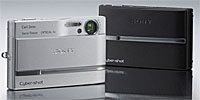 “Our T Series set the standard for slim, stylish, point-and-shoot cameras with fine image quality,” said James Neal, director of digital imaging products at Sony Electronics.
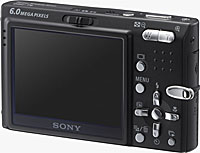 The DSC-T9 offers shutter speeds from 30 to 1/1000 second, Multi-pattern, Centre-weighted, or Spot metering, five white balance presets and 10 scene modes.
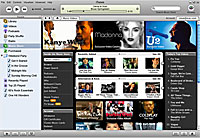 The
The  Steve Jobs, Apple’s head honcho, observed that the healthy sales strongly suggested there was a market for legal video downloads.
 “Most people are prepared to be honest if it is not too expensive to do so,” he added.
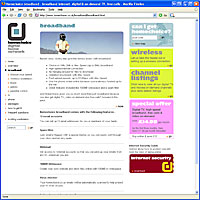 The wires are hot with rumours that BSkyB is contemplating a bout of wad waving in the direction of the video-on-demand, broadband and telephone company Homechoice, which is reportedly finding things tres tricky in the increasingly competitive TV broadband market.
 Homechoice currently provides a broadband Internet and telephone service, with on-demand programmes covering comedy, drama, music soaps, pay-per-view movies and home shopping.