 America Online has announced plans to enable users of its instant messaging service (AIM) to see when friends and business associates are online, even if they’re not on the contact list.
From today, AIM customers can download a free beta plug-in (called AIM Sync by Intellisync) that will let users of Microsoft Outlook see which of their contacts are online and available to chat by IM.
The program works by scanning a user’s Outlook address book to find friends, colleagues and clients who are AIM users and then offering to add those names to their AIM buddy list.
Inside the Outlook program, the plug-in detects the presence of online AIM contacts, with AOL’s signature running-man icon showing up next to the address fields on e-mail messages and contact lists.
If someone’s available, a single click from within Outlook will launch an AIM session.
The AOL-Intellisync partnership reflects a push by AOL to bring instant messaging to places where users are already (virtually) hanging out, rather than forcing them to communicate directly from AIM’s software.
In January, ComScore Media Metrix says, AIM had 20 million users (nearly 40 million if AOL members are included). Rivals Yahoo Messenger had 19.6 million, and MSN Messenger, 14.9 million.
“This is just the beginning of a broader strategic approach with AIM – making sure our application is available where you are,” says Chamath Palihapitiya, the America Online executive who handles the IM service.
“The web is open … It’s not siloing yourself,” she continued, “AIM is everywhere consumers are. We want to take it to where they are.”
This marks something of a turnaround from the company’s “no freebies” glory days when AOL’s dial-up service reigned supreme and its inflated public equity enabled it to buy up the world’s largest media company, Time Warner.
But with millions of users fleeing to cheaper rivals offering faster cable/telephone connections – and the looming presence of IM-enabled VoIP services like Skype – AOL is hoping to provide its once-proprietary programming and services to free Web sites, including its own AOL.com.
The strategy appears to be aimed at replacing dwindling subscription revenue with online advertising revenue, a sector of the media economy that is expected to rise by more than 20 percent this year.
 AOL has also announced a relationship with CareerBuilder.com to bring together recruiters and online job applicants. A prospective employer, who spots a job seeker’s résumé with an AIM address, can instantly send a message to that person in real time.
It’s also getting down with the youth by teaming up with the college-oriented Ruckus Network so students can chat via AIM about music, movies and other digital entertainment. Along with text, users might use AIM to swap musical play lists and video.
And they haven’t forgotten about the corporate world, with AOL announcing a partnership with Thomson Financial to let traders and brokers chat with clients or each other via AIM.
America Online
instant messaging service
AIM Sync by Intellisync
 The International Football Association Board has agreed to trial microchip technology, which can determine whether a ball has crossed the goal line.
 Destiny Media Technologies has announced a new version of its proprietary anti-piracy and digital distribution system, Promo Only MPE 1.1, designed to secure electronic music distribution within the music industry.
 “The new build was modified with the customers’ ease of use in mind,” gushed Dean Ernst, Director of the MPE project at Promo Only. “The response to version 1.1 has been unprecedented and reflective of the overwhelming number of users signed-on to date.”
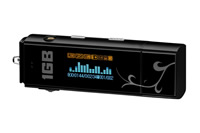 Jens of Sweden has unveiled its latest cool digital music player which they reckon will give iPod Shuffle a run for its money.
 Rumours pointing at Apple as a potential bidder for TiVo have given the digital video recorder company’s shares a healthy boost – and got people wondering whether the deal would be a good fit.
 Nearly every media and technology company is aiming at the living room now, either with Media Centre-style PCs or other digital hubs to spread content such as video and music around the home.
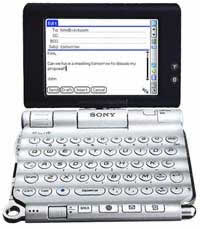 Sony has announced that it is to end production on its Clie line of PDAs in Japan.
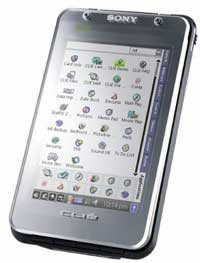 Our guess is that they’re going to focus their energies on ramping up the feature list on Sony Ericsson smartphones, developing the PlayStation Portable and finally producing the iPod killer they so desperately need.
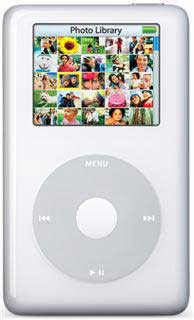 Apple has updated its iPod photo line-up with a new slim 30GB model, holding up to 7,500 songs, for just £249 ($475, e360) and a new 60GB model, holding up to 15,000 songs, for £309 ($590, e446)
 The truth is that the iPod photo seems to be far better as a versatile MP3 player and photo presentation unit rather than something for serious photographers to use for direct-to-camera storage.
 A handy Google search feature went live this week that lets users find showtimes at nearby movie theatres using either their computer or mobile phones and other wireless devices that use short-message services.
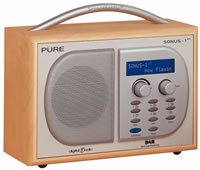 PURE Digital has announced its new PURE SONUS-1XT DAB digital radio, an enhanced alarm radio with unique iVOX voice feedback technology.
 It looks reasonable too, kitted out in smart maple wood casework with a pearlescent white front fronted with a silver grille and control panel with scrolling blue LCD text display.
 Digital civil liberties organisation, The Electronic Frontier Foundation (EFF) has announced the next stage in its ongoing challenge to the US Federal Communications Commission’s “Broadcast Flag” technology mandate (