 Cellular phone provider T-Mobile US is offering a service, HotSpot @Home, giving unlimited calls to US phones via WiFi. This in itself isn’t big news, but what is significant is that callers leaving the range of the WiFi will automatically switch to their cellular service. Initial roll-out is limited to Seattle.
This type of service has been long-discussed, but several technical barriers stood in its way, primarily handing the call from the WiFi-connected call over to the cellular network, without losing the conversation, or a break in the speaking. It’s pretty complex.
Beyond the mechanics of the call hand-over, the riddle of when and how the subscriber would be billed when transferring to the cellular network – and stopping that billing when they reconnect to WiFi has also caused great confusion for a long time.
Cellular reception within peoples home is often pretty ropey, so using their WiFi service will give considerably better reception – making them happy bunnies.

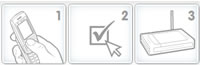
To use the service, three items are required – two pieces of hardware and a service plan. Once the special cellular/WiFi handset has been selected (which look surprisingly decent) and the Wireless hotspot router is installed on the home network, all that is required is the add-on ($19.95/month) on top of the normal $39.95.
The two handsets currently available are the Samsung T709 slider or the Nokia 6136 flip.
BT has been offering a similar service in the UK for a while under the product name BT Fusion. The difference with BT Fusion is it uses Bluetooth to handle the wireless calls at home rather than WiFi.
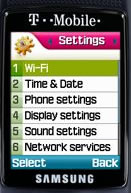 T-Mobile is the mobile communications subsidiary of Deutsche Telekom, the German telco incumbent.
They have spent considerable effort over the recent years not only building and owning their cellular service, but doing the same with their WiFi network, clearly understanding early on that WiFi would be a significant threat to cellular services.
 Global mobile shipments are set to hit one billion this year for the first time.
 Ryan Reith, research analyst with IDC’s Worldwide Mobile Phone Tracker noted that, “the strong growth in the third quarter was very comparable to the growth we saw in 3Q05, as the trend of vendors and carriers working to prep for the holiday season begins.”
 European mobile phone users are far more likely to use their handsets to access the web than their US counterparts, according to a new comScore Networks study.
 Portal sites were the most popular destinations for mobile surfers, with Google, Yahoo! and MSN leading the way, with branded Web sites set up by the phone operators, such as Vodafone, o2 and T-Mobile also proving a hit.
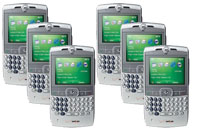 As the smartphone market continues to explode, Microsoft has revealed its bullish ambitions to keep on doubling sales, year on year.
 According to research firm
  It looks like the smartphone market is going to heat up in coming months too, with Research In Motion’s new
 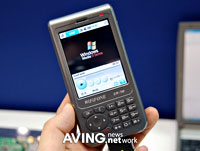 Currently causing something of a stir on the floor of the Korea Electronics Show is the WiFiFone EW-700, a Wi-Fi-enabled VoIP smartphone running Windows Mobile.
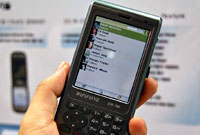 The EW-700, looks a fairly plain, clunky beast too – in fact the photos we’ve seen have something of a pre-production air to them – but it’s not short of features.
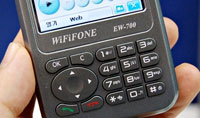 We’re yet to get full specs either, but the screen looks like a 320 x 240 pixels jobbie to us, and there’s also a 2-megapixel camera with camcorder function onboard, a voice recorder, hardware MPEG engine offering full frame video and Wi-Fi and infrared connectivity.


 Nokia has announced the winning entries in the Forum Nokia S60 3rd Edition Challenge global developer competition, dishing out a cool €100,000 in prizes to winning mobile applications developers.
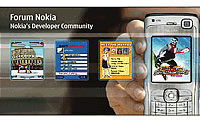 Quickoffice Premier 4 scooped up Best Enterprise Application, with the product allowing users to open, view and edit Microsoft Office documents on the move.
 InfoTalk Corporation’s Music Finder grabbed the honours for Best Mobile Music Application. The program provides a speedy way to use search for music files using voice commands, with users able to speak a song title, artist’s name or playlist in response to an audio prompt instead of scrolling through zillions of MP3s.
 The Herald is reporting that the shares in Carphone Warehouse took a bashing on the news that Vodafone is switching away from them, to sell their mobile phone contracts through Phones 4U instead.
 Carphone has been building up its
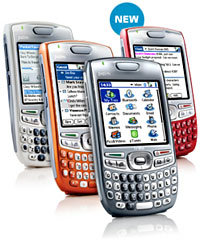
 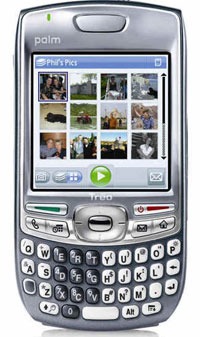 Palm has introduced a new range of quad-band Palm Treo 680 smartphones, running the tried and trusted Palm OS.
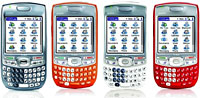 The Treo comes with a large and bright 320×320 screen and the well regarded full QWERTY keyboard, with a raft of multimedia functions including an integrated digital camera, Bluetooth 1.2 , MP3 player, video recorder and player.
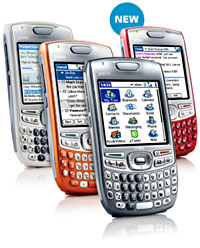 Along with the usual bundled applications for e-mail, Web browsing, messaging, multimedia, calendar and contacts, there’s a special version of Google Map for the Treo.
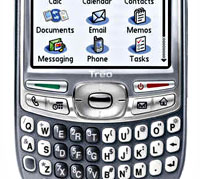 Palm has also announced that it will be partnering with several media companies, including Yahoo, Google and blogging firm Six Apart, to make their products available on the new device – these will join the enormous back catalogue of commercial and free software that’s already available for the OS.
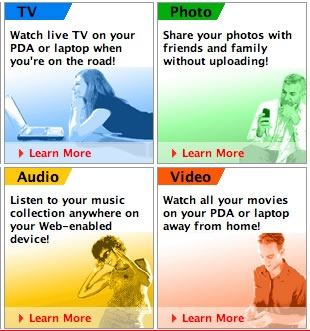 Orb MyCasting has been grabbed by Nokia to be bundled in with the Nokia N80 Internet Edition, in the US only.