The family of a 13-year old girl who was allegedly sexually assaulted by someone she met via Myspace have had their lawsuit against MySpace thrown out by a Texan judge.
 As we’ve covered previously, this family was one of four who are pursuing MySpace for not taking sufficient effort to protect their children.
As the LA Times reports, “the ruling appears to be the first time a federal court has extended to social-networking sites the same broad free-speech protections granted to Internet service providers,” which if correct will have far reaching consequences. We imagine that all at MySpace will also be breathing a huge sigh of relief.
To protect the anonymity of the young girl, she was referred to as Julie Doe, through the case. The court papers revealed that when she joined MySpace, she had listed her age as 18, despite only being 13 years old at the time.
The Judge, Sam Sparks, was very direct in his ruling dismissing the case, “If anyone had a duty to protect Julie Doe, it was her parents, not MySpace.”
Not deterred by the ruling, Adam J Loewy, the Austin lawyer who represented the girl, said they planned an appeal, adding “We were prepared for a very long battle in this.”
 The case was brought by Copiepresse, a copyright protection organisation that was representing 17 [UPDATE (thanks Michel) French-speaking] Belgian newspapers, complaining that both Google’s search and News service were in breach.
 Media giants Viacom International have finally lost patience with YouTube and demanded that they remove more than 100,000 of their video clips that have been posted up without permission.
 In a statement, a clearly miffed Viacom said: “Virtually every other distributor has acknowledged the fair value of entertainment content and has taken deliberate steps to concluding agreements with content providers.”
 Removing Viacom’s rich portfolio of popular clips may certainly result in loss of revenue for YouTube, but some media analysts reckon it could be a lose-lose situation all round, as both parties risk naffing off consumers.
 Love has broken out between the two Apples – computers and music.
 The terms of settlement are confidential.
 Norway has declared iTunes to be illegal because it doesn’t allow songs downloaded from the online music store to be played on any other equipment except their own, today’s FT reported.
 The original complaint was made by Torgeir Waterhouse, senior advisor to the Norwegian Consumer Council. He told the FT that “he was in negotiations with pan_European consumer groups to present a unified position on iTunes’ legality.”
 Firm believers in technology being used to add something, not being used for the sake of it, we also think there are some areas that technology should stay out of.
 There are just too many risks to let this go ahead.
 They’ve been compiling stats on this using
  The real figure of pirated copies is likely to be far higher than the 22.3% figure quoted, as it’s only the innocent/daft who would let their computer tell Microsoft that they are using a piece a software they bought from the bloke at the car boot sale for a fiver.
 Pretty severe for securing “access at about 02:00 on May 13 last year to a wireless router belonging to a person identified as Amos Leong “for the purpose of obtaining computer service” and specifically for Internet access.”
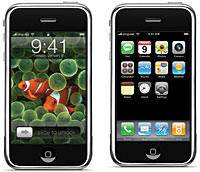 Once again Apple’s legal team have rolled into action, this time over mobile phone ‘skins’ based on their new iPhone interface.
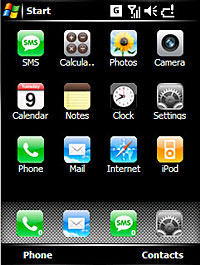 Although the skins were offered for free – and probably served as a great advert for Apple’s as yet unreleased phone – as soon as Apple’s head honchos caught wind of them, they reached for the speed dial and unleashed their ever-busy lawyers.
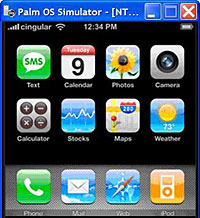 “Apple therefore demands that you remove this screenshot from your website and refrain from facilitating the further dissemination of Apple’s copyrighted material by removing the link to http://forum.xda-developers.com, where said icons and screenshot are being distributed.”
 Samsung has launched what it claims is the first mobile phone in the known universe to come with an optical joystick.
 The slide-open phone also comes with an illumination sensor which automatically controls the brightness of the LCD screen and keypad, so you won’t be dazzled if the phone goes off in the middle of the night.