 A US appeals panel has challenged new federal rules which require certain video devices to incorporate technology designed to prevent copying digital television programs and distributing them over the Internet.
US Appeals Judge Harry T Edwards delivered a slap across the wrists of the Federal Communications Commission by saying that that it had “crossed the line” with its requirements for anti-piracy technology in next-generation television devices.
The anti-piracy technology, known as the broadcast flag, will be required after July 1st for televisions equipped to receive new digital signals. Many personal computers and VCR-type recording devices will also be affected.
The broadcast flag would permit entertainment companies to designate, or flag, programs to prevent viewers from copying shows or distributing them over the Internet.
Two of the three judges on the District of Columbia Circuit panel said the FCC had not received permission from Congress to undertake such a sweeping regulation, and questioned the FCC’s authority to impose regulations affecting television broadcasts after such programs are delivered into households.
“You’re out there in the whole world, regulating. Are washing machines next?” fumed Judge Harry Edwards. Judge David Sentelle was equally unimpressed: “You can’t regulate washing machines. You can’t rule the world.”
The groups challenging the FCC’s broadcast flag regulation include the American Library Association, the Association of Research Libraries, the Medical Library Association, Public Knowledge and the Electronic Frontier Foundation.
They argue that the FCC has over-stepped its authority, that Congress should be responsible for making copyright law, and that librarians’ ability to make “fair use” of digital broadcasts will be unreasonably curtailed.
Although the judges’ comments are encouraging for opponents of the Broadcast Flag, doubts have been cast whether their opponents have the legal standing to challenge the rule in court.
Either way, we can expect to wait a few months before the court issues a ruling. In the meantime, activist groups like the Electronic Frontier Foundation continue to offer consumers the means to get around the restrictions with their “HD PVR Cookbook,”.
Electronic Frontier Foundation
Federal Communications Commission
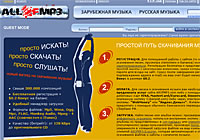 Russian prosecutors are considering filing criminal charges against a Web site that offers cheap music downloads, the music industry’s global trade group has said.
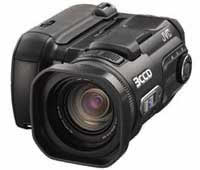 The diminutive JVC GZ-MC500 comes with three 1/4.5-inch CCD that records high-quality MPEG-2 video onto CompactFlash microdrives, with a 4 gig card, capable of storing up to an hour of “DVD-quality” video.
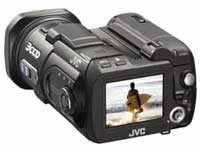 Translated into a language approaching English, this means that the camera is able to produce thumping great 5-megapixel with a resolution of 2560 x 1920 pixels still shots. This is second only to Samsung’s latest Duocam camcorder.
 Politicians, eh? Despite electing the slippery blighters, it can be next to impossible to work out what they’re doing – or not doing – on your behalf.
 Since its June 2004 launch, the site’s feature list is constantly updated. One of the recently additions is to have the system alert you, via email, whenever your MP speaks – driving the information to you, rather than you having to check the site.
 Video Networks Ltd (VNL) has announced a range of enhancements to the TV functionality of its HomeChoice service, claimed to improve the overall customer experience.
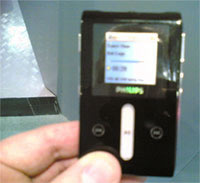 In an increasingly crowded marketplace, heavily dominated by iPod products, rival MP3 manufacturers are constantly foraging around to unearth new Unique Selling Points.
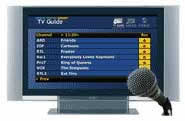 Punching endless buttons and shouting at your video recorder could become a thing of the past thanks to Opera Software’s new voice-enabled Electronic Program Guide (EPG) for home media.
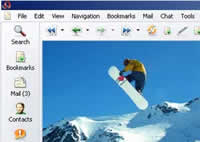 Opera will also be rolling out a new voice-enabled edition of the Opera browser for PCs.
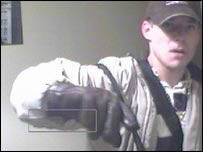 A 19-year-burglar is now enjoying an eleven month stretch at Her Majesty’s Pleasure after he was photographed burgling a house by the owner’s Webcam.
 We may not win many things these days, but when it comes to downloading pirated television, us Brits can puff out our chests and proudly declare, “we’re number one!”
 The downloading frenzy has been driven by the consumer-annoying practice of releasing popular US TV shows such as “The West Wing,” “The Sopranos” and “Friends” months after they’ve been seen by our American cousins.
 Kids today, eh? Spoilt rotten they are.