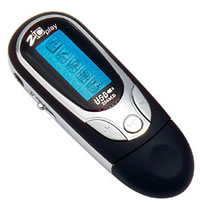
 The Zicplay MiniKey is a tiny audio player. It comes in versions from 256MB to 1GB. There’s also a version with a built in FM tuner. The version we tested was the 512Mb model.
It can cope with MP3 files (8 – 320Kb/s fixed or variable bit rate) and Windows Media Audio (32 – 160Kb/s fixed or variable bit rate).
There’s an LCD display which will show lyrics/track listings/etc. It feels quite plastic – but then it’s also very light, only weighing 25g including the AAA battery which allows 15 hours of listening.
Features of the unit are a voice recorder (using ADPCM) and 7 backlight colours for the LCD display, some are more readable than others. It also supports a basic phone book (with some Windows software) allowing basic access to contact info. The system is also firmware upgradable.
Earphones are the average earbud type, but not really unexpected with this type of device, or at this price.
The major drawback is the MiniKey only supports USB 1.1 so it’s relatively slow compared to other MP3 players to get files into the unit (or using it as a USB data device).
The pricing, £39 (Eu56, $69), is not much different from a straight USB memory device.
The instructions that come with the unit aren’t particularly great.
Summary: It’s pretty cheap, and does what you’d expect.
Rating: 48%
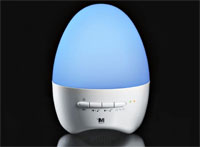 If there’s one thing we’ve always thought that’s been missing when we’ve been grooving to our MP3 files, it’s an egg-shaped device that changes colour to the music.
 If you’re rocking out at home, the lights go up to 11 for Hip Pop or dance music, while if you’re in the mood to get down with your laydee, the LEDs will glow all soft and romantic as you slip on some sweet-talking tunes from the love lothario himself, Chris ‘look out ladies’ DeBurgh.
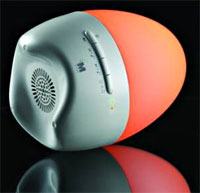 The player supports MP3 and WMA format music files and also comes with a line-in connector for non-USB audio devices, such as CD players and cassette recorders.
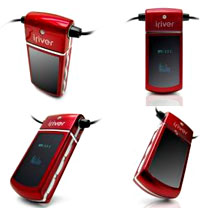 We have to say that if we strutted down the local boozer with an MP3 player strapped on around our neck, we’d most likely be called a lot of things – some of which might just rhyme with ‘Anchor’ – but, hey! – what do we know about yoof product design?!
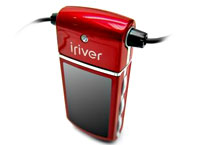 Dominating the iRiver is a large, 4 Line, 16 tone greyscale OLED screen, which displays EQ settings, track listings and folder views, and also doubles up as a clock/alarm clock.
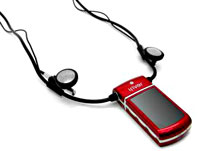 There’s also an FM radio onboard – pretty crucial, that – with iRiver quoting a MP3 playback battery life of around 13 hours per charge (128kbps, MP3, volume level 20, EQ Normal, LCD Off).
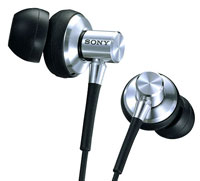 Fans of Star Trek keen to feel like their communicating with the Xyrillians when they’re
 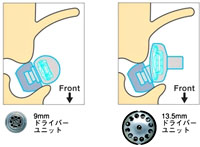 The high quality ‘phones sport a pair of large, 16 Ohm, 13.5mm (CCAW) speakers serving up 106dB/mW on a wide 5 to 25kHz frequency response (not that any human is likely to hear the extremes of that quoted range. Unless you’re an owl or something). Output is rated at 200mW (IEC).
 When we reviewed the
 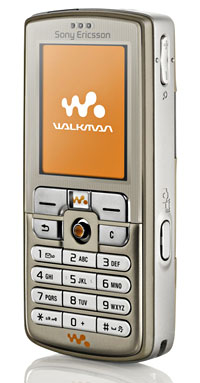 Rolling off Sony Ericsson’s well-furrowed product slipway this morning is the W700i Walkman Phone, the company’s eighth addition to their Walkman range.
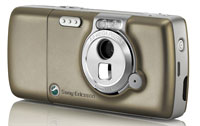 Like the W800, the W700 comes with a full complement of onboard gizmos, including a two megapixel camera, 1.8 inch 262k 176×220 colour TFT display, dedicated music buttons and Bluetooth and Tri-band connectivity.
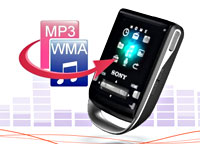 Details of a snazzy new range of Sony flash memory MP3 player/FM radios with a colour display have appeared on Sony’s Chinese site.
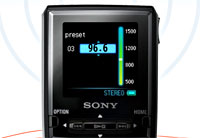 Sporting attractively bijou dimensions of 75.5mm x 45.5mm, the CE-P is smaller than a credit card (but not as thin, natch) and is designed for carrying around your neck, gangsta-stylee.
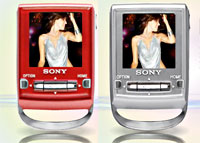 The CE-P series will come in three flavours, offering storage capacity from 256MB to a 1GB.
 New figures from the International Federation of the Phonographic Industry (IFPI) reveal soaring global sales of digital music while overall music sales continue to decline. This in the same week that Gnarls Barkley and their musical ditty Crazy have become the first digital-only Number One in the UK Hit-parade, as we’d
  The growing single song download market (which accounted for 86 percent of purchases), has resulted in many listeners choosing to grab individual tracks rather than download entire albums.
 The biggest selling album of the year was “X&Y” by Coldplay, which could be heard being played – not too loudly, mind – in 8 million bedrooms, company cars and comfy living rooms.
 It’s thought that the forthcoming UK chart show, released on Sunday, run by the terribly formal sounding Official UK Charts Company, will be the first time a Number 1 will be a non-physical product. Translated – Crazy by Gnarls Barkley has only been released electronically, as a download.
 Those Chart cat’s are exactly what you’d call ‘with it’ are they? But I guess we know that given how long it took the music companies to pull their fingers out and start to grab hold of the digital revolution – actually there’s many who’d argue that they still haven’t.
 Global revenue from music downloaded onto mobile phones went through the roof last year, with pundits predicting that the only way is up for the next five years.
 How to make a mint from mobile music
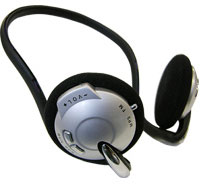 Most built-in MP3/FM/headphone combos are so bulky it looks like the user has got two halves of a tennis ball stuck on their heads, but a new headset from Japanese manufacturers Thanko looks to change all that.
 Clearly getting carried away with claims about the unit’s diminutive size, the (ahem) ‘ButterFly’ FMP3 comes in two flavours offering 512MB and 1GB flash memory capacities, with the built in MP3 player supporting MP3 and WMA at 32 – 192Kbps data rates.
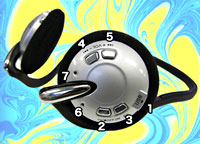 Powered by a non-removable 3.7V lithium ion battery, charged over the USB connection, the hazy web translation suggests that the makers are claiming up to 700 minutes for radio play and 350 – 400 minutes of continuous MP3 playback.