 As we’ve been covering for ages, Korea is super forward in many things electronic.
Now they’re leading in their treatment of DRM – making different DRM schemes interchangeable.
DRM systems are used to restrict what people can do with their digital media, normally audio and video. This pleases the content owners considerably, but consumers are finding it frustrating that media they are buying on one service will not play on all of their portable music players – eg music bought on iTunes cannot play on a non-iPod player.
By making DRM system interchangeable, the hope is that everyone remains happy – the content owner, because the content stays ‘protected’ by the DRM and the consumer because they have the freedom to move it to any playing device they have.
 The Koreans are achieving this by the EXIM standard for online and mobile music service. EXIM stands for Export/Import which was developed Korea’s Electronic & Telecommunications Research Institute (ETRI) and INKA Entworks. It should be wide reaching as up to 90% of online music sites and 70% of portable music devices deployed in Korea at the moment use DRM solutions based on the EXIM standard.
What differentiates the Korean mobile music market is that all phones sold since 2003 have a USB connector, which is used to transfer music they download via their computers, to their mobiles. This is sometimes called sideloading.
 SK Telecom, the largest mobile provider in Korea as finally agreed to open up their handsets and service to allow music from third party services to be used. Until now only content authorised by SK could be loaded onto their phones.
James Ahn, CEO of INKA Entworks, was clearly excited at the prospect, “SK Telecom’s decision to implement the EXIM standard is an important milestone because of its dominant position in the mobile phone services and online music services markets. We’re happy to have SK Telecom as a partner.”
 O2 Ireland has become the first European mobile operator to offer Napster Mobile.
 O2 has spend a considerable amount of money tying themselves to music, attempting to benefit from all of the ‘cool’ that it can bring. You only have to witness the party they threw at IFA last year to understand how successfully they’ve been with it – it was definitely the best party at IFA, rammed full of young things gyrating.
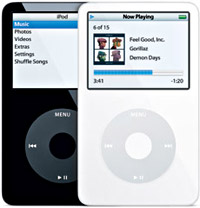 Industry analysts Nielsen Media Research have discovered that Apple iPod-toting consumers aren’t going ga-ga for video, with the vast majority preferring to listen to music and audio podcasts rather than watch TV or movies.
 Not surprisingly this figure rises for Video iPod users, who were found to spend 11 per cent of their time watching videos.
 We know that we barely ever watch video content on our mobile players, but then we’d imagine the video-playing target demographic is considerably younger than us comparative crumblies (i.e we’re over 20).
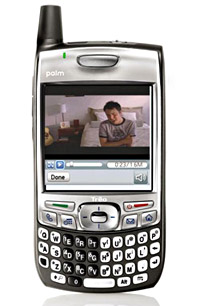 Smartphone unit sales are soaring, with sales almost tripling between 2004 and 2005, and increasing a further 50% in the first half of 2006 compared to the previous year.
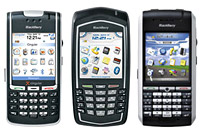 Despite the spectacular sales, Hughes advised caution, pointing out that many smartphone users continue to lug around the very devices that smartphones are supposed to replace.
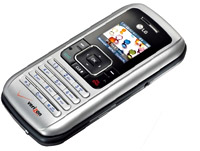 LG’s flip-open VX9900 business phone has been scheduled for a November 27th US launch date on Verizon’s network.
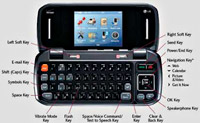 With the 262k color TFT LCD running at just QVGA (320 x 240 pixels) resolution, we reckon users would have preferred the more capacious 640×200 offered by the Communicator.
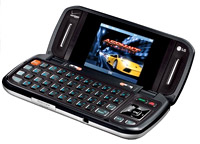 LG have gone to town on Bluetooth 1.2 wireless connectivity options, with the VX9900 supporting HSP (headset), HFP (hands-free), DUN (dial-up networking), A2DP (advanced audio distribution), SPP (serial port), AVRCP (audio/video remote control), BPP (printing) and HID (human interface device) profiles.
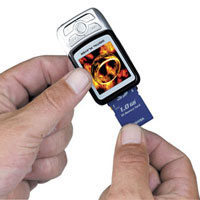 Smaller than a pixie’s pocket plaything, the ridiculously tiny Ultra Portable Personal Media Player and Recorder is quite the teensiest thing we’ve seen for a while.
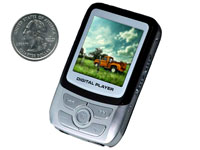 Lord knows how they’ve managed to fit it in, but there’s also a speaker onboard too, although we imagine the output must be quieter than a gnat having a snooze.
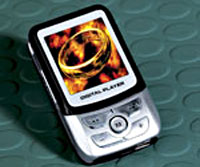 It’s as cheap as chips too, with Gadget Universe offering it for just $80 (£42, €62).
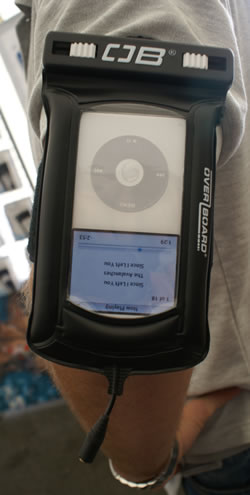 A UK company specialising in waterproof bags, OverBoard, have widened their selection of waterproof cases to include electronic gear.
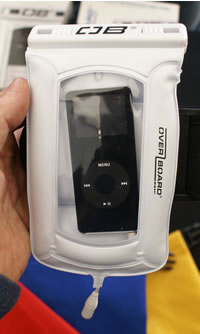 Not content with just providing their leisure range, they’ve decided to tackle the design problem of a waterproof iPod case for extreme water sports, a range they call pro-Sports. Not only are they more rugged, but float, so your rather expensive music player doesn’t start playing its tunes to the fishes.
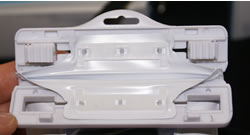 The time I had with it gave me the impression that the case is very tough. There’s two leads supplied, a neoprene velcro sports arm strap (for attaching to your arm – in the photo) and a safety break neck lanyard.
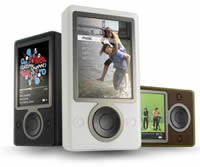 Microsoft is giving the Universal Music Group (UMG) a per-unit fee for each Zune that they sell, in addition to the money that they’ll make out sell music tracks on it too.
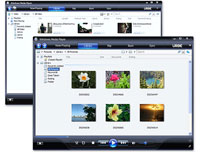
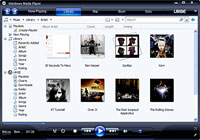 Confidently billed as “a milestone for music fans and the digital entertainment experience on Windows XP,” Microsoft’s shiny new Windows Media Player 11 claims support for more than 200 portable and home networking devices and hundreds of online music and video services and radio stations.
 “The fresh, exciting new look, the ability to find songs and videos in an instant, and the enhanced capabilities for syncing with portable devices are not only exactly what customers have asked us for, they’re also a preview of what’s to come in Windows Vista,” he added.
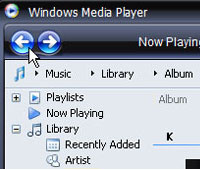 Tabs galore
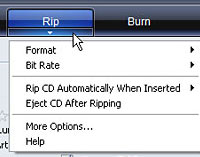
 WMP11 can rip audio CDs in the default WMA format or the more popular MP3 format and there’s also support for the beardy audiophiles preferred format, lossless WAV, along with the ability to easily burn all supported file formats onto CD.
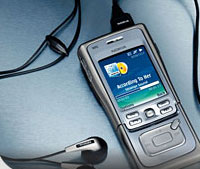 Mobile phones with built in MP3 music players are proving a massive hit with consumers, far outstripping sales of dedicated music players, say Nokia.
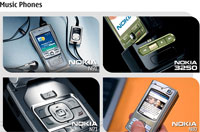 “The comparison with iPod is wrong; it is a single purpose device, and it is not connected,” Mustonen said, adding that he believes that Nokia’s current rivals are, “companies which make multimedia computers.”