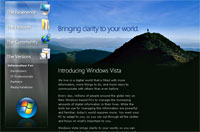
 After a morning of fishwife-hot rumours, it’s been officially announced that the next version of Microsoft Windows – previously code-named Longhorn – will be known as Microsoft Vista.
Although wags are already suggesting that the word might apply to the distant view of the product consumers will get for many months/years, Microsoft remains confident of an ontime release in the second half of next year.
Naturally, a big new product needs a suitably uplifting tag line, so the cappuccino-supping, flipchart-flapping, brainstormin’ visioneers at Redwood have come up with:
“MicrosoftVista. Clear, Confident, Connected: Bringing clarity to your world.”
The story was first broken by anonymous sources close to the company (that generally covers anyone from the cleaner to the guy who delivers the water cooler) who revealed that Microsoft had unveiled their new name in Atlanta during the company’s internal sales event, known as the Microsoft Global Sales Briefing (that’s ‘MGB’ to those in the know).
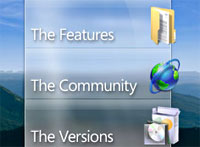 Possibly because of a fear of failing to release the product in the year bearing its name, Microsoft has once again shied away from its earlier practice of releasing dated operating systems (Windows95, Windows98 etc).
The current major version of Windows originally regaled under the name of ‘Whistler’ during development before being christened WindowsXP prior to its public release.
Brad Goldberg, a Microsoft product manager, said that the first beta of Vista is slated for release on Aug. 3 and will be targeted at developers and IT professionals.
Goldberg stated that Vista’s three design goals include better security, new ways to organize information, and seamless connectivity to external devices.
A second test release is anticipated to be debuted before Vista’s full release next year.
More details about the new operating system’s features will be announced on August 3.
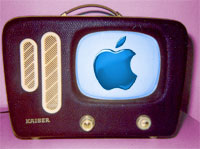 The rurmour mill continues to hum with speculation that Apple are set to introduce a video playing iPod-like device in the near future.
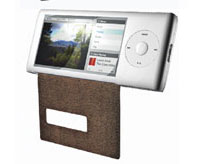 This has led to speculation that the company will be revising the iPod to create something like the ‘vPod’, a concept device created by design firm Pentagram which was published in Business 2.0 Magazine in March.
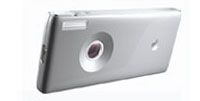 The big problem with trying to create a multimedia device is that people demand quite different things for mobile audio and video.
 Armchair football fans around Europe will soon be able to enjoy live Champion’s League matches over the Internet and mobile phones.
 Champions League coverage in the UK is provided by BSkyB and ITV (both of whom look likely to retain their current rights), and the Internet simulcasts could provide a honey pot for new revenue streams with advertising and betting partners.
 BSkyB has already announced its commitment to
 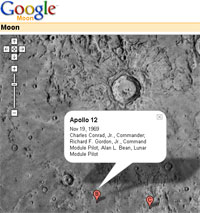 In honour of the first manned Moon Landing back in July 20, 1969, Google have launched an out of this world version of their Google Maps service – Google Moon.
 Although you can use a sliding scale to zoom into the surface – just like the terrestrial version – and view landing sites, there are limitations to how close to the surface you can zoom because of insufficient NASA imagery.
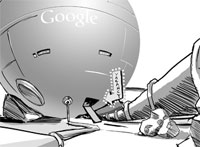 Glad you asked, and yes, the development of our Lunar hosting and research centre continues apace.
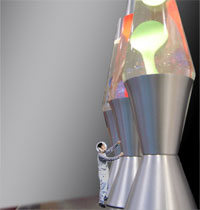 Google are also advertising jobs at their Google Copernicus Hosting Environment and Experiment in Search Engineering (G.C.H.E.E.S.E.), offering “high-density high-delivery hosting (HiDeHiDeHo) and de-oxygenated cubicle dwelling.”
 BT has announced that it will be doubling the speed of its entry-level broadband service.
 BT’s generosity knows some bounds though, with its no frills package retaining its monthly usage limit at 1 gig.
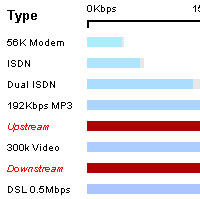 This is the second free upgrade that BT has introduced, with the telecoms giant upping the speed for all of its retail broadband customers back in February.
 I quickly learnt that not only was I paying more than most, but my BT connection was as swift as a sleepy sloth on a hot day compared to the rocket-like speeds quoted by others.
 We had a report from a reader today that he’d been … ehm, carrying out tests on his content filtering service. This entailed going to sites with photos of naked bodies – purely to test that the content filter blocked his access to them you understand. One of first sites he went to was the well known UK tabloid, The Sun.
 The piece in the Gizmo section of the site and paper features BT’s new model to promote BT Communicator, Michelle Marsh.
 Two users of the same online bulletin board were in the same carriage of a London Tube train that was involved with the blast last week.
 Without the discussion boards on urban75 or the Internet, the likelihood of two people caught up in the explosions meeting again, is highly unlikely.
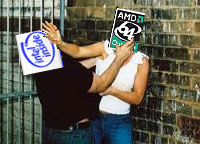 European Commission heavies made an unscheduled visit to Intel offices in Europe today as the chip maker’s offices were raided in connection with suspected anti-trust violations.
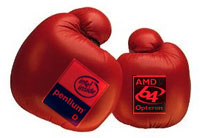 These requested information on government procurement tenders for computers containing requirements that they specify Intel chips or request a chip speed exclusive to Intel.
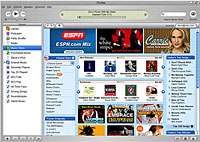 The Apple rumour mill has been cranking into overdrive over the weekend after Forbes reported that the company may be considering becoming a mobile phone operator.
 However, a report in the Sunday Telegraph yesterday claimed that Motorola will finally “unveil the first fruits of its partnership with Apple next month with the launch of its iTunes mobile phone at the V Festival.” The festival runs from 20th to 21st August 2005.
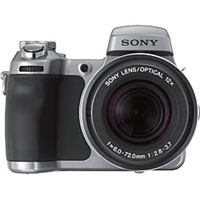 Barging its way into the crowded 5 megapixel “super zoom” market is Sony’s new Cyber-shot DSC-H1 camera.
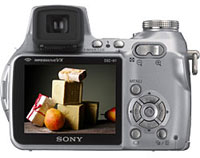 The DSC-H1 sports a fairly small but bright 115,200 pixels electronic viewfinder (EVF) that mirrors the information displayed on the main screen.
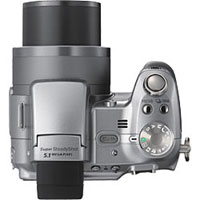 Shutter speeds range from 30 to 1/1000 second, and the camera comes with optical image stabilisation built in (although Sony likes to call it Super Steady Shot’).
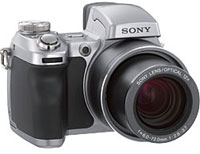 There’s enough manual controls to ensure that adventurous photographers can stay in control of their exposures, with a wide selection of scene modes covering most eventualities.