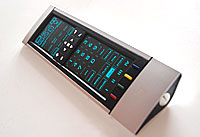
 After growing tired of endless beer-fuelled, late night rummages around the house for a mountain of easily-lost remote controls, we thought we’d check out an all-in-one controller.
Wooed by its sci-fi looks, we decided to give the ONE FOR ALL Kameleon URC8308 Remote Control a run, a 50 quid number with the ability to boss up to eight devices as well as optionally control lighting systems too.
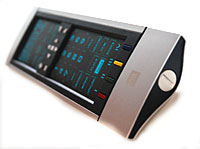
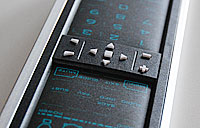
Opening up the package, the first impressions are good: the Tron-like electro-luminescent buttons are bright and the shiny, curved chrome finish was already starting to make our room look scruffy and outdated.
Smell the silver
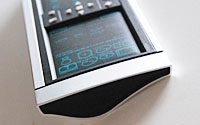
Taking the thing to hand, a few doubts began to surface. The remote has a strange curved back with the bulge offset to one side, making it a little hard to grip, and the chrome finish makes it something of a slippery number to keep a grip on.
There’s no denying that the space age screen sure lights up mighty purdy, but it’s made of some weird vinyl-like material that feels horrible to the touch.
After a few Saturday night TV sessions we could imagine the vinyl being covered in bits of pizza and sticky beer residue that would be tough to clean off around the edges where the material ‘folds’ into the casing. Not very Star Trek.
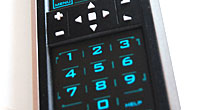
As well as the ‘virtual’ buttons, the Kameleon comes with a central horizontal strip containing hardware buttons for volume up/down, TV channel up/down and a four way selector with a central ‘OK’ button, plus four slim coloured buttons at the bottom of the control for teletext functions.
The trouble is that these buttons take the form of small raised bits of shaped plastic which weren’t particularly pleasant to the touch and were hard to locate in the dark.
Head-scratching
Looking through the multi-language instruction manual (one of opur pet hates), we found ourselves being dispatched promptly into head scratching mode, thanks to unhelpful descriptions and confusing menus.
Programming in our individual components was a hit and miss affair, requiring us to trawl through pages and pages of manufacturer’s remote codes and keep on inputting numbers until we found some that worked.
 The Kameleon only managed to find one set of codes that immediately worked on our devices; there was nothing for our 3 year old AV Yamaha amp and it neither had codes for our new Humax PVR nor wanted to learn any either (the learning process involved us continually bashing a single button, but the remote kept quitting before it found anything for the PVR).
In desperation, we went to their website to see if we locate new set up codes for our devices – and what an unpleasant experience that turned out to be, with their support site being quite possibly one of the worst we’ve ever seen for a mainstream consumer goods manufacturer.
Not only does it look really awful (they’ve cocked up the style sheets), but it doesn’t even list their own Kameleon URC8308 remote control in the dropdown menu entitled, ‘Find your set up code’ and after wasting ten minutes aimlessly clicking around their site we were still none the wiser.
 By this time we were beginning to harbour thoughts about how far we could throw the streamlined remote, but thought we’d drop One For All a line for help instead.
Sadly, more frustration was in store as we discovered that the ‘contact us’ link only took us straight back to the tech section with no means of actually contacting anyone.
Conclusion
Much as we loved the hover-boot looks and Tron-like lightshow, and much as we admire a company prepared to push the boat out in design terms, the reality of the Kameleon concept singularly failed to excite us.
As a multi remote controller it was unable to actually operate our devices and the lack of information on their support website was hugely disappointing.
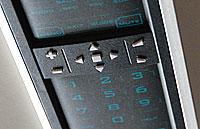 Moreover, we were reminded of the shortcomings of ‘virtual’ buttons versus real hardware buttons – groovy glowing buttons emerging from the darkness of a black remote may look the stuff of Spock, but ‘real’ buttons remain easier to use and more responsive to the touch (something that those dreaming of an iPhone might want to consider).
Perhaps others will have better luck than us, but this is one remote we wish had stayed lost at the back of the sofa.
Our verdict
Features: 70%
Ease of Use: 40%
Build Quality: 60%
Overall: 50%
Super-slick Kameleon promo site
 This just feels wrong on just about every level we can think of, but in an attempt to reach out to Da Yoot, the US Army have created a slick and highly polished MySpace recruitment site.
 A warning next to the psychopathic-looking Sgt Star warns, “The information you enter is to be used only for recruiting Soldiers into the U.S. Army and the Army Reserve.”
 We apologised: “OK. Sorry. We want to go to Iraq and bomb some soft Johnny Foreigners back into the Stone Age in the name of peace.”
 Clearly a sizeable wad of defence budget has been thrown at the slick game, which purports to offer realistic battlefield scenes (although we couldn’t find any options to rain friendly fire on Brit troops and then try and cover up the investigation afterwards.)
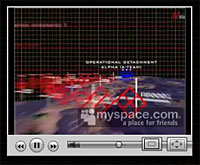 Of course, there’s sound business reasoning behind the US Army shoving its shiny size nines onto a social networking site like MySpace, with the site able to interact with the community, make friends and receive comments and – possibly – make the Army look vaguely cool and enticing.
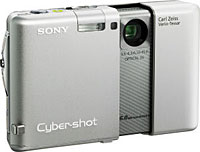 Digital camera heavyweights Sony have rolled out their first wireless Cyber-Shot digital camera, the 6-megapixel Cyber-shot DSC-G1.
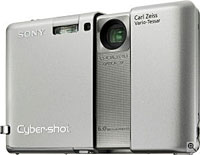 There’s also a memory slot onboard for storing yet more photos, but Sony are sticking with their less widespread Memory Stick Duo/Memory Stick PRO Duo format, which can now store up to eight gigabytes.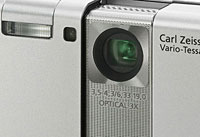
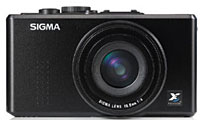 Sigma have announced the full details of their new DP1 camera, a high end point’n’shoot digital camera packing a hefty 14 megapixels resolution with a full size image sensor.
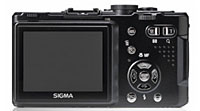 Camera controls
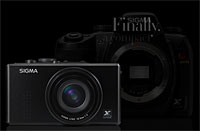 The 28mm fixed lens is disappointingly slow at just f4, but this may be compensated by improved high ISO performance.
 Specifications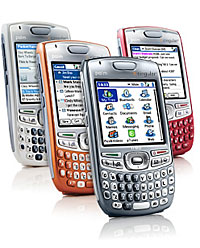
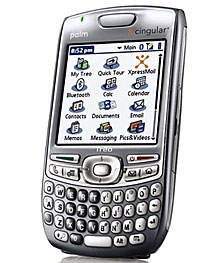 A few months ago Palm shelled out $44 million to Japan’s Access Systems for a perpetual license of the operating system used by Treo smartphones and PDAs, ensuring that current and future Palm handhelds remain compatible with Palm’s Garnet OS.
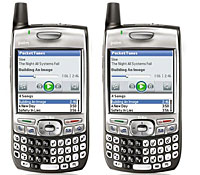 Treo 755p
 Gordon Brown has announced that a new labelling system for media content is in the works, designed to help parents protect their children from dodgy digital content.
 As part of the scheme, Ofcom will introduce common labelling standards covering cinema, TV, radio, computer games and the internet.
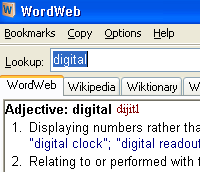 We rather liked the nifty
 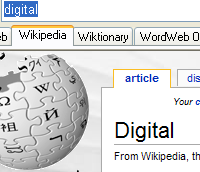 Full Windows Vista support has been bolted on, with the authors claiming that the program now comes with “many thousands of new senses, synonyms and clarifications.”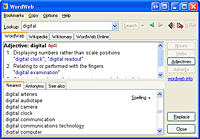
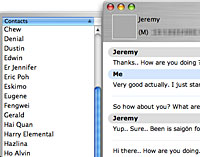 The Palm platform has traditionally enjoyed a lot of support from Mac users who can perhaps relate to the platform’s status as a great working product that isn’t as well known as it should be (or maybe it’s because it’s simply not Windows?!).
 All the messages are searchable and the program offers international language support.
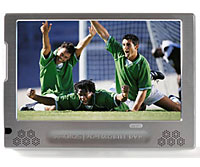 Keen to maintain its position as the Dark Master Of All Things PMP, Archos have announced the latest addition to its Personal Media Player, the 704 Wi-Fi.
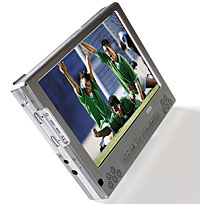 As befits its media player billing, this puppy can play a ton of video formats including MPEG-4, AVI, Divx and WMV video files, and MP3 and WMA audio files (with optional plug-ins for h.264, MPEG-2 MP@ML, and AAC support). There’s also support for PlaysForSure.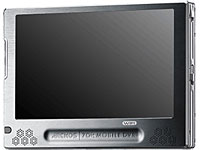
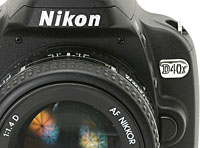
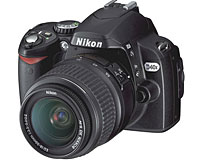 Nikon claim that the battery life has been extended to allow up to 520 images per charge (better than the 470 images for the D40) and can rattle off more photos in continuous shooting mode (3 frames per second compared to 2.5 fps for the D40).
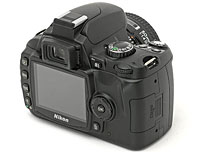 In-camera editing tools let snappers adjust compensation, correct red-eye or use monochrome effects to get that Ye Olde Black-and-white or Sepia tone effect.
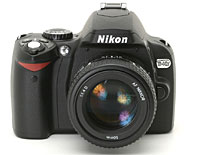 Specifications:
 Focus area One of three areas can be selected