 Back on Tuesday Google released their latest offering, the Google Web Toolkit (GWT). For those who didn’t catch the news at the time, it’s a downloadable application that lets developers write Java code that is translated into Javascript.
At first glance this appears a pretty strange concept, outputting JavaScript from Java, but code is the near-mythical AJAX code, heavily assisting the production of Web 2.0 applications.
You’ll know we think AJAX applications are special, not for the buckets of hype that’s surrounding Web 2.0, but because the taking up of AJAX marked the death Microsoft’s dominance of the interface. It’s the point where using an application through a Web browser became less tiresome because information is updated without the Web page having to be refreshed.
Google slowly remove the gloves
Google’s attacks on Microsoft have been consistently more intense. Early moves like the extended beta of Gmail chipping away at Microsoft’s Hotmail service.
The moves on to the Windows desktop via Google Desktop Search (GDS) stepped it up a gear. When we saw the release of GDS, we advised our friends to buy Google stock. This was the point where users no longer needed to use Windows Explorer to locate the documents that they had created on their machine. A Google application became the route to documents on ‘their’ platform. The vice-like grip in place for so many years was starting to weaken.
 The interface – Now they’re ready to box
We see the release of the Web Toolkit as Google’s most direct pop at Microsoft yet.
There is still a mystique around creating AJAX applications, primarily because most of the people who are trying to make them are not programmers, but are enthusiastic amateurs, designers, or people who have never learnt the basics of programming logic.
While GWT still requires programming skills in Java, there are more programmers around that know the inaccuracies that each version of browser requires, to have the interface working consistently.
It’s not just Microsoft that is getting a bloody nose from this, it’s also quite an aggressive move against Java, effectively removing its usefulness as a Web interface language. If this tool gets wide usage – and given the buzz (real or otherwise) around Web 2.0, it’s likely – it’s going to be pushing Java to the server, although many would argue that it doesn’t have much benefit there either.
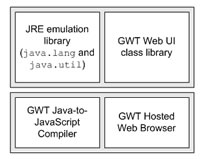 Summary I’ll leave you with the key point – Google Web Toolkit gives people the tools (literally) to write applications that work in any Web browser, circumvent Microsoft’s crown jewels, the Windows interface.
We know an AJAX toolkit won’t be a surprise to Microsoft, but it will be a big blow.
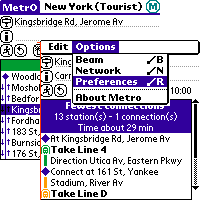 For globe trotters, city slickers, urban commuters and spoddy transport types, the freeware Metro looks to be a very useful application.
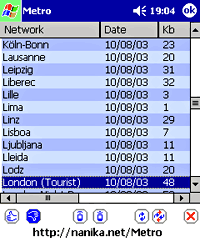 Using Metro
 Using the program’s simple interface, you can also get Metro to display station details, stops between the stations on your journey and even associate contacts with stations.
 Conclusion
 The HC3 has a tough act to follow – its own big brother, the HC1. Last year’s HC1 brought High Definition recording within the budget of almost any home movie-maker for the first time, and did it with assurance and style. Luckily, Sony hasn’t rested on its laurels, and the HC3 feels very much like a replacement for the HC1 rather than a mere upgrade.
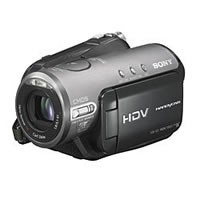 Changes to the imaging pipeline have enabled Sony to offer a couple of new features in the HC3. The first is the ability to capture up to three 2MP still photos while filming (the images buffer until you stop recording). The second is Smooth Slow capture, where the capture rate increases from 50 to 200 fields per second for three seconds. Audio recording and the Super SteadyShot audio are disabled while you shoot. You can then play back this footage at a normal frame rate, giving 12 seconds of smooth slow motion footage.
 IT workers who spend all day battling with clueless idiots who have just deleted critical OS files because they looked ‘messy’ already know it, but now it’s official: people who work in IT are the most stressed folks on the planet.
 IT
IT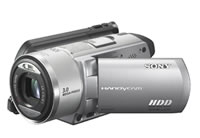 Just when you thought Sony couldn’t add any more formats to its camcorder range (the electronics giant already carries MiniDV, MicroMV, Hi8, Digital 8 and DVD models), along comes a new hard disc camcorder (the DCR-SR90) and a re-vamped Hi Def pro-sumer shooter (HDR-HC3). We caught up with both at an exclusive hands- on presentation in London. Details of the Sony HDR-HC3 will follow tomorrow.
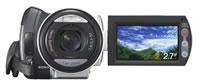 The interface is generally very good, with a 2.7-inch folding touchscreen ported straight from Sony’s MiniDV range, giving access to a good range of creative features, including true 16:9 recording.
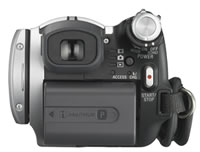 Playback features include basic editing tools that let you move scenes around but not cut or join them. Ease of use is emphasized with a One Touch DVD burn button for Windows computers with a DVD writer – just plug in via USB, slip in a disc and away you go.
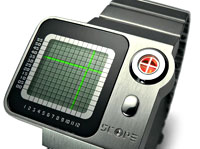 Without doubt quite the silliest timepiece we’ve seen for a long time, this new watch by Japanese manufacturers Scompe manages to turn the mundane task of checking the time into some sort of sci-fi adventure.
 Managing to complicate the simple task of reading the time, users must read off the vertical line for the hour and the horizontal line for the minutes, checking their values against the tiny onscreen numbers.
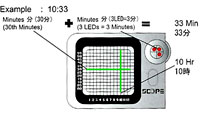 Powered by 2 lithium cells, the SCOPE watch is quite a chunky beast, measuring 45mm x 33mm x 11mm.
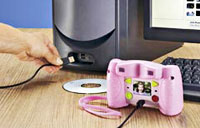 Back in our day, we were lucky if we got a lump of mud as a toy (Luxury! – editor), but kids today are spoilt rotten with an endless succession of frivolous gadgets demanding an unwelcome draining of parents’ wallets.
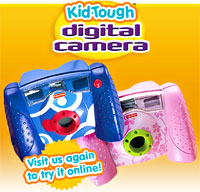 Fisher Price’s website doesn’t offer any details about camera resolution, but we figure it’s going to be pretty crappy.
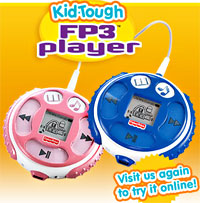 The circular player features big buttons and an LCD screen with icons to let kids pick their own choons and be a junior DJ Selectaaaaaa!
 Apple’s hugely popular iTunes music download service looks set to face some mighty competition in the coming months.
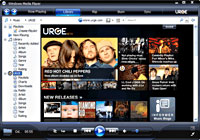 Users wanting to transfer songs onto portable music players can subscribe to the $14.95 service, with tunes protected by anticopying software from Microsoft.
 Noting that consumers have embraced satellite radio because it features dozens of channels with music chosen by experts, Harris reckoned that this could prove a real advantage to the Urge service.”You’ve got the experts in music here from MTV doing programming across a whole bunch of genres,” he commented.
 Although Harris admitted that the iPod incompatibility issue was “a hurdle that we have to get over” (an understatement, we reckon!), he added that, “there’s a long way to go in this market,” pointing out that the zillions of iPods sold still represent a fraction of the potential audience for music downloads.
 Sony has whipped out its first laptop equipped with a next-generation Blu-ray optical disk drive, saying that it will be available in Japan next month.
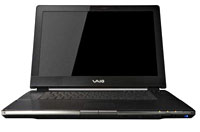 The AR-Series will also come with a HDMI (High Definition Multimedia Interface) output for hooking up the lappie to a HD-ready TV or Full HD desktop display.
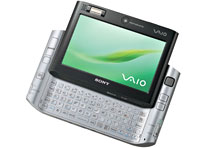 Powered by Intel Core Solo U1400 (1.2 Ghz)/U1300 (1.06 Ghz) the pint-sized PC will sport an Intel 945GMS Express chipset, 512MB RAM, 20/30 GB hard drive and 69 key QWERTY keyboard.
 A promising anti-spam service by Israeli company Blue Security has been brought to its knees by a renegade spammer hell-bent on protecting his spamming industry
 Spammers fight back
 With Blue Security reduced to communicating through their secondary TypePad-hosted Weblog at bluesecurity.blogs.com, the spammer moved in for the kill, launching a ferocious denial of service attack that closed down the TypePad and Live Journal servers owned by Six Apart.