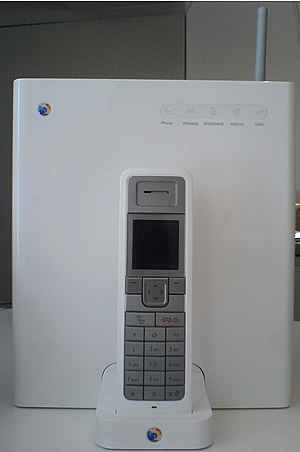
 To date, most ADSL equipment that BT has put out has been pretty …. functional … or put another way, ugly. Their ethernet routers have been transposed from office equipment, and their USB kit, the Frog as it was known … well don’t get us started on that*.
This has all changed with their latest packaging of broadband. Released alongside this, the newly-announced BT WiFi Home Hub has been designed to seduce people into pulling their router out from it previous position in the study or under the stairs, and putting it in to their living space.
Why would they care about that? Well it’s important for the success of products like BT Vision, their autumn-release IPTV service, as the connection between the Home Hub and the BT Vision box currently has to be wired ethernet. Given most people don’t have their house cabled for ethernet, the Home Hub has to be located close to the main TV in the house, normally in the lounge. It also doesn’t hurt to have their new wireless-DECT VoIP phone handsets sitting in the main room in the house either.
It’s a looker
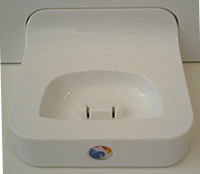 BT have clearly had the industrial designers on the case and what they’ve turned out is a bit of a looker.
Being white, you can’t but fail to be reminded of Apple (being that they own the colour white). It’s like a cross between a small, white, upstanding PS2 and an iPod, but lacking the curves of the iPod.
The BT VoIP handset, or BT Broadband Talk handset as they call it (sssh, don’t mentioned VoIP), sits in an integrated docking unit that is slots in the front of the base of the Home Hub.
 What can you connect to it?
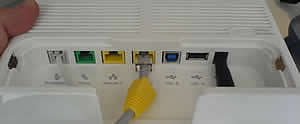
Apart from the 802.11G/B wireless connectivity, there’s six physical connectors tucked away at the back of the Home Hub.
There’s the connector that runs between the phone line and the box, a slot for you POTS phone, two ethernet connectors (one of these will be used for BT Vision) and two USB connectors.
One of these USB ports is intended for computers that don’t have ethernet ports on them (are there any of these still in circulation?) and the other is for an as-yet unannounced use.
One trick I feel they’ve missed is using the Hub as a print server, but discussing this with BT’s, they suggest that this is something that could be introduced later, via a software update.
Disco lights may drive you mad
 The only issue we raised after spending a brief time with it was the usage indicator lights that sit at the top of the unit, which flicker whenever data passes through the box. Sadly, as yet, these can’t be turned off.
We’d imagine that while having these beauties flickering away may be a novelty initially, but long term, people are going to find it _really_ annoying, as they catch them out of the corner of their eye. Expect either the addition of some masking tape over them or a software update giving the option to kill them.
Over broadband software updates
Keeping equipment up to date is a expensive and risky business, especially if you need to get the customer involved.
Like their video phone handsets, the Home Hub can be updated remotely by BT over the broadband connection. This gives them a chance to provide new features in the future, or to fix an problems that they might find, without having to bother the subscriber.
Do you need a Home Hub?
If you want to carry on using the Internet as you have previously, then the short answer is no, _but_ if you want to use any of the new BT services like BT Vision or BT Homesafe, their home security system (more on this soon), then yes.
For BT Vision to work, the STB that comes with it has to be able to control the flow of data over the broadband connection, because frankly, getting TV to run over a 2Mb DSL connection is asking a lot of it. If little Johnny is sitting in the bedroom downloading goodness knows what, he’s going to have to have his connection throttled, which Dad is watching the Football on Saturday night.
* Thank the gods of USB that BT have finally dumped the USB-connected Frog that used to ship in previous version of their broadband offering. We found this an odious move purposely designed to limit the number of computers that connect to one. In our book, this was detrimental to the wider adoption of broadband in the UK.
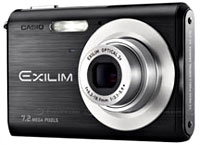 Casio have added the new Exilim Zoom EX-Z70 digital camera to their EXILIM range, ramping up the pixel count to a hefty 7.2 megapixels.
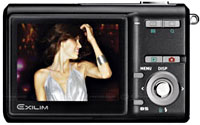 In an attempt to stave off the wobbles, Casio’s Anti Shake DSP is built in, although the anti-shake stuff is achieved through ramping up the ISO and dropping the image size, so it’s nowhere as good as proper optical image stabilisation.
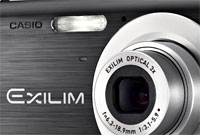 Available in “luxurious” black or high quality silver, the black EX-Z70 will be on the shelves from the beginning of July (you’ll have to wait a month for the silver version) for around £230 ($422, €335).
 Contrast type AF (selectable between spot, multi)
 Symbian, the smartphone OS company, are pulling a smart move (pun intended) by offering free assistance to Universities and their lecturers to have Symbian programming skills built into courses. Very clever.
 As a sweetener to the lecturers to get involved, Symbian will provide “exposure to Symbian’s industry partners.” Pretty healthy if you fancy running a software development company and want to get exposure for your potential products, or you’re getting a little bored of Uni life and fancy impressing those in industry that you’re a bit of visionary.
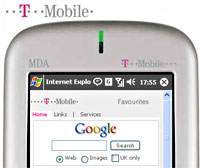 T-Mobile has announced that it is to extend its web’n’walk unlimited mobile Internet access service to include pay-as-you-go customers.
 All the web’n’walk handsets come pre-configured to connect immediately to the Internet, with customers able browse any web pages they chuffing well like rather than the ‘cut-down’ mobile-optimised web pages available through some services.
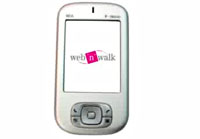 We love it
 As you may recall, we first reported the
  The transfer and negotiations around the unit are likely to have given BT some food for thought as to how they can manage the disposal of business units they do not see as key, or that are giving rates of return below the main business’s targets.
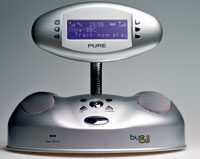 It might look like a weird mutation between Dr Who’s K9 and and the wobbly robot from Lost In Space, but we like the fact that PURE Digital’s new Bug TOO DAB radio is brave enough to stand out from the current crowd of wood’n’plastic identikit DAB radios.
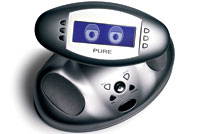 This usefully displays artists names, song titles, news, sports results and other information, with the EPG feature offering programme information and schedules.
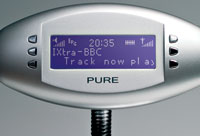 There’s also alarm, sleep and timer record functions – including an MP3 alarm – so the Bug TOO could be a handy bedside radio. We’re not quite sure why anyone would want 20 configurable alarms though, but if that’s what you’re after, the Bug’s got ’em.
 Some commentators expect ITV’s share price to renew vigour over the coming weeks, as rumours of a fresh takeover are fanned by its institutional shareholders. This is despite poor audience performance and strong competition from a publicly owned, but very commercially managed, C4. There are those who are keen to take over the ITV helm where Greg Dyke so publicly failed.
 Some wonder why the continued interest in ITV as the deregulated non-linear future hurtles closer, but in truth, ITV has a value in both its content and brand that may be undervalued. The channel when compared against the triple and ‘four-play’ options that are so exciting the Telco executives, still has programmes that viewers will seek out. The next 12 months are critical to the brands long term success, as it’s multi channel strategy is tested by the Freeview expansion of C5 with two more channels. Not forgetting the move of Channel 4’s film channel to an advertising supported free to air proposition, a strong assertive strategy could turn the corner for the dominant UK commercial player but more On Digital type disasters could spell a long and unpleasant demise.
 The other left field possibility is that US media titan Time Warner in selling off its UK AOL business has an eye on acquiring a much bigger UK fish that looks astonishingly like the UK’s main commercial TV network- eyes should be glued to the unfolding drama.