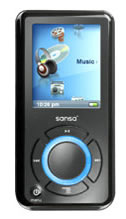
 Forget the Nano, do the Sansa
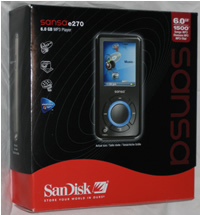
Sansa’s are a new range of portable media players from SanDisk. They come in several versions starting with the 2GB e250, the 4GB e260 and the 6GB e270. There’s also the possibility of adding to the internal memory as they have a microSD slot, unfortunately microSD cards currently only support up to 1GB.
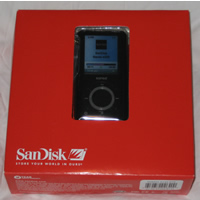
The packaging though functional, doesn’t meet Apple standards. Though the e270 which is 8.5cm long by 4.1cm wide and 1.1cm deep with a grey metal back (about 0.5cm deep) and a black plastic front, almost does.
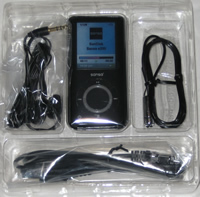
The display is about 3.5cm high and 2.7cm wide. It comes with headphones (which are quite big being over 1.5cm diameter), a USB lead (the Sansa itself has a proprietry connector – so you need the cable, it charges through USB), a lanyard and a soft case.
Though bigger than a Nano it fits comfortably in your pocket. The black headphones come on a 2 foot lead and are actually reasonably good, though their size might be uncomfortable for people with smaller ears.
 It glows
Turn the device on and the first thing to notice is the glowing wheel on the front, a nice deep blue that stands out against the black face. It only stays on for about 10 seconds, then the display illuminates. The display is TFT and is very bright and vibrant.
The wheel is a wheel, it turns controlling the icons on the display (which are connected as though they are on the surface of a disc). Oddly the icons cycle in the opposite direction to the turning of the wheel, but for some reason it feels the right way to do it.
There are four buttons mounted around the wheel (like a compass) and one in the centre. Turn the wheel to the icon you want and press the centre to select it (generally the right hand button can also select things). The left button takes you back a menu/icon.
Media
The unit obviously plays MP3’s but also supports WMA including secure WMA files. Video is a MOV format and photos seem to be in bitmap format, luckily SanDisk supply some software called MediaConverter which does just that and converts various input formats into the correct format for the player. Images can be in JPEG, TIFF, PNG, BMP and GIF.
 Video can be in AVI, MPEG-1 & MPEG-2 in MPEG, MPG, MPE or VOB (unprotected) formats. MPEG-4 in AVI format, DAT, ASF, QuickTime MOV, and WMV. Media Player 9 or 10 and Quicktime 6.5 or higher must be installed for QT MOV files.
Video is handled well and is converted to the high by long format (videos are watched by turning the player on its side), but photos aren’t and an external application may be used to flip them.
Connections
There are two modes of operating when plugging into a USB port of a PC, Mass Storage Class (MSC) and Media Transfer Protocol (MTP). MSC makes the Sansa look like a removable drive (one for the Sansa itself and another if a microSD card is inserted). MTP make the Sansa appear as a portable device (under XP) and uses Media Player 10 to transfer content, including subscription content from Microsoft’s service. SanDisk now have an upgrade utility that installs on the PC and will check the SanDisk site for firmware upgrade. The player must be in MSC mode for it to work.
 Verdict
The Sansa isn’t an iPod, it’s not as easy to use but it is a pretty good little player and supports a good range of formats. You don’t actually need to use any other software if you just want music, just plug the Sansa into the PC and copy any music tracks saved on your PC. Playlists are a pain, and though they can be set on the Sansa, the more sensible way is to create them in Windows Media Player and sync them with Sansa.
Video and photos really requires MediaConverter to ensure they’re in the right format.
Mac users are out of luck, unless they just want to copy MP3s onto a raw disk.
Pricing
e250 – £89
e260 – £120
e270 – £150
Overall score: 71% – it’s small, with a good display and does more than a Nano.
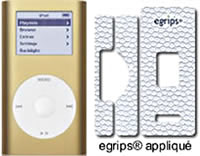 Are you the owner of a pair of super slippery hands that seem unable to keep a firm grip on your mobile or PDA?
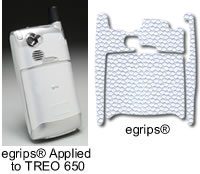 We’re not sure what the Frenchy-sounding name is all about, but the company offers a range of protective stick-on covers for a wide selection of electronic devices such as cell phones, PDAs, digital cameras, iPods, MP3 players, gaming devices etc.
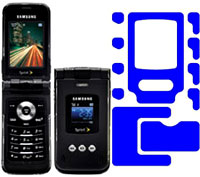 Made from a super thin material, the makers claim that the “specially formulated adhesive” won’t damage your precious gadget while the super-grippy material will prevent it from, “sliding around on dry surfaces, like car seats, centre consoles, counter tops, desktops, laptops and more.”
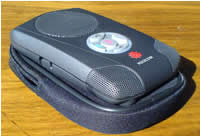 The Polycom Communicator (C100S) first caught our eye at the Skype-day in London. It’s a well-formed handsfree speaker/mic kit that connects to your PC via USB, letting you make trouble-free calls on Skype.
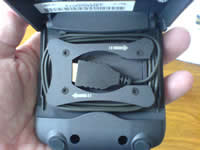 What’s it like to use
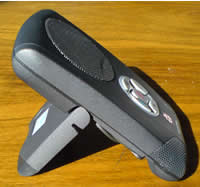 Design
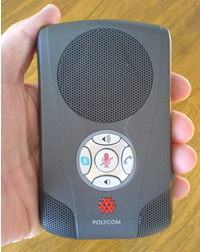 The centre-top is dominated by a high quality (22 KHz) speaker, with twin microphones on either side of the bottom front corners. This not only gives excellent sound reproduction (actually beyond Skype 16KHz capabilities), but the dual mics make it easy for many people around a table to take part in the conversation. The microphones are independently balanced, so a person sitting a distance away from one would not be drowned out by another sitting close to the other.
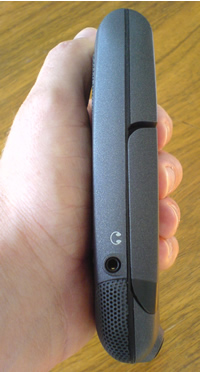 Around these buttons is a circular LED that gives progress on the call – it flashes green when connecting the call, glows green when on a call and red when the conversation is muted.
 The much heralded NTL/Telewest merger, expected to be the saviour of the UK cable industry, has become the subject of another Private Equity takeover rumour and the likely winner, if it goes ahead, is Richard Branson.
 Market reaction
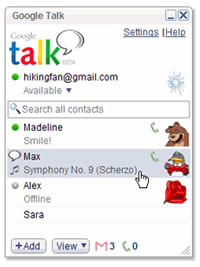 When upgrading their Instant messaging (IM) and VoIP software released earlier this week, Google has taken the opportunity to introduce a new feature – Music Trends.
 So what? you may say. Google say it’s an interesting way to discover new music, which we’re sure has nothing to do with one of the other features of GTalk, file transfer – “cool tune, man, can you IM it over?” Surely not. Would be a great way to get people buying music, through a long rurmoured Google Music-buying site though wouldn’t it?
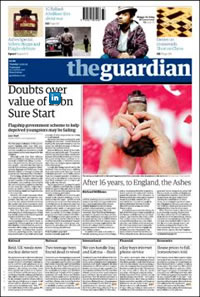 The UK’s national leading left newspaper, The Guardian, has been looking at what it thinks is the future of the daily newspaper. Since the successful launch of its Berlin edition in 2005, which rolls out of the presses somewhere between the size of a tabloid and the more traditional ‘quality’ broadsheet, it’s done a pile of blue sky thinking.
 Since the
 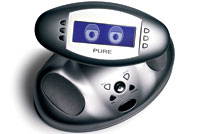 DAB in the UK has had a good week with prices dropping to an all time low, with High Street retailers are now making available a DAB radio with CD player for under £50.
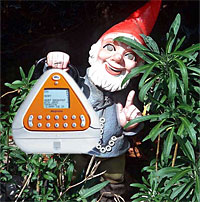 Sky’s satellite hybrid
  The UK Government have put two of their videos up on YouTube – for all the world to enjoy.
 The Death of YouTube?
 UK satellite operator, Sky is building on their video offerings on the Sky Mobile service, by adding the Extreme Sports Channel.