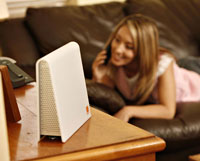
 Orange has launched, nay unleashed, the Unique phone, its first converged service using a single handset that connects via WLAN in the home and then switches to the regular mobile network when the user goes walkabout.
Initially rolling out in the UK and selected European countries, the phone promises unlimited free VoIP calls from home to other Orange mobiles and landlines.
Calls can be seamlessly switched between the Orange mobile network and VoIP, with screen icons keeping customers constantly informed of the network connection.
Interestingly, calls started from home remain free, even when the user has wandered out of their front door and out of range of their Wi-Fi network, causing the phone to switch to the mobile network.
To use the service, customers must get an Orange Livebox which lets users connect to the Orange network via Wi-Fi.
Households can have up to six Unique phones, although there is a limitation on their use, with only three users allowed to use the Internet or make calls at any time.
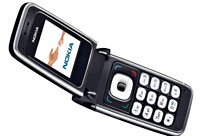 So far, only the Motorola A910, the Nokia 6136 and the Samsung P200 can be used with the service, but more phones will be launched in 2007.
Two price plans are currently on offer; the Canary 50 (offering 600 minutes per month) and the Panther 65 (1,200 mins), priced at £50 and £65 respectively.
A broadband connection is bundled in free with the convergence-tastic deal, with the setup offering clear benefits to users, who’ll now only need one phone, one number, one address book, and one bill from Orange.
The service will be available from November, although punters keen to be hip with the convergence crew can pre-register their interest here: www.orange.co.uk/uniquephone
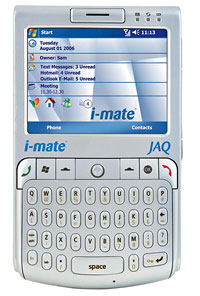 Currently blossoming on the Ugly Tree and ripe for plucking is the new i-mate JAQ PocketPC phone.
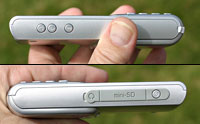 As far as we know, i-Mate haven’t officially split from HTC, but the company seems to be following O2’s policy of sourcing Windows smartphones from other manufacturers as well as HTC – a decision perhaps prompted by HTC recently releasing phones under their own name.
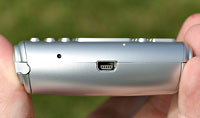 Quite a hefty beast at 122x71x22mm and weighing 160 grams, the i-Mate JAQ comes with a 2.8″ 320×240 pixels, 65k colour display, Bluetooth and InfraRed, but there’s no WiFi or 3G in sight, neither is there an onboard camera, which strikes us as a serious omission.
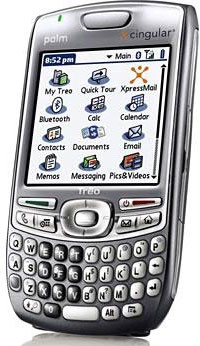 Currently leaking out all over the Web is this picture of a Palm Treo 680 with Cingular branding.
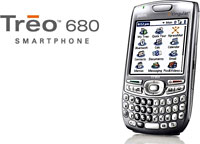 Although it looks like a slimmer, sleeker version of the 650, the phone is aimed at the lower end of the market, so is expected to feature a rather disappointing VGA resolution camera along with Bluetooth, 64MB memory and run the trusty Garnet version of the Palm OS (sure it’s as old as the hills now, but it’s still one of the best mobile operating systems around in our opinion).
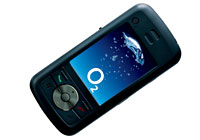 Slated for an October release is the swish O2 Xda Stealth PDA phone, clad in ‘ebony black’ and featuring a slide-up numerical keypad.
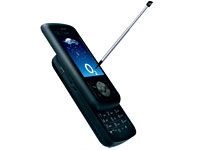 The front panel is dominated by a 2.4 inch touch screen supporting a resolution of 320 x 240 pixels and 65,000 colours.
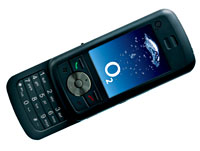 A SD card slot takes care of expansion needs, while the 1300 mAh Lithium Ion battery provides a claimed 150 hours of talktime and 4.5 hours of standby time.
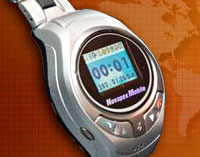 Dick Tracy had one and when I was a kid I would have swapped my entire collection of 2000AD comics for one, but users down under in Oz will soon be able to start talking into their wrist watches and not face arrest on psychiatric charges.
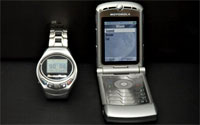 Anyway, back to the M300, the specs say that it offers GSM/GPRS 900/1800/1900 MHZ connectivity, Bluetooth (with bluetooth headset for voice call only), a teensy-weensy 65K OLED (0.9″) display and “Speaker Phone Text base UI,” whatever that is.
 I guess the bit that the designers forgot about is that talking into a watch is going to make you look distinctly odd and that watch sales have been steadily declining as users are preferring to use the time displays on their phones, PDAs and MP3 players…
 CSR, a chipset design lab in Cambridge that specialises in radio, has released a voice over WiFi design (UniVox) which a bill of materials of around £11.00.
 Both SIP (version 2) and IAX2 (Inter Asterisk Protocol v2) are supported. IAX is useful in NAT environments as it can traverse NAT without any special software, while SIP can be a complete headache.
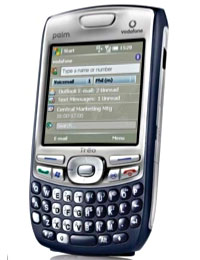 Palm have revealed details about their eagerly awaited Treo 750v, which will be made available on the Vodafone network in the UK.
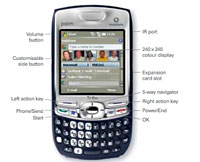 In line with Palm’s weird aversion to all things Wi-Fi in their Treos, hotspot lovers will have to invest in a separate Wi-Fi SDIO card.
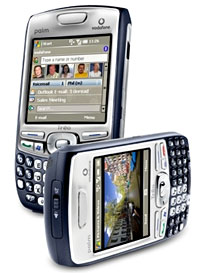 Memory has been boosted to 128MB plus 60MB user flash memory, with the device sharing the same 1.3 megapixel digital camera and the excellent full QWERTY keyboard with 5-way navigator of its predecessors.
 Hyundai Telematic Korea have announced their way-posh Roadbank HTMS 18800 DMB navigator, an ultra slim, in-car navigation system with a hefty 7 inch touch screen.
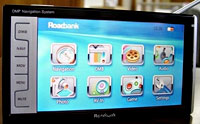 As well as offering navigation tools, the Roadbank comes stuffed with multimedia widgets, doubling up as a high end media console with support for movie playback formats like WMV9, MPEG-1/2/4, DivX, Xvi and H.264. It can also display digital photos too.
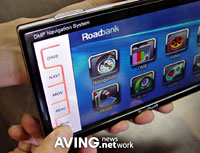 The Roadbank HTMS 18800 DMB runs on Windows CE 5.0 and comes with 64 MB of Nand Flash with a SD card slot providing memory expansion options.
 News Corp has reportedly shelled out $187.5m to buy 51% in Jamba (Jamster in the US), the mobile phone ringtone company who came to prominence with the Crazy Frog ringtone.
 The WSJ is
 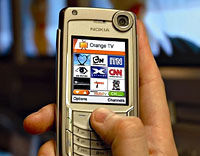 The mobile TV audience soared 45 percent to 3.7 million subscribers in Q2 2006, according to a new report by telecom and new media researchers, Telephia.
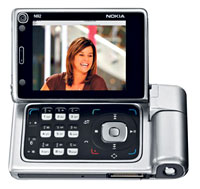 “News and information is the killer app for mobile television. With just a quick flip of their phone it gives consumers instant gratification,” added Gaffney.