 Nokia has risen to become King Of The Hill of 3G phones with a market share of 17%, with its attractive range of 3G phones trouncing products from rivals NEC and LG.
According to a report by Strategy Analytics, the phone-shifting Finns scooped a 17% of the 3G handset market in the three months from April to June, 2005.
Chris Ambrosio, director of the Strategy Analytics wireless device strategies service observed that Nokia’s hefty share of the 3G market represents nearly half of its global overall share in the global mobile market, currently standing at 33%.
 Previous 3G front-runners Motorola and LG have been overtaken by Nokia, with the report warning the manufacturers that they “have significant work to do to match up in the next battle for WCDMA phones priced below US$200 (~£111, €164~) wholesale, which will present significant mass-market opportunities in 2006 to 2010”.
The study notes that the market for 3G phones is still comparatively small, with only nine million units shipped in the second quarter of 2005 – small beer compared to the total sales of 185m handsets for the same period (source UDC).
“WCDMA (3G) technology, which accounted for just 5% of total handset sales during Q2 2005, remains a market in the early stages of development, but it is worrying for a cluster of aspiring Asian vendors that Nokia has already become best in class,” commented Chris Ambrosio, director of the Strategy Analytics’ wireless device strategies service.
Nokia’s market lead has been assisted in no small part by the popularity of their acclaimed 6680 3G handset, recently lauded as the “best-in-class 3G phone” in Western Europe.
Nokia’s triumph means long faces in the Motorola offices, with the company failing to make much progress with their 3G phones, despite their funky ‘lifestyle’ GPRS phones like the V3 Razr proving a hit.
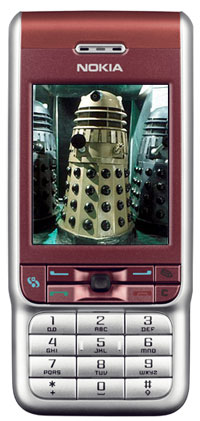 The BBC has announced that it will be offering classic episodes of “Doctor Who” and “Red Dwarf” on digital video chips for viewing on mobile phones.
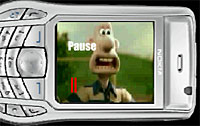 Films can be fast forwarded, rewound and paused, just like a conventional movie player.
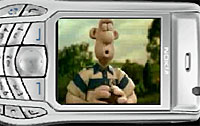 The first scheduled release is The Five Doctors, a 90-minute Dr Who special originally shown in 1983, followed by three episodes of cult sci-fi hit, Red Dwarf.
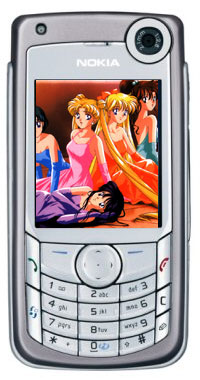 Sony Pictures Entertainment is set to triple the number of comic books it offers as mobile downloads in Japan, making the company the number one provider of “manga” downloads.
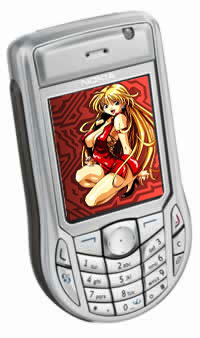 Sony intends to offer more comic books than competitors like NTT Solmare, (unit of telecom firm NTT) and Toppan Printing.
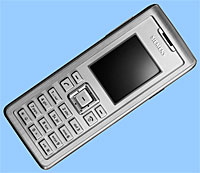 Following hot on the heels of Vodafone’s successful stripped-down phone
 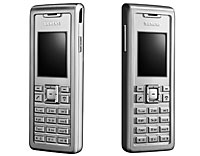 Simple doesn’t have to mean crap though, and the thin and light phone offers a 65k colour display, SMS and MMS with an innovative button on the side of the phone allowing a MMS voice message to be recorded easily.
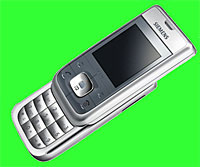 Siemens have also announced their new CF110 slim slider phone.
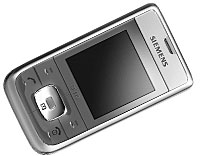 The CF110 is also something of a frill-free affair, with no camera, Bluetooth or music playback functionality onboard.
 HTC are rumoured to have won the contract to manufacture the much-hyped Windows Mobile-based version of Palm’s Treo smart phone.
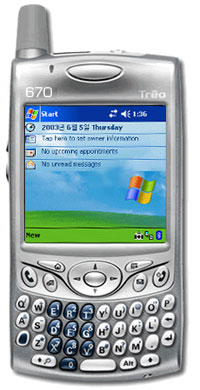 The Taiwan-based High Tech Computer (HTC) firm already manufactures its own popular suite of Windows Mobile-based smart phones and PDA-style communicators, which go under a mass of different names worldwide, depending on the mobile networks operators and handset vendors.
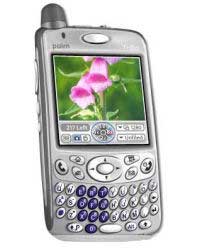 Just as we went to press, another rumour flashed across the Web, with Cool Tech Times showing a fairly convincing photograph of what it reckons is the new Treo 700.
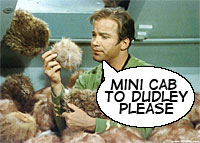 Viacom have announced that they will be launching a special super-spoddy edition Star Trek Communicator Phone, in association with Sona Mobile.
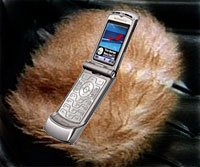 We couldn’t find a picture of the actual phone anywhere, although one poster on a Star Trek site claimed it was a re-branded Motorola V3 phone, while another frothed enthusiastically about a “multiplayer, persistent game universe, that uses location based / GPS information to alert you when an ‘enemy player’ is within range so you can do battle!”
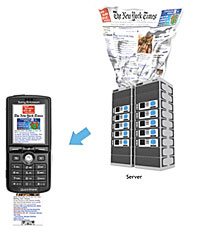 Norwegian browser brewers, Opera Software, have announced Opera Mini, a J2ME (Java 2 Mobile Edition) Web browser for “virtually all mobile phones”.
 The browser makes up for the feeble firepower of low end phones by using a remote server to pre-process Web pages before sending them to the phone, rather than trying to get the phone to process the pages.
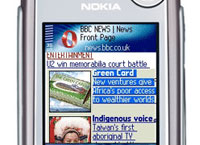 “With Opera Mini, the phone only has to run a small Java-client and the rest is taken care of by the remotely located Opera Mini server. With Opera Mini you don’t have to have an advanced phone to surf the Web, which means that most people can use it with their existing phones.”
 Patriotically, Norway’s leading commercial television station, TV2, have already bundled Opera Mini with its mobile services in Norway to offer its viewers a complete mobile content package with a branded Web browser.
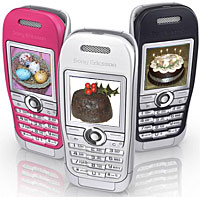 Sony Ericsson’s boffins have come up with the cunning idea of creating phones which automatically change the way they behave, depending on the time, date and place.
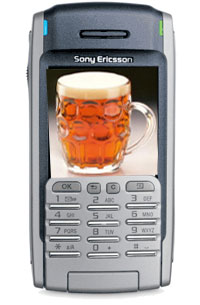 Travellers touching down in Glasgow airport may be ‘treated’ to a bagpipes ringtone courtesy of a GPS country location signal, or perhaps the phone might blast out some demonic black metal on arrival in the Norwegian hinterland.
 In spite of pundits’ predictions of a swift demise, the PDA refuses to die with 2005 looking set to be a record year for handheld sales.
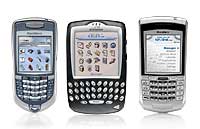 Like Billy Bunter at a speed eating competition, the Western European PDA market inflated by a massive 94 percent to reach 1.3 million units in the second quarter of 2005.
 Mobile gaming big boys I-Play have released the results of a study which revealed that only 5% of mobile users have ever downloaded a game
 A further 17.5% were uncertain how to download a game while the rest said that the downloading process itself was tedious.
 Pricing was seen as a discouraging factor by 51% of the respondents, with 48 percent in favour of free trail versions and 30% saying that that they would go for a game if a friend recommended it.