 Cambridge outfit, HD Positions, have launched their ‘Boomerang Box’ device, a new low cost, high accuracy positioning system which locates vehicles and other valuable assets.
The Boomerang Box is a robustly constructed device with two year battery life and low installation cost, and it can be bolted into vehicles or containers or just slapped in the drivers seat.
Powered by Cambridge Positioning Systems (CPS) Matrix technology, the system uses the Orange UK network and provides coverage all over the UK – including inside buildings and containers – with a claimed accuracy of less than 100m.
Back in Febuary this year, we covered CPS’s work with Nokia to bring their mPosition System to market.
There’s a growing demand for location based services letting companies keep a watchful eye on the whereabouts of valuable moveable assets like trailers, cars, motorcycles, caravans etc (maybe they’ll stick them on employees soon so they know when they’re skiving off in the boozer?).
 The service works by HD Positions supplying the interface to Matrix, facilitating related Machine to Machine (M2M) services, including network connectivity, billing and support.
Nigel Chadwick, director of HD Positions commented that the market for high accuracy positioning systems has been held back by a number of factors including poor area coverage, prohibitive purchase, fitting and operating costs, power consumption, and slow and inconsistent location reporting.
Clearly chuffed with his new product, he continued, “The Matrix system, combined with the latest devices now appearing on the market provide consistent and high accuracy positioning with high speed reporting at low cost, and as such are increasingly deemed by management teams as an essential and viable element of asset management and risk reduction.”
 We tried to find a picture of the actual Boomerang Box, hopeful that it would be an amusing looking thing that would spice up this rather dull report, but there was nothing to be found on their Website.
So here’s a picture of a frankly disturbing fluffy cat called ‘boomerang’ that we found on the Web instead.
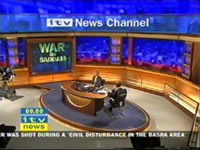 Sad to report that UK News organisation ITN has decided to end its ITV News Channel. Despite much favourable comment, they feel that there’s no room in ITV’s multi-channel world for a dedicated News Channel and the channel will close in January.
 A US federal appeals court has upheld the mammoth $22,500 (£12,760, €18,930) fine slapped on a 29 year old Chicago mother caught illegally distributing songs over the Internet.
 After Ms Gonzalez rejected an earlier proposed settlement from music companies of about $3,500 (£1,950 €2,950), a federal judge later filed a summary judgement ordering her to shell out $750 (£425) for each of 30 songs she was accused of illegally distributing over the Internet.
 Ms Gonzalez’s case was part of first wave of civil lawsuits filed by record companies and their trade organisation, the Recording Industry Association of America (RIAA), back in September 2003.
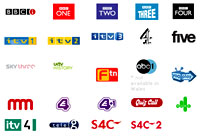 Ofcom has published its Digital Television Update for the third quarter of 2005, revealing that two thirds of UK households now watch digital television.
 The number of households with Freeview as their only source of digital television viewing was estimated at 5,775,000 – up by 600,000 homes during the quarter.
 Digital cable subscribers now account for more than 2.6 million of the total cable television homes, increasing by more than 43,300 in the quarter, while subscriptions to analogue and digital cable television decreased slightly to just below 3.3 million in the quarter (due to a fall in analogue cable subscribers outweighing the increase in digital cable subscriptions).
 Both Vodafone and France Telecom are now considering a rival bid for Virgin Mobile, following a “unanimous” decision by the Virgin board to reject the starting offer from NTL. Financial sources say both companies have asked to look at the Virgin Mobile books.
 From Australia, Forbes quotes Branson as saying that the new company will be formed and will be called Virgin TV – all it will take, he added, is a small increase in the offer. He said the current offer under-valued the company in the eyes of his fellow directors, but that “the difference between what they’ve asked for and what NTL has offered is not considerable in financial terms.”
 California based telecoms company, SureWest Communications, is set to become the first company in the USA to offer HDTV commercially over its Internet Protocol (IP)-based fibre-to-the-premise (FTTP) network.
 “Through our HDTV channel lineup and launch of HDTV over IP, we are showcasing our dedication to providing customers with the highest-quality programming, sharpest picture available and a variety of emerging video products,” he added.
 On HDNet, SureWest viewers can, err, thrill to original series like “HDNet World Report,” “Face 2 Face with Roy Firestone” and “HDNet Concert Series,” and if that lot doesn’t set you packing your bags for Sacramento, there’ll also be showing Warner’s “Smallville” series and a load of live sports productions include Major League Soccer games.
 The Digital-Lifestyles office is in a state of total confusion over major UK broadcaster,
  The school leavers departing since the wide use of the Internet, will not have to resort to third-party services – the majority of them will have an online presence, allowing direct contact, if desired.
 Another benefit will be letting ITV have access to the 12m members of FR, allowing them to expose the online FR audience to promotion of ITV’s programming, if they’re UK based. Later this can be expanded to on-demand sales.
 Vodafone has started to roll out its global Mobile TV channels, serving up a feast of “world-class TV brands, pan-European sports coverage and leading entertainment and documentary programmes”.
 Sports fans will be kept amused on the move with Eurosport, UEFA Champions League and, err, Chilli TV (who?) channels, with the Vodafone service also carrying popular channels like MTV and Discovery.
 Vodafone say that their research into the market revealed that Mobile TV complemented television viewing habits at home and thus demonstrated a hearty appetite for the product amongst consumers.
 The words European and Commission, when used together rarely equate to clarity. This is holding true with the mixed signals on the financial support that will be permitted in the transition to Digital TV across Europe.
 The Commission made clear that it supports the transition to digital broadcasting, and that Member States have a variety of methods to assist the digital switchover, that fits in with EC Treaty state aid rules.
 Europe could benefit economically and socially, by a concerted approach across Europe to the ‘liberated’ spectrum. The EC wants to see trading in radio wavebands (much championed by the UK regulator OFCOM) and believes that this could assist European firms in launching innovative products and services. A study commissioned by the executive indicated that the move to Digital would have potential benefits of around EUR 9 billion for community members through greater efficiencies.
 Today will see the share IPO of Eutelsat, the third largest satellite operator.