 Web browser company Opera today announce they’re bring their Web browser with AJAX support to chips for use in Consumer Electronics (CE) applications.
It’s not long back that Opera made the decision to give their Web browser away after a long period of charging for it. A very brave and noble act many though – not a bad way to raise your profile we thought.
 They’ve been putting their browsers on different platforms for a while, like the mini-browser for mobile phones they brought out back in August 05.
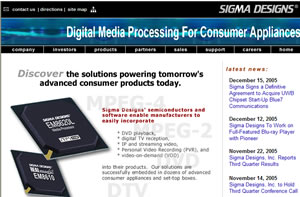
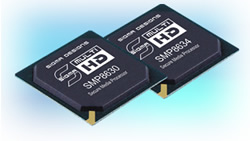
The reasoning behind the give-away move becomes clearer today as they announce that they’ve been working with US chip company Sigma Designs to bring their browser software to embedded hardware via Sigma’s SMP8630 family of chipsets.
 Clearly looking to tread on Intel’s toes, Sigma say the SMP8630 family of chipsets can be used in digital media adapters, IPTV set-top boxes and networked DVD players that OEM’s may want to build.
To get to use the browser and the oh-so-desirable AJAX, OEM’s will need to get in touch with Opera to license their Software Development Kit (SDK). Once familiar with it they should be able to create some snazzy application.
So what’s so exciting about embedded Web browsing software? Their supports the darling of the hour buzzword – AJAX.
 We’re sure you, dear reader, know what AJAX is, but just incase – it stands for Asynchronous JavaScript and XML. This translates to being able to use a Web browser more like a computer-based application.
The most notable difference from a ‘normal’ Web app is information and updates can be carried out without needing reload the Web page each time. It’s an intergral part of the Web 2.0 landscape.
 The most often cited example is Google’s Gmail.
We at Digital-Lifestyles see the rise of AJAX as the event that broke Microsoft’s domination of computers. So pretty significant really.
Expect this news to generate great excitement in the Blog-world.
 BT has been hit by two further blows, bringing into stark relief the height of the mountain it must climb to achieve its TV ambitions. Secondarily, drawing into sharp focus the changing landscape for domestic phone calling, as the competition begins to consolidate.
 Separately, a consolidating Carphone Warehouse has been on the acquisition trail and agreed the purchase of Tele2’s UK and Ireland operations, and separately, Onetel.
 The purchase of Onetel from Centrica for £132 million includes £37.1 million, while will be delivered if Centrica deliver a targeted number of customers in the next three years via its British Gas operations. The Carphone Warehouse will also pay Centrica an additional £22.2 million if higher sign-up targets are met.
 Here at Digital Lifestyles, we expect competition to be even fiercer in 2006 as both BSkyb and the Telcos battle to capture high spending subscribers.
 The BBC is hoping to get Dr Who fans reaching for their red buttons en masse with a video-rich interactive TV application scheduled to run straight after the airing of the Christmas Day special (7:00PM GMT).
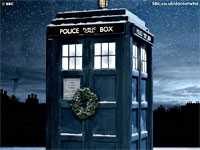 It looks that the BBC has invested muchos cash into the venture, employing live-action video and “state-of-the-art” special effects produced at the high end visual effects studio, The Mill.
 Produced in Cardiff by BBC New Media and BBC Wales, producer Sophie Fante commented, “Attack of the Graske gives the viewer the unique opportunity to immerse themselves fully in the world of Doctor Who.”
 We can’t wait to watch this latest installment of the highly rated Dr Who series and are hoping to witness another kind of winter wonderland the day after when the mighty Cardiff City FC take on Plymouth.
 In the week that BT and Sky both saw their triple play offerings potentially trumped by a possible NTL/Virgin ‘quadruple play’, BT chose to release details of its upcoming content deals with BBC Worldwide, Paramount and Warner Music Group.
 Against a backdrop of whispered rumours of delays with Microsoft’s IPTV Edition, the BT service is slated for launch next year.
 Problems won’t be confined to BBC programmes if ITV programming is carried, advertisers are bound to be unhappy that time-shifting viewers will skip the paid for messages.
 Ofcom has published its Digital Television Update for the third quarter of 2005, revealing that two thirds of UK households now watch digital television.
 The number of households with Freeview as their only source of digital television viewing was estimated at 5,775,000 – up by 600,000 homes during the quarter.
 Digital cable subscribers now account for more than 2.6 million of the total cable television homes, increasing by more than 43,300 in the quarter, while subscriptions to analogue and digital cable television decreased slightly to just below 3.3 million in the quarter (due to a fall in analogue cable subscribers outweighing the increase in digital cable subscriptions).
 California based telecoms company, SureWest Communications, is set to become the first company in the USA to offer HDTV commercially over its Internet Protocol (IP)-based fibre-to-the-premise (FTTP) network.
 “Through our HDTV channel lineup and launch of HDTV over IP, we are showcasing our dedication to providing customers with the highest-quality programming, sharpest picture available and a variety of emerging video products,” he added.
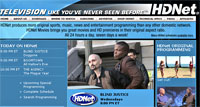 On HDNet, SureWest viewers can, err, thrill to original series like “HDNet World Report,” “Face 2 Face with Roy Firestone” and “HDNet Concert Series,” and if that lot doesn’t set you packing your bags for Sacramento, there’ll also be showing Warner’s “Smallville” series and a load of live sports productions include Major League Soccer games.
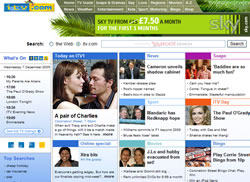 The Digital-Lifestyles office is in a state of total confusion over major UK broadcaster,
  The school leavers departing since the wide use of the Internet, will not have to resort to third-party services – the majority of them will have an online presence, allowing direct contact, if desired.
 Another benefit will be letting ITV have access to the 12m members of FR, allowing them to expose the online FR audience to promotion of ITV’s programming, if they’re UK based. Later this can be expanded to on-demand sales.
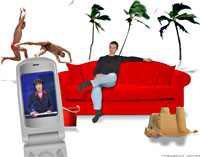 Vodafone has started to roll out its global Mobile TV channels, serving up a feast of “world-class TV brands, pan-European sports coverage and leading entertainment and documentary programmes”.
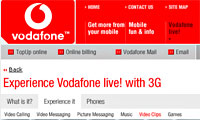 Sports fans will be kept amused on the move with Eurosport, UEFA Champions League and, err, Chilli TV (who?) channels, with the Vodafone service also carrying popular channels like MTV and Discovery.
 Vodafone say that their research into the market revealed that Mobile TV complemented television viewing habits at home and thus demonstrated a hearty appetite for the product amongst consumers.
 NTL is currently in talks to merge with Virgin Mobile in a deal that would create a potential rival to the now
  In a fiercely competitive market, cable companies on both sides of the Atlantic are looking to outflank their satellite and phone company rivals by adding mobile phone services to their portfolio of voice, Internet and TV services.
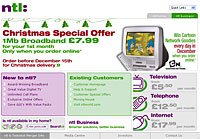 NTL and Telewest have notched up around 5 million subscribers combined, next to BSkyB’s 7.8 million digital television viewers.
 The words European and Commission, when used together rarely equate to clarity. This is holding true with the mixed signals on the financial support that will be permitted in the transition to Digital TV across Europe.
 The Commission made clear that it supports the transition to digital broadcasting, and that Member States have a variety of methods to assist the digital switchover, that fits in with EC Treaty state aid rules.
 Europe could benefit economically and socially, by a concerted approach across Europe to the ‘liberated’ spectrum. The EC wants to see trading in radio wavebands (much championed by the UK regulator OFCOM) and believes that this could assist European firms in launching innovative products and services. A study commissioned by the executive indicated that the move to Digital would have potential benefits of around EUR 9 billion for community members through greater efficiencies.