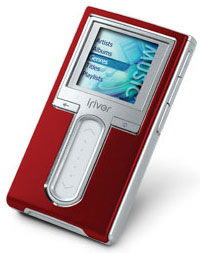
 Shipments of MP3 players soared by an enormous 116% in 2004, as hundreds of wallet-tempting products arrived in response to the phenomenal success of Apple iPod player, according to a survey by Market Intelligence firm, iSuppli.
Propelled by the soaring growth in demand for hard disk drive (HDD)-based products, iSuppli predicts shipments of MP3 players will nearly quadruple from 2004 to 2009.
The company forecasts that total MP3 player shipments will expand to 132 million units in 2009, rising at a compound annual growth rate (CAGR) of 29.1% from 36.8 million in 2004.
Although growth in 2005 is expected to slow from the frenzied buying levels of 2004, the MP3 market will continue to expand at a rapid rate, with iSuppli predicting unit shipments of MP3s rising to 57.7 million in 2005, up 57% from 36.8 million in 2004.
The super, soaraway success of the iPod echoed the public’s love affair with HDD-based MP3 players, with competitors moving quickly to offer products that aped the iPod’s use of a 1.8-inch HDD.
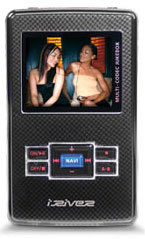 The iSuppli report also predicts that HDD-based MP3 player shipments will grow by a CAGR of 41.8% from 2004 to 2009, as compared to 22.9% for flash-based players.
Shipments are expected to 56.2 million units in 2009, up from 9.8 million in 2004, with HDD-based products accounting for nearly half of all MP3 shipments, at 42.6% in 2009 (up from only 26.6% in 2004).
The overall small form-factor HDD market had revenues of US$2.2 billion in 2004 and likely will rise to US$5.7 billion in 2008, generating a CAGR of more than 27 % over this period, iSuppli predicts.
The first vendor to ship 1.8-inch HDDs was Toshiba. Hitachi Global Storage Technology also has started shipping these drives and Western Digital Corp. (WDC) is expected to begin shipping them later in the year.
The research group said electronics producers stood to benefit from consumers’ willingness to pay more for “waaaaaay cool” products, something that Apple traditionally excels at and something that Sony clearly has in mind with its funky new line-up of Walkmans.
“Initially, (Apple’s) iPod was quite expensive, but the company reduced prices when the competition arrived. It also has aggressively introduced many generations of products in quick succession over the past four years,” iSuppli said.
But iSuppli warned companies not to try to squeeze too many features into their products: “The so-called ‘Swiss Army Knife’ approach has not succeeded in the MP3 market. Simple, elegant products that perform a few functions with easy-to-use interfaces have sold well in the marketplace, while the do-everything approach has failed.”
So, there goes my idea for a MP3 playing toaster then.
 Satellite broadband services should become a lot easier to implement with the adoption of the first broadband satellite standard on both sides of the Atlantic.
 “Intelsat meets the connectivity requirements of some of the largest telecommunications service providers worldwide,” said Frederick Morris, vice president of Intelsat.
 Crown Castle International announced today that it has formed a new subsidiary, Crown Castle Mobile Media, tasked with delivering live mobile television services to handheld devices including cell phones.
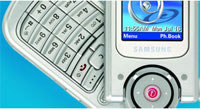 Crown Castle’s support of DVB-H is further evidence that DVB-H is a robust, open standard that will not only bring high- quality television and radio to the market, but will ensure a vibrant marketplace for infrastructure equipment, innovative devices, and compelling services.”
 TiVo has signed a multiyear deal to make a version of its personal video recorder software available to customers of Comcast Cable, currently the King Kong of largest cable operators in the US.
 The Comcast deal means that TiVo will have to adapt its software to work on Comcast’s existing DVR platform. This will enable TiVo to blast out the advertising it sells as interactive video clips in their onscreen menu to Comcast subscribers.
 Motorola is to bundle GPS navigation software and hardware with the European versions of its A780 and MPx220 smart phones.
 GPS navigation has proved a bit of a hit in Europe, with sales bolstering up an otherwise declining PDA market.
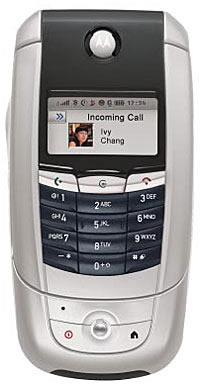 Both handsets use Bluetooth to communicate with a separate GPS receiver.
 America Online has announced a consumer VoIP application, Wanadoo joins the party. The AOL offering will go head-to-head with traditional telephone companies, cable firms and a multitude of start-ups competing for the mainstream-bound VoIP market.
 The AOL product will also allow customers to turn IM sessions into phone calls when one of the parties enters the phrase “Can I Call?”
 ATI Technologies have introduced two new media processors, IMAGEON 2282 and IMAGEON 2182, offering a shovel load of ‘groundbreaking’ multimedia capabilities for mobile phones.
 “The new IMAGEON processors from ATI combine advanced audio and video processing capabilities to turn mobile phones into mobile entertainment centers.”
 Announced at the CeBIT tradeshow, Pretec have introduced a new memory card format for smartphones, called the C-Flash cards.
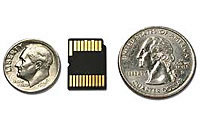 This format will also have support for MU-Card, a specification from China lead by Mu-Card Alliance. C-Flash has been adopted as the next small form factor version of MU-Card (called MU-Flash).
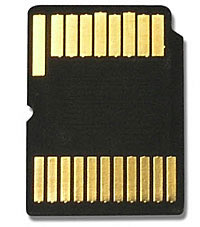 C-Flash has also been submitted to the MMC Association to be considered as the next small form factor standard of MMC.
 MP3-player supplier Jens of Sweden and Jonas Birgersson (founder of broadband supplier Bredband2) have reported the Anti-Piracy Agency to the Swedish Data Inspection Board (SDI).
 Bredband2 has already received queries from the police based on the agency’s registrations.
 Besides, we think that terrorizing and persecuting the users is the wrong method. Instead, we should popularise and support all the great Swedish companies that develop unique digital services. Stop the witch-hunt and support the legal alternatives.”
 The Swedish police have prosecuted 136 people for illegal file sharing after complaints from the AP-agency, and the agency has vowed to increase the number.