 Canary Wireless have released their Digital Hotspotter device, which, as the name suggests, is a WiFi detection and analysis tool.
Unlike rival products that only detect signal availability and strength, this pocket sized marvel features a handy LCD display offering network ID, encryption status and channel data for multiple networks.
Using the Hotspotter is simple enough: whip it out of your pocket, hit the little grey button and watch as the scanner starts sniffing about for local wireless networks.
If it locates one, the screen will display a sequence starting with the network name, followed by the signal-strength readout (one to four bars), an indication of whether the signal is “Secure” or “Open” and the channel number of the detected signal. The whole process takes about ten seconds.
 To scan for more networks, bash the button again.
The manufacturers claim that Hotspotter should work up to about 200 feet outside (with a clear line of site) and user reports have confirmed this range.
Benjamin Kern, founder of Canary Wireless, put on his ‘enthusiastic’ hat and explained what’s great about his product: “Canary Wireless’ Digital Hotspotter device offers the only convenient solution that lets a user know exactly what networks are available and allows the user to determine whether it’s a good time to boot-up.
With its ability to detect encryption status, signal strength and channel information, the device also provides the easiest way for tech professionals to detect rogue access points, perform site surveys and troubleshoot interference.”
 And while we can’t disagree with Ben’s summary, we wonder how long it will be before laptop makers start fitting WiFi sniffers into machine cases to let users seek out accessible networks without going through all the palaver of booting up.
And if the next generation of VoIP phones doesn’t include built in sniffers, heck, we’ll eat Ben’s enthusiastic hat.
The Digital Hotspotter device is available at www.canarywireless.com and costs US$49.95 (£27/€39)
 Google has started dishing out factual answers for some queries at the top of its results page, thus sparing click-weary users the hassle of navigating to other sites to look up the information.
 Norvig went on to explain that Google feeds the service with information from Web sites they considers to be reliable, but it’s yet to establish formal relationships with any of the sites providing the content.
 A hard drive, containing confidential data belonging to the Brandenburg police in Germany, was auctioned over eBay and bought by a student from the city of Potsdam for €20 (us$25/£14) according to a report by Spiegel, a leading weekly German newspaper.
 Last year, mobile security specialists Pointsec bought a load of hard drives off Internet auctions like eBay to find out how much sensitive company information they could unearth (and publicise their expertise in the bargain, natch).
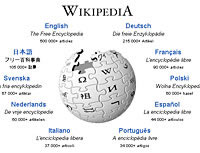 Yahoo’s search engine division has announced that it will be dishing out hardware galore, resources and “critical material aid” to support the non-profit Wikipedia online encyclopedia.
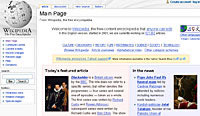 “Their popularity is growing very fast and, accordingly, their bandwidth and hardware needs have increased substantially.”
 Skype is a Voice over IP (VoIP) service that allows you to make phone calls via a broadband connection to other users for free. And we like it.
 Despite all the benefits of VoIP telephony, the perceived ‘fiddlyness’ of the technology makes it look like an uber-geeky toy for weird, gadget-loving, parameter tweaking folks (cough!).
 Once installed, picking up the Cyberphone causes the Skype interface to immediately pop up on your PC’s desktop (sadly, this amused us for some time) and you can then scroll through your contacts via the ‘+’ and ‘-‘ buttons on the phone’s keypad.
 Naturally, fellow Skype users can ring you for free too, and you can elect to use your PC’s ring tones or use the one built into the phone.
 VERDICT
 Comcast Corp. is working with TiVo on an advertising system that will slap new, updated commercials into already-recorded programs.
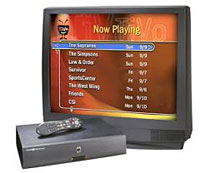 The new technology could help make DVRs more palatable to advertisers and the television networks because it should increase the chances of someone watching an ad rather than fast-forwarding through it.
 Under the pact, both companies are free to sell ads on the service, and each retains its respective revenue from any sales.
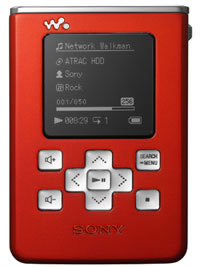 iPod killers, eh? You can barely get out of bed without some hyperbolic company boldly giving their new MP3 player the big one, only to discover that it’s proved as popular as a lager lout on a teatotallers daytrip.
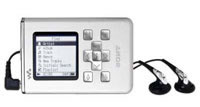 When it comes to battery life, the Sony has taken the iPod around the back of the bike sheds and given it a good thumping.
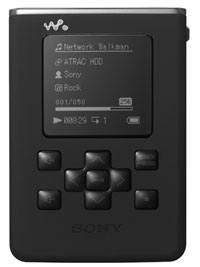 Unlike previous Sony models, the NW-HD5 is based around a portrait design where the seven line, 1.5-inch backlit LCD sits above the controls. In a neat twist, the new ‘Follow Turn Display’ feature automatically orients the interface screen horizontally or vertically depending on which way the player is held.
 We’ve never quite been persuaded to move to 3, but these two price plans they’ve just announced sure look tempting.
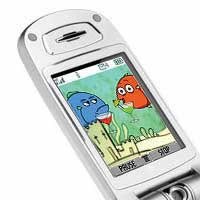 The second plan, “Talk, Text & Video 600”, is an enhancement to 3’s best selling plan, “Talk & Text 600”.As you’ve probably worked out, clever reader, this new plan bundles in 3’s video mobile services to the £35 (US$65/€50) a month package.
 Bob Fuller, 3 UK CEO swivelled on his heels and span out the corporate spin: “3 is the fastest growing network in the UK, we now have over 3 million 3G customers and we continue to lead the market for both value and video mobile services. With these new price plans 3 continues to set the pace for value in the UK mobile market. 3 was the first network to launch live, over-the-air, multi-player gaming, the first to stream concerts live over video mobile and first to launch quickplay video streaming of 3’s content.”
 Google plans to invite users to submit personal video clips for archiving as part of its recently launched video search service.
 The company also announced that it would provide data about popular Web searches to Current, a new television network for the 18- to 34-year-old audience, backed by former US Vice President Al Gore and other investors.