 With ne’er a whisper or a parp on the PR trumpets, Apple has quietly released an updated version of the iTunes software as a free download from its Web site.
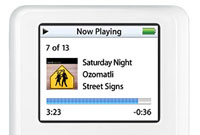
Described as including “new Music Store features and support for transferring contacts and calendars from your computer to your iPod,” iTunes 4.8 has a big surprise lurking in its bag – the capacity to play movies within it.
With all the stealth of a Dickensian pick-pocket, Apple has also added some short promotional music videos to the service, supplementing the music videos and movie trailers hosted through iTunes.
The short .mp4 format promos may not exactly be Hollywood blockbusters, but it’s an effective ‘proof of concept’, illustrating how Apple could easily offer full-length video through its store.
 Mindful of the marketing value, Apple has made music videos available initially on purchase of albums or tracks from the Dave Matthews Band, Morcheeba, Gorillaz and The Shins.
For example, fans shelling out for the Dad-friendly Dave Matthews Band album, ‘Stand Up’, can also download a digital booklet containing the album artwork, a five minute video (55MB download) showing the making of the album, with the all the usual bundled extras like interview clips etc.
Downloaded video clips can only be played in iTunes, with an option to watch the video in full-screen mode.
The updated software also lets iPod owners manage contact and calendar information, with the choice of synchronising all or some of the contacts in Apple’s Address Book, as well as all or some of their iCal calendars.
 The new version also includes a security fix to patch up a vulnerability relating to MPEG4 file buffer overflows (they sound rather painful).
By bolting on video functionality, Apple seems to be shimmying ever closer to the full integration of iTunes and Quicktime (iQuick? TuneTimes? Quines?), with the iTunes music store now offering videos and movie trailers for free viewing – just like the QuickTime homepage.
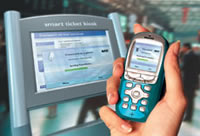 According to industry insiders, trials of mobile phones doubling as payment tools will be taking place in Taiwan shortly, marking a big step for the nation’s contactless technology development.
 NFC handset payment services are already tickling the public’s imagination in Japan and South Korea.
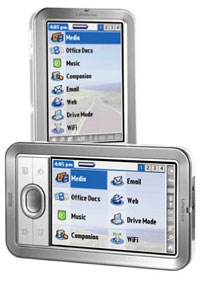 After months of rumours on the Web, details of palmOne’s new LifeDrive PDA have finally shown up on Amazon.
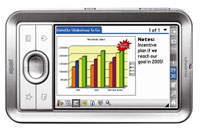 NormSoft’s Pocket Tunes is able to play MP3, WMA, Ogg Vorbis, and WAV files and the unit will also support full screen video and photo playback.
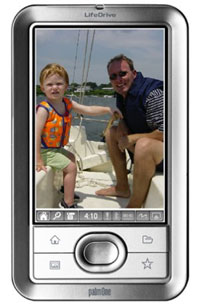 The LifeDrive comes with USB 2.0, so transferring files onto the microdrive should be a fairly nifty business.
 Research In Motion (RIM) have announced that that the BlackBerry wireless communicator now boasts 3 million worldwide subscribers, with one million subscribers added in less than six months.
 BlackBerry Enterprise Server’s ability to integrate with Microsoft Exchange, IBM Lotus Domino and Novell GroupWise (and other existing enterprise systems) has proved a hit with corporate customers keen to take advantage of push-based wireless access to e-mail and other corporate data.
 With the NTP lawsuit now resolved, RIM is free to follow its European initiative and license its Blackberry Connect software to US mobile phone vendors, so we can expect to see more third-party phones and handsets connecting to the service.
 It was a bad weekend for Google as the entire site was rendered unavailable on Saturday night and their new Web Accelerator application drew criticism on privacy and security concerns.
 Deeply unchuffed, Fried complained that “Google’s Web accelerator can wreak havoc on Web-apps and other things with admin-links built into the UI.”
 Sadly, things went from bad to worse on Saturday night when the world’s leading Internet search engine shut down from 6:45 to 7 p.m. eastern time, with some users experiencing longer outages.
 Games developers have included Internet access in their products. The best example of this is Wipeout Pure, which includes a browser, allowing the user to download new game levels and features. Since the game has a browser built-in, it can be reasonable to assume that Sony have actually put all the code to access the Internet in the PSP itself (and made it available to developers).
 Rather than everyone set-up spoof servers, some nice people have done it for you, and these then point to a PSP portal which someone has set-up PSP friendly content. You can access the spoof DNS servers by amending your Internet set-up configuration (on the PSP) and leave everything to automatic except for the DNS settings, into which you enter the spoof server settings.
 Once updated versions of the firmware come out, or there are 3rd party applications, the system will have all the features to be a powerful media hub. It supports WiFi, has a decent screen and video capability now, adding other Internet capabilities will just add the finishing touches to a superb product.
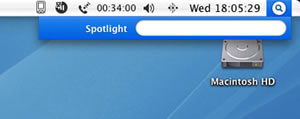
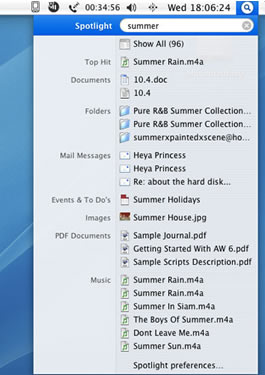
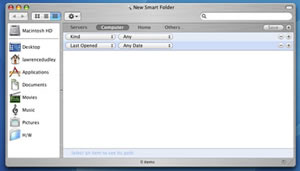
 It’s that time again, a new version of OS X has been released! For those that aren’t aware of OS X, it’s Apple’s operating system. As usual, OS 10.4 is named after a cat: 10.2 was named Jaguar, 10.3 Panther, and the new 10.4 has been titled Tiger.



 Cell phone penetration in Western Europe will hit 100% by 2007 as mobile-loving customers continue to scoop up multiple phones and phone cards.
 Although some people might think that the rise is fuelled by drug dealers toting multiple phones for ‘business’, the increase is actually explained by customers buying multiple phones and/or SIM cards.
 With a manly backslap, Intel and Sprint have announced that they will work together to advance development of the 802.16e WiMAX standard.
 In case that sounded too simple, here’s Oliver Valente, CTO and VP of technology development for Sprint, to baffle you with a buzzword remix: “Our relationship with Intel will help validate requirements, drive key ecosystem development needs, formulate network strategies and define the potential for advanced wireless services adoption”.
 Sean Maloney, another executive with an impossibly long job description (“executive vice president and general manager of the Intel Mobility Group”) added: “WiMAX technology has the promise to deliver new broadband services to consumers globally.”
 Today, the US Court of Appeals for the DC Circuit ruled that the US FCC (Federal Communications Commission) does not have authority to prohibit companies from making computer and video hardware that doesn’t comply with the Broadcast Flag. This was to come into effect on 1 July, this year.
 We equated it to either a door being slammed, or it being politely pushed closed, but left ajar. It appear as if it’s the big slam.