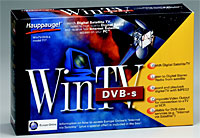
 Hauppauge Digital have whipped out a new add-on card to convert a boring old PC into a multimedia-tastic satellite TV receiver.
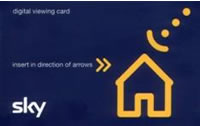
Their new WinTV Nova-s card receives free satellite channels (the -s is for satellite), and will work with Sky’s Freesat, that give free access to the unencrypted channels on Sky, which are currently all of the BBC offering and soon ITV (hopefully). Sky normally charge you £150 for the privilege.
Once they’ve shelled out for the £59.99 (~$103, ~€87) decoding device, punters won’t need a viewing card or subscription fees to enjoy free satellite transmissions on their desktop.
The card is aimed at consumers who already have a satellite dish stuck on their roof/wall, with Hauppauge suggesting that the WinTV Nova-s would be ideal for a PC “in the kitchen, study or bedroom as an additional digital TV.”
Owners can watch full screen satellite TV on their desktop, or have a smaller window open whilst trying to work on something else (yeah, right: who’s going to carry on working on their VAT return when there’s some top notch footie onscreen?!)
The Nova-s is compatible with Microsoft’s Windows XP Media Center Edition, and also offers the option to record shows to the PC’s hard disk. It will also work with all-round media handlers like ShowShifter.
At the moment, the Hauppauge’s WinTV Nova-s can receive all the BBC TV channels (including One, Two, Three, Four, CBBC, Cbeebies and BBC News24 and Radios 1 to 7.)
ITV currently encrypts, or scrambles, its satellite transmissions using the service provided by Sky, but will soon be following BBC’s lead and broadcasting its channels without encryption, so they can be viewed any satellite receiver.
This means that ITV1, ITV2, ITV3 and the ever-fascinating Men&Motors will become available soon, with more channels to be added in 2006 when Freesat officially launches.
 Freesat will be the satellite equivalent of Freeview,” said Yehia Oweiss, Managing Director of Hauppauge Digital. “Already broadcasting BBC, the service will be available to all UK households and bring free digital TV to the 25 per cent who are outside Freeview’s area. Consumers can buy our Freesat tuner now and enjoy many digital channels now, with more being added all the time.”
The WinTV Nova-s looks reasonably future proofed too, offering HDTV (High Definition TV) compatibility, with HDTV broadcasts expected to be delivered by satellite in 2006/7
Freesat’s EPG (Electronic Programme Guide) will be made available on the Hauppauge card, but for now the information can be downloaded through the Internet.
The Hauppauge WinTV Nova-s also provides a video input socket for slapping in a camcorder and digitising the content into MPEG format for editing and burning to DVD.
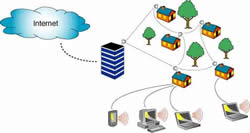 Mesh Networks are going to grow enormously by the end of the decade, according to ABI research. This ‘revalation’ is following years technical-types raving on about them.
 It’s not cheap to launch a satellite and, as commercial satellite operators have become prey to acquisition over the last 2 years, this has been followed by the operators consolidating. The economics of satellite distribution have fundamentally changed in the USA and Western Europe. Expect competition to be fierce in what was until recently a comfortable cartel carved out the International Telecoms Union (ITU) with constituent members many years ago.
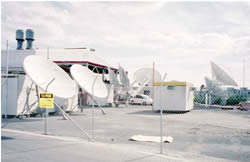
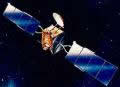 Telecommunications companies like France Telecom are increasingly selling off underused teleport facilities – they’re those places with loads of big satellite dishes pointing towards the heavens. These are being bought by satellite operators so they can offer an integrated end-to-end solution to their customers.
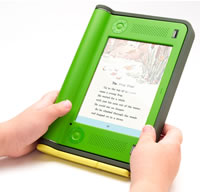 The $100 laptop project launched by MIT Media Lab, gained a big boost yesterday when the labs Nicholas Negroponte met with UN Secretary-General Kofi Annan at the World Summit on the Information Society in Tunisia.
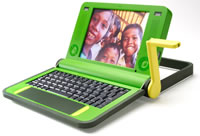 “USB ports galore” will be provided as will built-in WiFi. The only thing it will be missing is a hard drive. We’d imagine that this will be down to the additional power drain they have, and to try and maintain the necessary ruggedness. The networking will be via a wireless mesh.
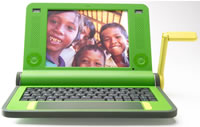 All software will be open source as in Negroponte view “open source software is the key to innovation in software and learning technology.”
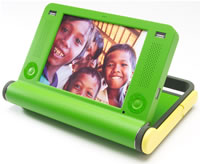 The impact of this project could be huge on many fronts – if it comes into being – and we’ve no reason to imagine that it won’t. Giving any and every child access to a computer, and teaching them to use it and inspiring them will be the start of a revolution bring free communication and equal learning to all citizens.
 Ofcom estimates that the digital switchover programme will release up to 112 MHz of spectrum in the UHF (Ultra High Frequency) band for new uses. The UHF band is prime spectrum, because it offers a technically valuable combination of capacity (bandwidth) and range.
 Ofcom point out that this is not an exhaustive list – which will please HM Treasury since the greater the potential uses and users the higher the value likely to be realised from auctioning it.
 As
As 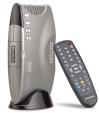 A raft of HD services across Europe is likely to eat up scarce capacity on the high-power satellites that beam the programmes down to earth, making any system that duplicates services across platforms more expensive.
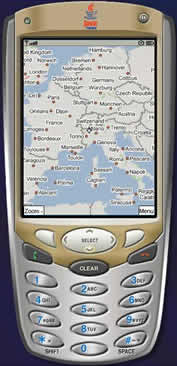 For those who have better thing to do with their lives than fanatically watch every twist and turn of online technology, or if you’re living outside the US of A, you may well not have been using Google’s recently launched Google Local For Mobile (GLM)- or even have heard of it.
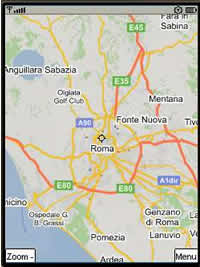 Yesterday we revealed how GLM has
 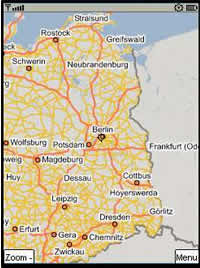 More detail than the browser version
 Intertrust must have though that all of the xmases came at once on the day Vodafone confirmed their licensing deal. It’s not every day that the World’s largest mobile operator signs a deal like that with you.
 The Vodafone deal goes well beyond these basics and licenses all of the technologies and patent that Intertrust have available.
 Both Vodafone and Intertrust declined to reveal the value of the transaction, but given the need for separate deals with the handset companies, it may be here that Intertrust make most of their money. This will not be optional if the handset manufacturers want to be on the Vodafone service and offer content.
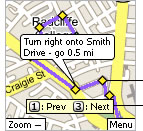 Despite their emphatic denial, Google appear to be planning to bring GPS to the recently announced Google Local For Mobile.
 Currently the users of the service have to key in or select the desired starting and destination points, and press a key to mimic their progress in the real world. Using GPS eradicates the need to tell the system where you are, or update the system to your progress.
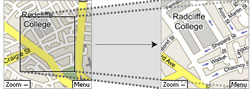 The GPS feature could well be waiting for a second release of the service, or waiting for next-gen handsets with aGPS built into them, to become more widely used.
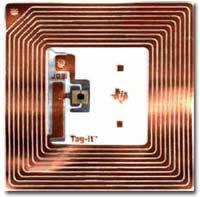 Ofcom, the UK uber-regulator, has today announced that they have removed the licensing restrictions on the frequency that radio frequency identification(RFID) tags use.