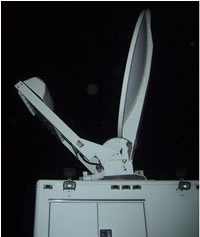
 Digital-Lifestyles has been informed, and can exclusively reveal, that BT is looking to shed its OU operations from its Media and Broadcast (BT M&B) division.
For those of you not in the know (like the vast majority of those not directly involved in the day-to-day of the business), OU is Occasional Use – the temporary services that provide worldwide video for events like Live 8.
BT has a long history of servicing the broadcast industry with the provision of telecom lines and links dating back to pre-Privatisation Post Office days. They provide the infrastructure behind ITV’s regional switching network and its customers include such TV giants as CNN and QVC.
 Despite BT as a whole being determined to move into new revenue opportunities like TV, there’s new breed of technology solutions for linking signals which are outside BT’s control. This bothersome issue is further squeezing their previously healthy profits, and the current cost base for BT’s OU services makes it difficult to justify continued operations, indeed we’ve been told that the OU is currently unprofitable. It’s hoped that a buyer will be able to make the operations pay, by reducing costs and realising synergies.
In the last decade, the former state monopoly phone companies (and many argue this hasn’t changed a great deal) have divested themselves of the majority of their interests in global satellite operators, as we saw when the global teleco industry packaged and sold Intelsat. There’s no reason to not see a continuation of that trend.
 Further deals for incumbent European telecoms operators are on the cards as they retreat into their core businesses. See France Telecom, who recently off-loaded one of its Paris Earth Stations to the satellite operator Eutelsat.
Private discussion are ongoing with a number of suitors and a decision on a buyer is expected in February. Those linked with the purchase include satellite operators Intelsat and SES.
It’s unlikely to be simple to disengage the Occasional Use element from the Media and Broadcast division and potential suitors may try and cherry pick the more profitable elements in a deal.
 BT has cut short its ambitious plans to transform phone boxes into interactive Internet gateways.
 In a public statement BT said, “There are no immediate plans to reduce the base of public multimedia kiosks other than moving to locations with better revenue earning potential and agreeing moves with our managed site owners.”
 With the continuing exponential growth in Internet-enabled mobile phones and Wi-Fi, we wouldn’t be surprised if we see some of these all-singing phone terminals disappearing sooner rather than later.
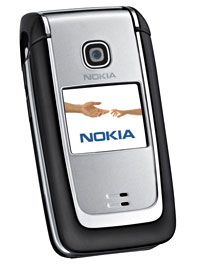 Nokia has shunted out a new addition to their mid-range mobile portfolio with the new Nokia 6125 clamshell phone, offering stereo audio streaming over Bluetooth and FM Radio.
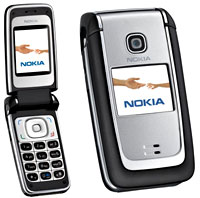 The quadband Nokia 6125 operates in GSM 850/900/1800/1900 networks and provides a flight mode, which enables the user to work with calendar or listen to music while on the flight – although we’ve heard of airlines like Virgin insisting that you turn off all phones – including those with ‘flight modes.’
 Friday afternoon distractions.
 JVC has unveiled the flagship model to its extensive range of Everio hard drive camcorders, the GZ-MG77.
 In the highest resolution mode, Ultra Fine, users can record 7 hours and 10 minutes of video at 9 Mbps.
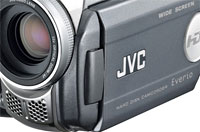 Video can be recorded in both standard and widescreen aspect formats, with an option to record stills.
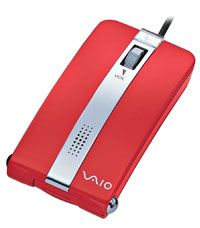 No idea if we’re ever going to see it turning up in Blighty any time soon, but we love this crazy new Sony VN-CX1 USB optical mouse-phone.
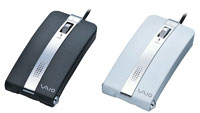 The clever stuff happens when a call comes in.
 A potential problem might arise if you wanted to use the mouse when you’re on a call, but we think you can just switch to speakerphone mode. Or maybe not (the translated press announcement goes on about ‘knitting machines’ so it’s a bit vague).
 Although the VN-CX1 doesn’t look like the most comfortable mouse we’ve ever seen, it’s small and light enough (45.5 × 23.9 × 89.2 mm, 67gms) and certainly looks a fun product.
 The expected has happened – Apple have unveiled their new Intel-basedMacs.
 Most of the keynote was about the new version on iLife, which you won’t be surprised to hear is called iLife’06. It continues to contain thestandard iTunes, iMovie HD, iDVD and GarageBand, but they’ve all had somemajor reworking.
 As
As