 If you were to consider UK telecoms, media, and technology (TMT) policy since Parliament passed the Communications Act 2003 and brought about the formation of Ofcom much has happened. The regulatory machinery of the state has swung into action with relative efficiency, taking on such issues as BT’s marketplace position, digital switchover, and public subsidy and control of broadcasting and new media. And we are starting – just starting – to see the results of some those efforts.
But up until now, it is fair to say that the Conservative Party have basically ceded influence over the TMT policy arena to New Labour – not least because Labour has been the party of power during what has been a period of radical technological change. The Conservatives, for a number of reasons, have been somewhat ineffectual at making their voices heard in this space … leaving observers such as ourselves largely unsure of where the party stands on most issues impacting the TMT sector.
 This is not a good thing. These industries are massively influential from a social and economic perspective. According to Ofcom, for example, the U.K. communications marketplace has an annual turnover of £55.9 billion. That’s tens of thousands of jobs and billions of pounds at stake. Policies applicable to the TMT sector also affect how the U.K.
- (i) sees itself,
- (ii) communicates,
- (iii) drives its economy,
- (iv) learns,
- (v) projects global influence, etc.
What can we say? The TMT sector is already staggeringly important and will become more so as economies across the globe become increasingly interlinked through electronic communications technologies. So it is common sense that there be senior level engagement with technology issues across all political parties.
This holds particularly true for the Conservative Party.
- Firstly, they are the UK’s main opposition party.
- Secondly they are currently engaged in a process of revamping their image and re-orientating their policy offering in order to be relevant.
- Thirdly, technology – and the policy and regulation associated with it – is always relevant.
However, any proposed policy and regulation must be backed by new thinking. So, although we have been told what sort of music David Cameron has put onto his new iPod, we don’t yet know how he thinks this technology might be used to deliver public service broadcasting or for that matter public services, or what the rights issues might be, and how all of this might impact the commercial market.
Of course there won’t be any answers overnight – and we don’t expect the Conservatives to suddenly unveil a raft of policy positions in what is a highly complex and constantly evolving area. But without doubt there’s a genuine and important opportunity here for the party. Developing a keen and critical understanding of TMT and proposing broad policies likely to harness the benefits that stem from new technologies would provide a platform that would assist the party in being seen as critical to delivering a modern Britain.
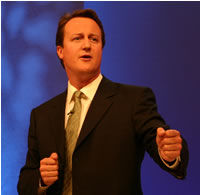 Certainly the party is already developing new ideas (or in some cases adopting the opposition’s cast-offs) in other policy areas. And by all accounts, David Cameron is doing an effective job of moving the Tories back toward the centre of British politics. The new leader appears flexible and open to new policy approaches. But nothing definite is happening in the TMT space. We think it should.
So with this in mind, we have decided that 2006 would be a good time to try and stimulate the political debate in regard to issues impacting the TMT industries by occasionally placing a specific focus on what the Conservatives might look to do for the sector. In doing this we hope to assess, encourage and develop thinking as to what the Conservatives have to offer if (and when) they return to power.
We will not be attempting to write the Conservative Party’s policies in regard to the TMT sector. Far from it – as always, we hope to provide a dialogue – a small impetus that might get a much bigger ball rolling. And any debate on would possibly include the views of those who may not be supporters of the Conservative Party – new or old. We remains open to all.
Tomorrow, in the second installment, we’ll get in to the details of what could get the ball rolling.
Luke Gibbs and Russ Taylor are founders of OfcomWatch
 UK TV broadcaster Channel 4 is joining the podcast steam train by launching their first podcast presented by the very excellent, Jon Snow, the front-man for the highly-regarded Channel 4 News.
 Big Chief, Channel 4’s Chief Executive, Andy Duncan, speaking at the Oxford Media Convention today (19th January), said: “We’re delighted Jon has agreed to present Channel 4’s first podcast. It’s great to be creating a genuine public service offering for new users on different platforms. And, as part of a possible bid for the new DAB national multiplex, it’s important that we start to explore the considerable potential to create cross-over content from the best of Channel 4’s output.”
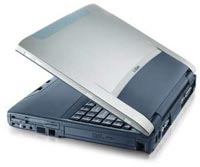 Wi-Fi usage has still a long way to go before it really catches on in the UK according to a new survey carried out by Toshiba.
 These figures seem in stark contrast to our recent
  Not surprisingly, a fear of someone swiping their laptop played a big part in people’s reluctance to whip out the Wi-Fi (25%) as did privacy fears (27%).
 With a high-end feature set offering auto, scene, aperture and shutter priority modes plus full manual exposure controls, Panasonic’s beautifully sculpted 8 megapixel LX1 is clearly aimed at the discerning photographer who knows their ISO from their f-stop.
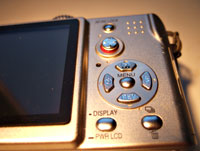 On most compact digcams, exposure adjustments are invariably achieved by fiddly excursions through endless sub-menus, but the LX1’s design affords fast, direct access to a host of vital functions like ISO rating, shutter speed, aperture and file size/quality – essential for those looking to capture the ‘decisive moment’.
 Although some cameras mimic a 16:9 shooting ratio by cropping off the top and bottom of the picture, the LX1 has a true 16:9 sensor, with users able to switch formats via a handy switch on the lens barrel (no sub-menu burrowing needed).
 Camera controls
 Photographic modes
 Of course, the capable image stabilisation goes some way to compensate for these serious shortcomings, allowing handheld longer exposures at low ISO ratings, but that’s going to be a dead loss if you’re trying to freeze action in low light.
 Conclusion
 According to figures released by French Web metrics firm XiTi, the open source Mozilla Firefox browser has now grabbed a massive 20% average market share in Europe, creating a growing challenge to the current leader, Microsoft Internet Explorer.
 Over here in Blighty, it seems that the Brits are yet to be wooed by the might of Mozilla, with the country recording one of the lowest proportions of Firefox users in Europe – just 11%.
 Other Web metrics companies have produced somewhat less spectacular estimates of Firefox’s market share, with OneStat.com reporting in November last year that the browser had notched up a global market share of 11.5%.
 In its submission this week to an MPs’ inquiry into Digital Rights Management (DRM), the influential National Consumer Council (NCC) spelt out its concern at current self-regulation, and called for new laws to ensure consumers’ rights to use digital content are protected.
 People are finding they can’t play the DVDs they’ve bought abroad or make compilations of material that they have purchased for their own use. The NCC believes that the use of DRM can and is already constraining the legitimate consumer use of digital content. It is also undermining consumers existing rights under consumer protection and data protection laws.
 Jill Johnstone, Director of Policy at NCC said; “Because of the current situation, consumers face security risks to their equipment, limitations on their use of products, poor information when purchasing products and unfair contract terms.
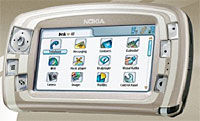 Two recent studies into mobile TV on 3G mobile phones have managed to produce rather inconclusive results concerning the willingness of the great British public to use the service and how much they’d be prepared to pay for it.
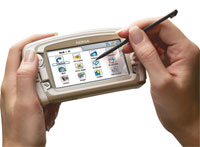 The feedback seemed back-slappingly reassuring, with 83 per cent of the triallists “satisfied” with the service, and 76 per cent indicating they’d be keen to take up the service within 12 months.
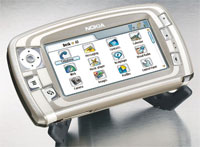 “This trial is further illustration that we are moving from a verbal only to a verbal and visual world in mobile communications,” said David Williams, O2’s technology chief.
 BT has cut short its ambitious plans to transform phone boxes into interactive Internet gateways.
 In a public statement BT said, “There are no immediate plans to reduce the base of public multimedia kiosks other than moving to locations with better revenue earning potential and agreeing moves with our managed site owners.”
 With the continuing exponential growth in Internet-enabled mobile phones and Wi-Fi, we wouldn’t be surprised if we see some of these all-singing phone terminals disappearing sooner rather than later.